THE ADVENTURE COLLECTIVE® · Independent discovery and booking for outdoor travel

Paddle quiet tidal channels through Damas Island’s mangrove forest near Quepos. This easy, guided SUP tour offers close wildlife viewing, ecological interpretation and calm water suitable for beginners.
Paddle quiet tidal channels through Damas Island’s mangrove forest near Quepos. This easy, guided SUP tour offers close wildlife viewing, ecological interpretation and calm water suitable for beginners.
The river narrows to a ribbon of glass and the paddle settles into a slow rhythm as you slip between trunks and aerial roots that thread the water like a living lattice.
Verified experiences and guided adventures in the surrounding area.
Operated by Paddle 9 · Quepos, Puntarenas
The river narrows to a ribbon of glass and the paddle settles into a slow rhythm as you slip between trunks and aerial roots that thread the water like a living lattice.
This three-hour stand-up paddle (SUP) tour explores the Damas Island estuary near Quepos, a broad tidal floodplain carved from volcanic soils and coastal sediment. Mangrove species here—red, black and white—filter runoff and anchor shoreline, supporting shrimp, juvenile fish and the birds that hunt them. Local fishing communities have long used these channels for subsistence and navigation; recent conservation efforts emphasize protecting nursery habitat for Manuel Antonio’s reefs.
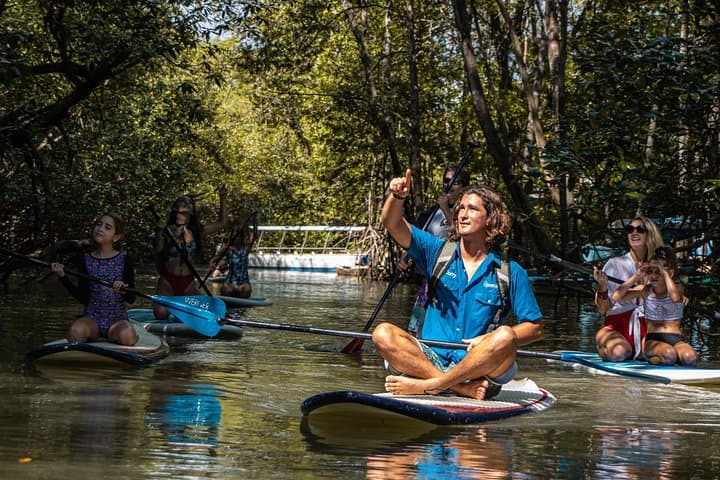
Expect calm, shallow water and narrow passages that require gentle steering rather than power. Guides typically point out how root structures trap sediment and why the estuary’s mix of salt and fresh water creates such biodiversity. Monkeys, herons, kingfishers and occasional crocodiles or iguanas may appear; binoculars help but close, quiet paddling often brings the best views.
Practically: bring reef or water shoes, quick-dry clothing, reef-safe sunscreen and insect repellent. Tours usually provide boards, paddles and life vests plus bottled water and snacks; arriving hydrated and with a light waterproof bag keeps gear safe. Morning low tide and early dry-season months (December–April) offer the clearest water and the calmest weather. If you’re new to SUP, the sheltered channels are forgiving, but listen to your guide on balance, boarding and exit. The route is a relaxed skill-building paddle with high returns for wildlife viewing and local ecological insight.
easy.
2–3 hours.
Moderate: able to stand and balance for 30–90 minutes with occasional kneeling; suitable for most ages with basic mobility
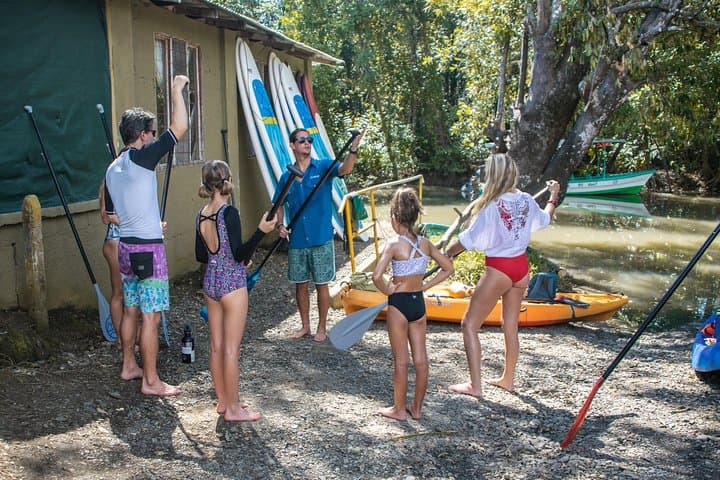
No—this estuary tour is beginner-friendly; guides teach basic stance, paddling and safety before launch.
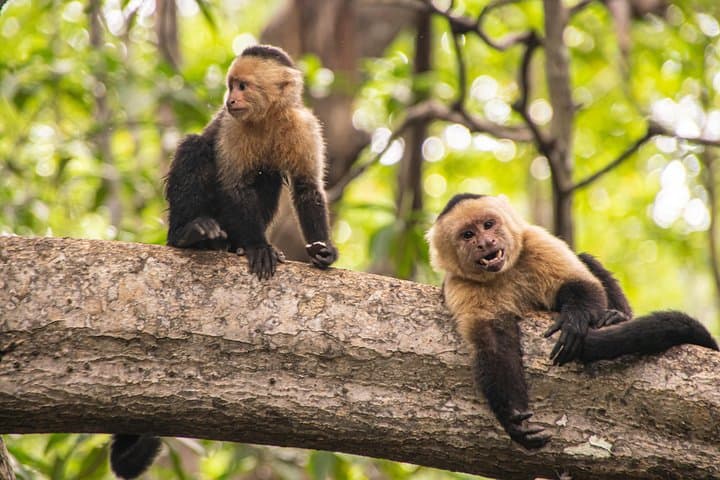
Common sightings include white‑faced capuchin monkeys, herons, kingfishers, iguanas and occasionally crocodiles along quieter banks.
Yes—life jackets are provided and required for all participants as part of the tour package.
Meeting points are usually in Quepos; some operators offer pickups from nearby Manuel Antonio for an extra fee—confirm when booking.
Mangroves around Damas Island have long supported local fishing and shore protection; recent conservation work focuses on nursery habitat for coastal fisheries.
Tours emphasize minimal disturbance—stay in the channel, avoid touching roots, and use reef‑safe products to reduce impacts on the estuary.
Paddle 9 operates guided outdoor trips and adventures with an emphasis on safety, stewardship, and memorable experiences.
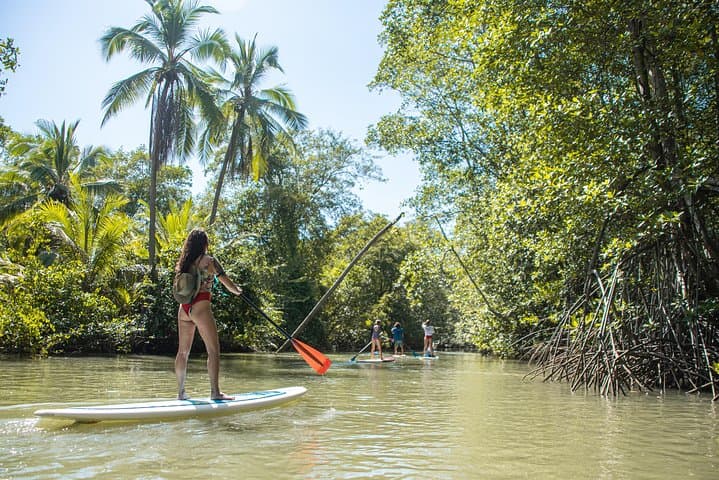
The river narrows to a ribbon of glass and the paddle settles into a slow rhythm as you slip between trunks and aerial roots that thread the water like a living lattice.
The river narrows to a ribbon of glass and the paddle settles into a slow rhythm as you slip between trunks and aerial roots that thread the water like a living lattice.
This three-hour stand-up paddle (SUP) tour explores the Damas Island estuary near Quepos, a broad tidal floodplain carved from volcanic soils and coastal sediment. Mangrove species here—red, black and white—filter runoff and anchor shoreline, supporting shrimp, juvenile fish and the birds that hunt them. Local fishing communities have long used these channels for subsistence and navigation; recent conservation efforts emphasize protecting nursery habitat for Manuel Antonio’s reefs.
Expect calm, shallow water and narrow passages that require gentle steering rather than power. Guides typically point out how root structures trap sediment and why the estuary’s mix of salt and fresh water creates such biodiversity. Monkeys, herons, kingfishers and occasional crocodiles or iguanas may appear; binoculars help but close, quiet paddling often brings the best views.
Practically: bring reef or water shoes, quick-dry clothing, reef-safe sunscreen and insect repellent. Tours usually provide boards, paddles and life vests plus bottled water and snacks; arriving hydrated and with a light waterproof bag keeps gear safe. Morning low tide and early dry-season months (December–April) offer the clearest water and the calmest weather. If you’re new to SUP, the sheltered channels are forgiving, but listen to your guide on balance, boarding and exit. The route is a relaxed skill-building paddle with high returns for wildlife viewing and local ecological insight.