THE ADVENTURE COLLECTIVE® · Independent discovery and booking for outdoor travel

Ride a camel along Cabo San Lucas’s Pacific edge for a slow, coastal safari that pairs low cliffs and tide pools with close-up time with trained camels. This accessible, guided outing combines seaside views, local natural history, and easygoing animal interaction.
Ride a camel along Cabo San Lucas’s Pacific edge for a slow, coastal safari that pairs low cliffs and tide pools with close-up time with trained camels. This accessible, guided outing combines seaside views, local natural history, and easygoing animal interaction.
The sand smells of salt and warm rock as a slow, deliberate shadow—the camel—drops you into a Pacific-side rhythm. You climb into a padded saddle, the animal shifts, and the coastline unfurls: low cliffs, scattering tide pools, and the steady push of surf daring you to look over the edge.
Verified experiences and guided adventures in the surrounding area.
Operated by Explore Los Cabos · Cabo San Lucas, Baja California Sur
The sand smells of salt and warm rock as a slow, deliberate shadow—the camel—drops you into a Pacific-side rhythm. You climb into a padded saddle, the animal shifts, and the coastline unfurls: low cliffs, scattering tide pools, and the steady push of surf daring you to look over the edge.
Camels are not native to Baja; they were introduced in the region in recent decades for ranching and tourism, and here they become the odd, gentle counterpoint to the seaside scrub and cardón cacti. Geologically, this stretch of coast is shaped by volcanic rock and marine terraces; underfoot are packed sand tracks and compact soil rather than steep alpine switchbacks. Culturally, the ride borrows theatrical cues—turbans and guide narration—while local guides point out native plants, seabirds, and the human history of Cabo’s fishing and maritime traditions.
Expect a slow, steady outing through a managed park rather than a wild desert expedition: 3–4 hours including pickup, a guided camel loop on relatively flat terrain, stops for photos, and a short visit to the camels’ stable. The experience suits all fitness levels but is not advisable for pregnant travelers or those with spinal or serious heart conditions.
Practical notes: wear closed-toe shoes, sun protection, and bring water (bottles are provided). Photography is allowed, and guides will help mount and dismount. Respect the animals—follow handlers’ instructions, avoid sudden movements, and let the camels rest when instructed. The result is a coastal, slightly surreal ride that pairs Baja’s shoreline with an experience more commonly found a hemisphere away.
easy.
4 hours.
Suitable for most fitness levels; participants should be able to mount with assistance and tolerate a slow seated ride for up to 90 minutes.
No—guides provide instruction and assistance mounting; the ride is paced for first-timers.
Yes; the operator accepts families but confirms any age or weight restrictions at booking and provides assistance for young riders.
Roundtrip hotel pickup in an air-conditioned van, bottled water, snacks, a bilingual guide, turbans, and the guided camel route are included.
Yes—photography is allowed; follow guide directions near animals and avoid flash or sudden movements that could startle them.
Camels in Baja are an introduced element of modern tourist culture rather than a native species; operators often trace the idea to late-20th-century attractions that mixed novelty with local coastal tours.
Stick to designated paths, don’t feed wildlife, and choose operators that limit group size and provide rest and shade for camels to reduce stress and habitat impact.
Explore Los Cabos operates guided outdoor trips and adventures with an emphasis on safety, stewardship, and memorable experiences.
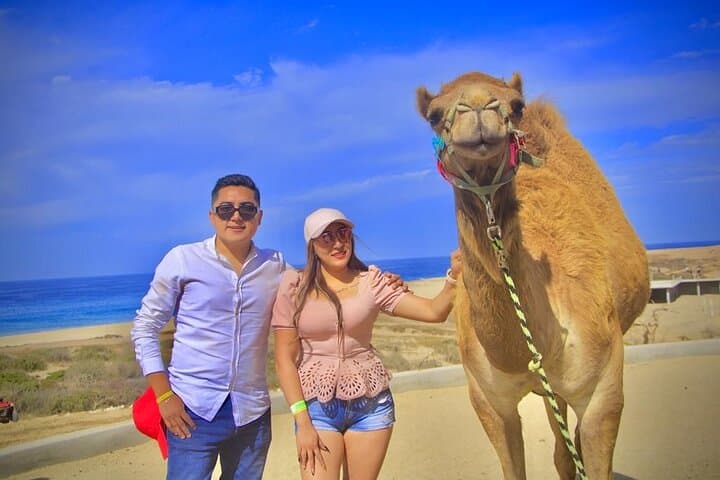
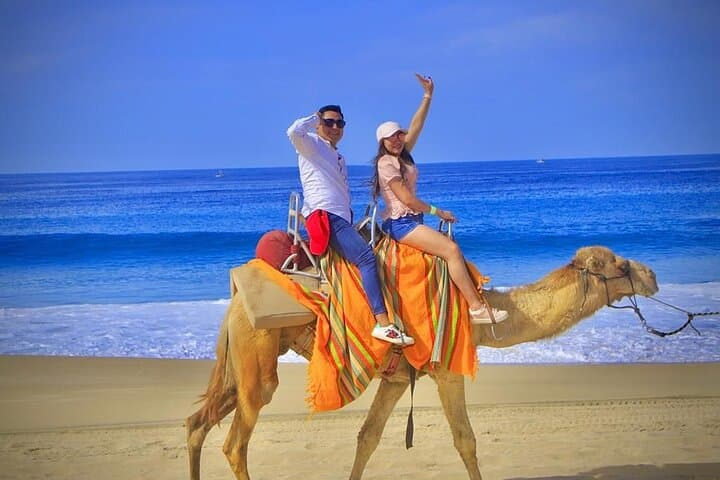
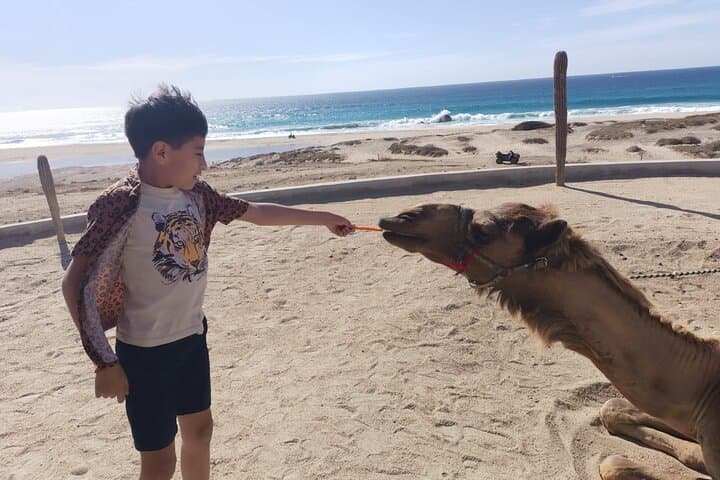
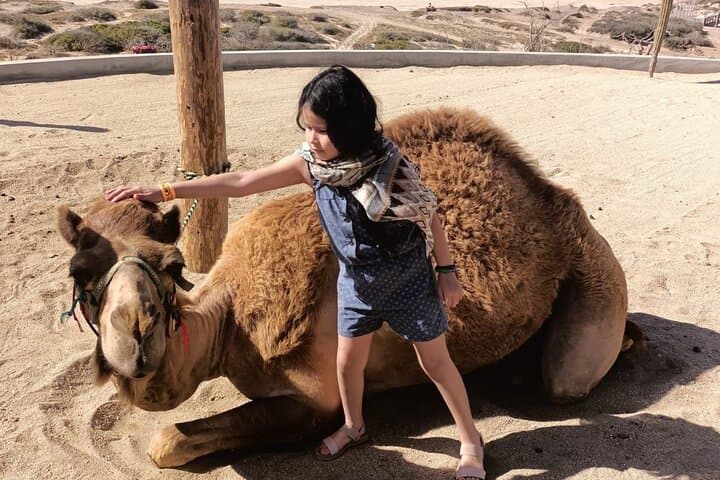
The sand smells of salt and warm rock as a slow, deliberate shadow—the camel—drops you into a Pacific-side rhythm. You climb into a padded saddle, the animal shifts, and the coastline unfurls: low cliffs, scattering tide pools, and the steady push of surf daring you to look over the edge.
The sand smells of salt and warm rock as a slow, deliberate shadow—the camel—drops you into a Pacific-side rhythm. You climb into a padded saddle, the animal shifts, and the coastline unfurls: low cliffs, scattering tide pools, and the steady push of surf daring you to look over the edge.
Camels are not native to Baja; they were introduced in the region in recent decades for ranching and tourism, and here they become the odd, gentle counterpoint to the seaside scrub and cardón cacti. Geologically, this stretch of coast is shaped by volcanic rock and marine terraces; underfoot are packed sand tracks and compact soil rather than steep alpine switchbacks. Culturally, the ride borrows theatrical cues—turbans and guide narration—while local guides point out native plants, seabirds, and the human history of Cabo’s fishing and maritime traditions.
Expect a slow, steady outing through a managed park rather than a wild desert expedition: 3–4 hours including pickup, a guided camel loop on relatively flat terrain, stops for photos, and a short visit to the camels’ stable. The experience suits all fitness levels but is not advisable for pregnant travelers or those with spinal or serious heart conditions.
Practical notes: wear closed-toe shoes, sun protection, and bring water (bottles are provided). Photography is allowed, and guides will help mount and dismount. Respect the animals—follow handlers’ instructions, avoid sudden movements, and let the camels rest when instructed. The result is a coastal, slightly surreal ride that pairs Baja’s shoreline with an experience more commonly found a hemisphere away.