THE ADVENTURE COLLECTIVE® · Independent discovery and booking for outdoor travel

Cross Barranco’s Bridge of Sighs and then travel south into the Lurín Valley to visit Pachacamac’s mud-brick pyramids, Inca precincts, and museum. This 3–4 hour private tour blends street culture, wetlands birding, and coastal archaeology for an efficient half-day outside Lima.
Cross Barranco’s Bridge of Sighs and then travel south into the Lurín Valley to visit Pachacamac’s mud-brick pyramids, Inca precincts, and museum. This 3–4 hour private tour blends street culture, wetlands birding, and coastal archaeology for an efficient half-day outside Lima.
The sun lifts slowly off the Pacific, and the morning light turns the tiled roofs of Barranco a soft terracotta. Walkers drift across the Bridge of Sighs—some pausing to make a wish—while street murals argue with the ocean for attention. By midmorning the tour slips out of the bohemian lanes and into the patchwork green of the Lurín Valley, where the earth keeps evidence of civilizations that predate the Spanish conquest.
Verified experiences and guided adventures in the surrounding area.
Operated by Peru Best Price travel agency & Tour Operator · Lima, Lima
The sun lifts slowly off the Pacific, and the morning light turns the tiled roofs of Barranco a soft terracotta. Walkers drift across the Bridge of Sighs—some pausing to make a wish—while street murals argue with the ocean for attention. By midmorning the tour slips out of the bohemian lanes and into the patchwork green of the Lurín Valley, where the earth keeps evidence of civilizations that predate the Spanish conquest.
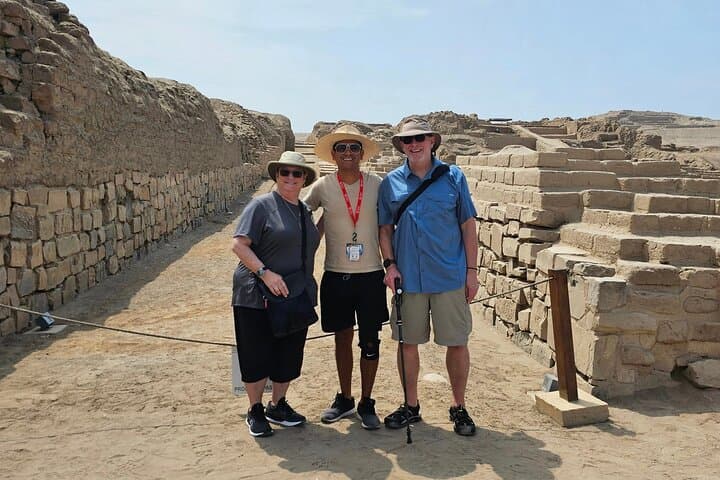
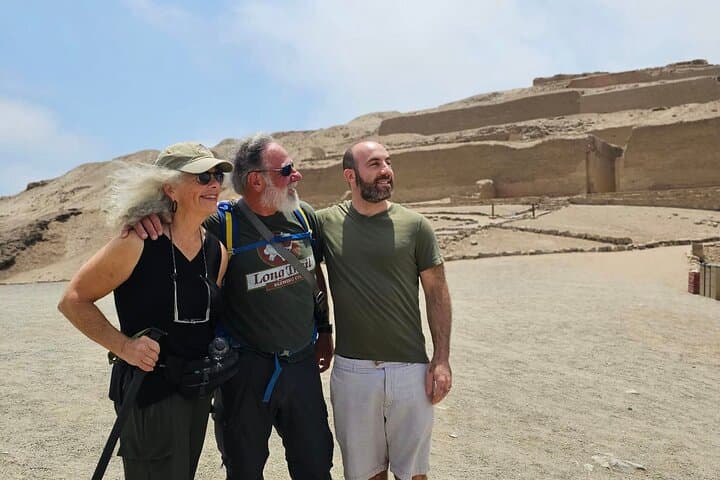
Pachacamac was a major pre-Inca and Inca oracle—its name in Quechua meaning “Earth’s Creator.” The sanctuary sits at the foot of the Andean foothills where seasonal streams once fed a green valley that contrasted the coastal desert. The site is dominated by large adobe pyramids—sun temples constructed of mud-brick—that survive as broad stepped masses, their faces scarred by centuries of wind and human hands. You’ll see Inca-era palace foundations, the Acllawasi precinct where chosen women lived and worked, and sections of the subterranean aqueducts that channeled scarce water across the valley.
Geology here is honest: a thin veneer of coastal soil over alluvial fans from the nearby Andes, and a dry, wind-shaped landscape that makes the pyramids feel both fragile and monumental. Cultural layers accumulate—pre-Inca huacas beneath Inca rebuilds—so the experience is as much about reading the ground as viewing structures. The tour pairs that archaeology with modern Lima: Barranco’s cafés, old libraries, and street art; a pass along Chorrillos’ coastline to the Pantanos de Villa wetland where migratory and local birds stake out reeds and pools.
What to expect practically: the full loop runs about 3–4 hours. Walking distances are moderate—roughly 3–5 km on foot—with low elevation change (under 200 m cumulative), but expect uneven surfaces: packed earth, loose adobe fragments, and short stair climbs to viewpoints. Bring sun protection and a water bottle, and plan to start in the morning to avoid the midday sun or Lima’s winter garúa (coastal mist).
Guides will typically include museum entry, transport from central Lima, and a bilingual commentary on rituals, agriculture, and the traffic between coast and highlands. The route is adaptable for relaxed walkers and families; parts of the sanctuary are protected and require respectful, low-impact behavior. For photographers, catch the late-afternoon light on the sun temple or the blue-gray haze off Barranco for clean coastal frames.
This tour is a straightforward introduction to Peru’s long coastal history—an easy half-day that stitches city streets to millennia of human presence and leaves you with both tangible remains and an appetite to explore inland.
moderate.
3–4 hours.
Suitable for travelers who can walk 3–5 km on uneven surfaces and climb short stair sections; minimal sustained elevation gain.
Expect 3–4 hours total with roughly 3–5 km of walking across mostly flat to gently rolling terrain and some short stair climbs at the archaeological site.
Yes—entrance to Pachacamac archaeological site and the on-site museum are included in the tour price.
Yes—this is family-friendly and rated accessible for most fitness levels, but uneven surfaces may challenge very young children or those with limited mobility.
Most operators offer hotel pickup across central Lima neighborhoods; confirm your pickup point at booking and allow about 10 minutes for pickup windows.
You may spot birds at the Pantanos de Villa wetland—herons and migratory shorebirds are common—especially in calmer morning hours.
Dry months (December–March) offer clearer skies, but mornings year-round are often the most reliable for light and visibility given Lima’s coastal microclimate.
Pachacamac was a multi-cultural pilgrimage center used for more than a thousand years; the Inca integrated earlier huacas and built ceremonial palaces and aqueducts.
The coastal desert and wetlands are fragile—visitors should stick to paths, avoid touching adobe walls, and support local guides who follow site protection rules.
Peru Best Price travel agency & Tour Operator operates guided outdoor trips and adventures with an emphasis on safety, stewardship, and memorable experiences.

The sun lifts slowly off the Pacific, and the morning light turns the tiled roofs of Barranco a soft terracotta. Walkers drift across the Bridge of Sighs—some pausing to make a wish—while street murals argue with the ocean for attention. By midmorning the tour slips out of the bohemian lanes and into the patchwork green of the Lurín Valley, where the earth keeps evidence of civilizations that predate the Spanish conquest.
The sun lifts slowly off the Pacific, and the morning light turns the tiled roofs of Barranco a soft terracotta. Walkers drift across the Bridge of Sighs—some pausing to make a wish—while street murals argue with the ocean for attention. By midmorning the tour slips out of the bohemian lanes and into the patchwork green of the Lurín Valley, where the earth keeps evidence of civilizations that predate the Spanish conquest.
Pachacamac was a major pre-Inca and Inca oracle—its name in Quechua meaning “Earth’s Creator.” The sanctuary sits at the foot of the Andean foothills where seasonal streams once fed a green valley that contrasted the coastal desert. The site is dominated by large adobe pyramids—sun temples constructed of mud-brick—that survive as broad stepped masses, their faces scarred by centuries of wind and human hands. You’ll see Inca-era palace foundations, the Acllawasi precinct where chosen women lived and worked, and sections of the subterranean aqueducts that channeled scarce water across the valley.
Geology here is honest: a thin veneer of coastal soil over alluvial fans from the nearby Andes, and a dry, wind-shaped landscape that makes the pyramids feel both fragile and monumental. Cultural layers accumulate—pre-Inca huacas beneath Inca rebuilds—so the experience is as much about reading the ground as viewing structures. The tour pairs that archaeology with modern Lima: Barranco’s cafés, old libraries, and street art; a pass along Chorrillos’ coastline to the Pantanos de Villa wetland where migratory and local birds stake out reeds and pools.
What to expect practically: the full loop runs about 3–4 hours. Walking distances are moderate—roughly 3–5 km on foot—with low elevation change (under 200 m cumulative), but expect uneven surfaces: packed earth, loose adobe fragments, and short stair climbs to viewpoints. Bring sun protection and a water bottle, and plan to start in the morning to avoid the midday sun or Lima’s winter garúa (coastal mist).
Guides will typically include museum entry, transport from central Lima, and a bilingual commentary on rituals, agriculture, and the traffic between coast and highlands. The route is adaptable for relaxed walkers and families; parts of the sanctuary are protected and require respectful, low-impact behavior. For photographers, catch the late-afternoon light on the sun temple or the blue-gray haze off Barranco for clean coastal frames.
This tour is a straightforward introduction to Peru’s long coastal history—an easy half-day that stitches city streets to millennia of human presence and leaves you with both tangible remains and an appetite to explore inland.