THE ADVENTURE COLLECTIVE® · Independent discovery and booking for outdoor travel

A full-day private shore excursion from Puerto Quetzal to Pacaya Volcano offering a guided hike across humid slopes and hardened lava fields. Expect moderate ascent, volcanic terrain, and close-but-safe views of an active volcano.
A full-day private shore excursion from Puerto Quetzal to Pacaya Volcano offering a guided hike across humid slopes and hardened lava fields. Expect moderate ascent, volcanic terrain, and close-but-safe views of an active volcano.
Dawn on Pacaya arrives as a hard, cool light that rims the craggy lava flows and makes the humid forest smell sharp and green. The trail begins under a canopy that hums with insects, then opens onto slopes where black, glassy rock sprawls like a challenged landscape daring you forward. Steam plumes and distant rumblings are reminders that this mountain is alive.
Verified experiences and guided adventures in the surrounding area.
Dawn on Pacaya arrives as a hard, cool light that rims the craggy lava flows and makes the humid forest smell sharp and green. The trail begins under a canopy that hums with insects, then opens onto slopes where black, glassy rock sprawls like a challenged landscape daring you forward. Steam plumes and distant rumblings are reminders that this mountain is alive.
Pacaya is one of Guatemala’s most active volcanoes; its recent eruptions are part of a longer Holocene story of basaltic lava shaping the lowlands. The lower slopes hold humid montane forest, while the upper reaches are a moonscape of hardened lava and fumaroles. Local communities of Escuintla and nearby Antigua have long respected the volcano—farmers and guides know its moods and work with its soils and ash.
Practically, most shore-excursion itineraries allot about seven hours: transport from Puerto Quetzal, a guided hike of roughly 4–6 km roundtrip with 300–500 m of elevation gain, time at the lava fields, and return. Expect steep, uneven ground, loose volcanic scree, and exposed sections where sun and wind take hold. Guides keep groups at safe distances from active vents; do not attempt to get closer.
Bring sturdy boots, layered clothing, 2–3 liters of water, sun protection, and a lightweight rain shell in the wet season. Start early to avoid afternoon showers and the heat that makes the rock radiate. The hike delivers tactile contrasts—forest that breathes and rock that hums—rewarding with stark views and the rare chance to watch a living volcano from a safe, guided vantage point.
moderate.
6–7 hours.
Good aerobic fitness for steady uphill hiking over uneven volcanic terrain; able to cover 4–6 km with 300–500 m ascent.
Guides maintain safe distances from active vents and hot flows; you can see hardened flows and steam up close but not approach fresh lava or unstable edges.
Older children used to hiking and able to handle uneven ground can do the trip; check with the operator about minimum age and note that conditions are strenuous at times.
Visitors usually join guided tours that handle local permissions; commercial operators coordinate access—confirm with your tour provider.
Tours may be altered or cancelled for safety if activity increases; operators monitor conditions and will prioritize guest safety and reroute or refund when necessary.
Pacaya’s frequent eruptions have reshaped the surrounding landscape repeatedly during the Holocene; nearby towns adapted agriculture to the volcanic soils over centuries.
Stick to marked trails to avoid trampling recovering vegetation on lava margins; respect guide instructions to minimize disturbance around sensitive fumarole areas.
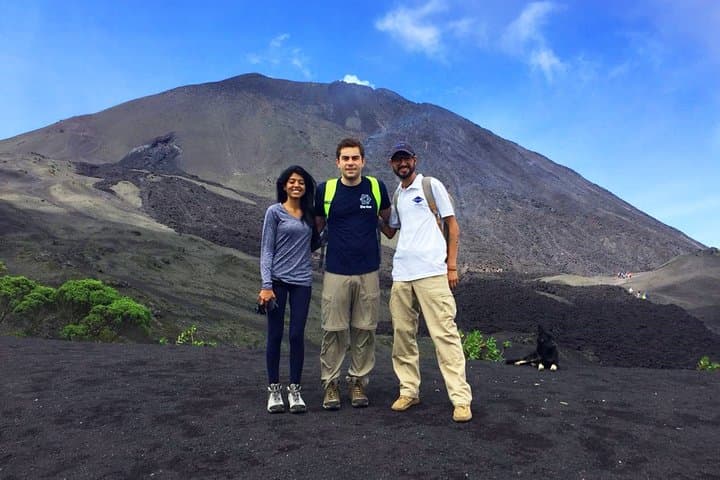
Dawn on Pacaya arrives as a hard, cool light that rims the craggy lava flows and makes the humid forest smell sharp and green. The trail begins under a canopy that hums with insects, then opens onto slopes where black, glassy rock sprawls like a challenged landscape daring you forward. Steam plumes and distant rumblings are reminders that this mountain is alive.
Dawn on Pacaya arrives as a hard, cool light that rims the craggy lava flows and makes the humid forest smell sharp and green. The trail begins under a canopy that hums with insects, then opens onto slopes where black, glassy rock sprawls like a challenged landscape daring you forward. Steam plumes and distant rumblings are reminders that this mountain is alive.
Pacaya is one of Guatemala’s most active volcanoes; its recent eruptions are part of a longer Holocene story of basaltic lava shaping the lowlands. The lower slopes hold humid montane forest, while the upper reaches are a moonscape of hardened lava and fumaroles. Local communities of Escuintla and nearby Antigua have long respected the volcano—farmers and guides know its moods and work with its soils and ash.
Practically, most shore-excursion itineraries allot about seven hours: transport from Puerto Quetzal, a guided hike of roughly 4–6 km roundtrip with 300–500 m of elevation gain, time at the lava fields, and return. Expect steep, uneven ground, loose volcanic scree, and exposed sections where sun and wind take hold. Guides keep groups at safe distances from active vents; do not attempt to get closer.
Bring sturdy boots, layered clothing, 2–3 liters of water, sun protection, and a lightweight rain shell in the wet season. Start early to avoid afternoon showers and the heat that makes the rock radiate. The hike delivers tactile contrasts—forest that breathes and rock that hums—rewarding with stark views and the rare chance to watch a living volcano from a safe, guided vantage point.