THE ADVENTURE COLLECTIVE® · Independent discovery and booking for outdoor travel

A compact, expertly led one‑hour walk through Oxford’s historic core. See the Radcliffe Camera, Sheldonian Theatre and golden college quads while learning centuries of local history and academic life.
A compact, expertly led one‑hour walk through Oxford’s historic core. See the Radcliffe Camera, Sheldonian Theatre and golden college quads while learning centuries of local history and academic life.
Step from a cobbled lane into a concentrated hour of Oxford’s living history. Stone façades catch the light and the Radcliffe Camera curves like a well-read eye; bells from the Sheldonian mark minutes that have measured scholars for centuries. The condensed route moves with purpose — college quads, ceremonial theatres, and narrow alleys that still smell faintly of old books and rain-washed stone.
Verified experiences and guided adventures in the surrounding area.
Operated by Oxford History Tours · Oxford, Oxfordshire
Step from a cobbled lane into a concentrated hour of Oxford’s living history. Stone façades catch the light and the Radcliffe Camera curves like a well-read eye; bells from the Sheldonian mark minutes that have measured scholars for centuries. The condensed route moves with purpose — college quads, ceremonial theatres, and narrow alleys that still smell faintly of old books and rain-washed stone.
Founded on an Anglo-Saxon settlement and expanded through medieval collegiate patronage, Oxford’s centre is more than architecture: it’s strata of civic life. The limestone here — oolitic Jurassic oolite, the same golden freestone used across the city — gives buildings their warm glow and weathers into crisp edges that show centuries of hands at work. Student traditions, academic ceremonies, and market histories thread through the streets; your guide will point out where dons, rebels, and poets left marks on the map.
Expect brisk pacing with room to pause: courtyards that frame spires, shaded cloisters, and riverside glimpses where the Cherwell dares you to slow down. The tour balances narrative with navigation — it orients you quickly so you can make confident plans for museums, a college visit, or an evening performance.
Practical edge: dress for variable British weather, bring a compact umbrella and comfortable shoes for uneven stone, and aim for early morning or twilight for softer light and fewer crowds. The route is low elevation and wheelchair-accessible in parts, but ask ahead about specific college entry. With one hour, you trade depth for a coherent map of Oxford’s essentials — efficient, illuminating, and easy to slot into a broader itinerary.
easy.
1 hour.
Suitable for most fitness levels; involves standing and walking on uneven historic paving for about 45–60 minutes.
Yes — the pace is gentle and suitable for a wide age range, but notify the operator of mobility needs when booking to confirm accessibility on specific college approaches.
This private one‑hour tour highlights exteriors and public spaces; formal college or library entry may require separate permissions and additional time.
The operator may cancel tours in severe weather; light rain usually still permits walking with waterproofs, but check cancellation terms when booking.
Meeting and end points are provided at booking — typically central and walkable, but confirm exact pickup if arriving by public transport or taxi.
Oxford evolved from an Anglo-Saxon market town into a medieval university hub; many colleges date back to the 13th century and shaped both local governance and scholarship.
High foot traffic in the city centre requires mindful tourism: stick to paved paths, avoid touching delicate stonework, and support local conservation through official museum and college donation schemes.
Oxford History Tours operates guided outdoor trips and adventures with an emphasis on safety, stewardship, and memorable experiences.
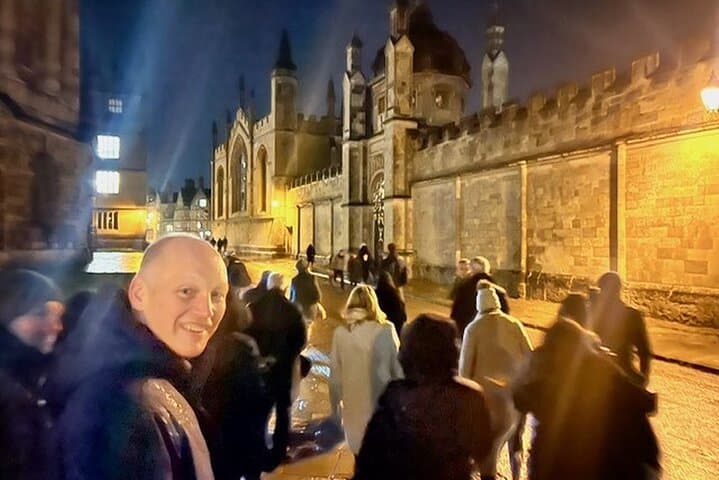



Step from a cobbled lane into a concentrated hour of Oxford’s living history. Stone façades catch the light and the Radcliffe Camera curves like a well-read eye; bells from the Sheldonian mark minutes that have measured scholars for centuries. The condensed route moves with purpose — college quads, ceremonial theatres, and narrow alleys that still smell faintly of old books and rain-washed stone.
Step from a cobbled lane into a concentrated hour of Oxford’s living history. Stone façades catch the light and the Radcliffe Camera curves like a well-read eye; bells from the Sheldonian mark minutes that have measured scholars for centuries. The condensed route moves with purpose — college quads, ceremonial theatres, and narrow alleys that still smell faintly of old books and rain-washed stone.
Founded on an Anglo-Saxon settlement and expanded through medieval collegiate patronage, Oxford’s centre is more than architecture: it’s strata of civic life. The limestone here — oolitic Jurassic oolite, the same golden freestone used across the city — gives buildings their warm glow and weathers into crisp edges that show centuries of hands at work. Student traditions, academic ceremonies, and market histories thread through the streets; your guide will point out where dons, rebels, and poets left marks on the map.
Expect brisk pacing with room to pause: courtyards that frame spires, shaded cloisters, and riverside glimpses where the Cherwell dares you to slow down. The tour balances narrative with navigation — it orients you quickly so you can make confident plans for museums, a college visit, or an evening performance.
Practical edge: dress for variable British weather, bring a compact umbrella and comfortable shoes for uneven stone, and aim for early morning or twilight for softer light and fewer crowds. The route is low elevation and wheelchair-accessible in parts, but ask ahead about specific college entry. With one hour, you trade depth for a coherent map of Oxford’s essentials — efficient, illuminating, and easy to slot into a broader itinerary.