THE ADVENTURE COLLECTIVE® · Independent discovery and booking for outdoor travel

Play with perception on Oxford High Street: four floors of infinity mirrors, an upside-down room and a mirror maze designed for high-impact photos and short visits—ideal for families and curious travelers.
Play with perception on Oxford High Street: four floors of infinity mirrors, an upside-down room and a mirror maze designed for high-impact photos and short visits—ideal for families and curious travelers.
Step off Oxford High Street and into a building that rearranges expectation. Light bends in corridors of mirrors, an upside-down professor's study flips your sense of gravity, and a dodecahedron of infinity mirrors multiplies your silhouette until space feels negotiable.
Verified experiences and guided adventures in the surrounding area.
Operated by Oxford Illusion Museum · Oxford, Oxfordshire
Step off Oxford High Street and into a building that rearranges expectation. Light bends in corridors of mirrors, an upside-down professor's study flips your sense of gravity, and a dodecahedron of infinity mirrors multiplies your silhouette until space feels negotiable.
Oxford’s High Street has long been an artery between colleges; the Illusion Museum joins that lineage with a contemporary twist. The city’s honey-coloured limestone facades look on like patient observers as visitors trade the centuries-old stone for fluorescent tricks of perception. The museum itself is a recent addition to Oxford’s cultural scene, designed for short, high-impact visits that play well on camera and in memory.
Geology here matters only as backdrop: the local oolitic limestone and ironstone roofs frame a compact urban visit—no trail or ascent, just stairwells and four floors of installations. Culture appears in the juxtaposition: medieval architecture and a pop-up of modern visual science and stagecraft. The experience leans toward play—interactive light wands, inversion goggles, and a mirror maze—making it accessible to families and solo travelers alike.
Practical guidance: expect about 45 minutes, wear comfortable shoes (there are steps), and bring a fully charged phone for photos. Book skip-the-line tickets for late mornings or early afternoons to avoid school groups. The site is stroller-accessible and welcomes service animals; however, tight spaces in the maze can be congested. Keep bags compact to move freely between rooms, and consider visiting on a weekday to better control your frame and your timing.
easy.
45 minutes.
Light mobility required; visitors should be comfortable standing and walking short flights of stairs
Plan roughly 45 minutes for the full four-floor experience; photographers may stay longer.
Mobile or paper tickets are accepted; book online to secure a timed entry and skip lines.
The museum is stroller-accessible and permits service animals, but some tight exhibits and staircases may be difficult to navigate.
Yes—most exhibits are designed for photography and social sharing; be mindful of other visitors and avoid flash where requested.
Oxford’s High Street runs between many historic colleges; the Illusion Museum is a recent, playful addition to a long sequence of academic and architectural landmarks.
As a compact urban attraction, the museum manages visitor flow and uses LED exhibits to reduce energy use; visitors can help by minimizing waste and following venue guidance.
Oxford Illusion Museum operates guided outdoor trips and adventures with an emphasis on safety, stewardship, and memorable experiences.
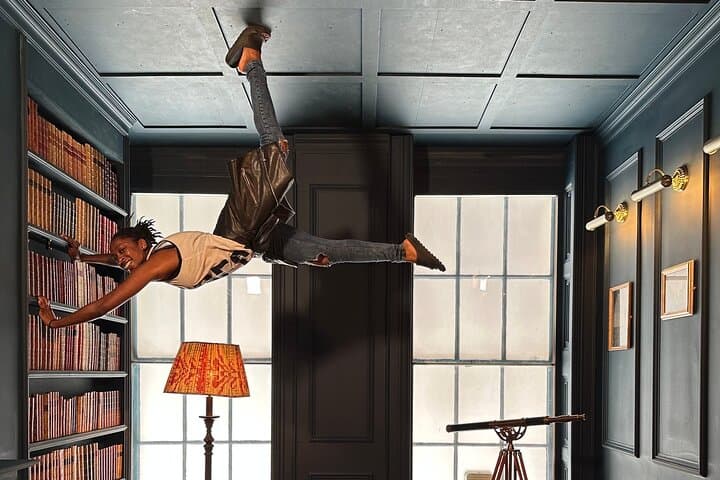

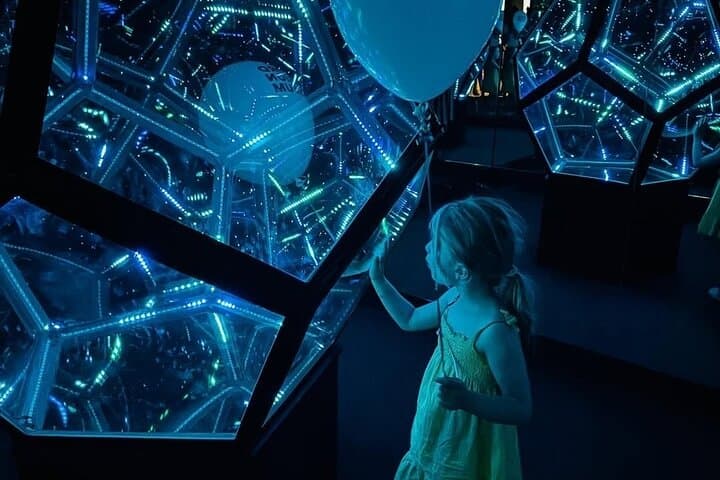

Step off Oxford High Street and into a building that rearranges expectation. Light bends in corridors of mirrors, an upside-down professor's study flips your sense of gravity, and a dodecahedron of infinity mirrors multiplies your silhouette until space feels negotiable.
Step off Oxford High Street and into a building that rearranges expectation. Light bends in corridors of mirrors, an upside-down professor's study flips your sense of gravity, and a dodecahedron of infinity mirrors multiplies your silhouette until space feels negotiable.
Oxford’s High Street has long been an artery between colleges; the Illusion Museum joins that lineage with a contemporary twist. The city’s honey-coloured limestone facades look on like patient observers as visitors trade the centuries-old stone for fluorescent tricks of perception. The museum itself is a recent addition to Oxford’s cultural scene, designed for short, high-impact visits that play well on camera and in memory.
Geology here matters only as backdrop: the local oolitic limestone and ironstone roofs frame a compact urban visit—no trail or ascent, just stairwells and four floors of installations. Culture appears in the juxtaposition: medieval architecture and a pop-up of modern visual science and stagecraft. The experience leans toward play—interactive light wands, inversion goggles, and a mirror maze—making it accessible to families and solo travelers alike.
Practical guidance: expect about 45 minutes, wear comfortable shoes (there are steps), and bring a fully charged phone for photos. Book skip-the-line tickets for late mornings or early afternoons to avoid school groups. The site is stroller-accessible and welcomes service animals; however, tight spaces in the maze can be congested. Keep bags compact to move freely between rooms, and consider visiting on a weekday to better control your frame and your timing.