THE ADVENTURE COLLECTIVE® · Independent discovery and booking for outdoor travel

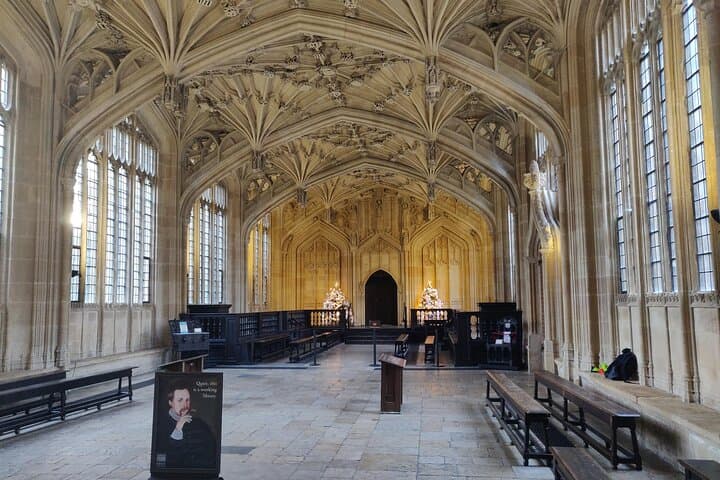
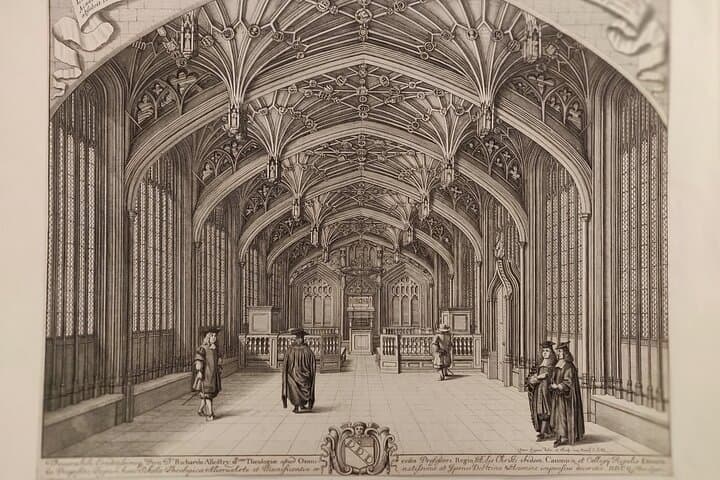
Walk through six centuries of English history on a 2.5‑hour guided tour of Oxford’s architecture. Visit the Sheldonian Theatre cupola, the Divinity School, Radcliffe Camera and key college quads while learning how religion and reform reshaped the university.
Walk through six centuries of English history on a 2.5‑hour guided tour of Oxford’s architecture. Visit the Sheldonian Theatre cupola, the Divinity School, Radcliffe Camera and key college quads while learning how religion and reform reshaped the university.
You step from the busy High Street into a stretch of stone and shadow where rooftops rise like chapters in a book. The guide leads you under carved arches, past the Martyr’s Memorial and into Radcliffe Square, where the Radcliffe Camera’s round facade compels you to slow and look up.
Verified experiences and guided adventures in the surrounding area.
Operated by Contrada Tours - walking tours of Oxford · Oxford, Oxfordshire
You step from the busy High Street into a stretch of stone and shadow where rooftops rise like chapters in a book. The guide leads you under carved arches, past the Martyr’s Memorial and into Radcliffe Square, where the Radcliffe Camera’s round facade compels you to slow and look up.
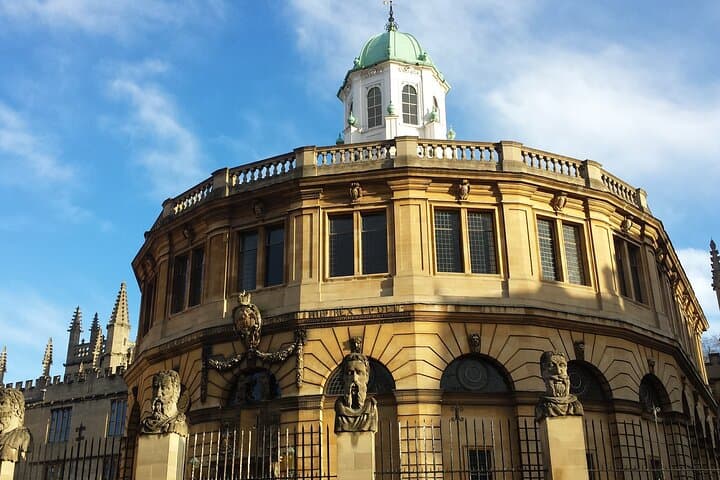
The route threads six centuries of English history: medieval colleges built from warm Jurassic oolitic limestone, the Tudor upheavals of the 1530s and 1550s that reshaped faculty and faith, and the 19th-century Gothic Revival that rewrote the city’s skyline. Architecture here reads like a ledger of ideas—from collegiate quadrangles and church pulpits to Christopher Wren’s Sheldonian Theatre, whose cupola rewards a short climb with a clear view across spires and dreaming courtyards.
Culturally the tour decodes the collegiate system, student rituals, and how Oxford’s intimate streets still host national debates. Expect tactile details: worn stone steps, narrow staircases, and busy market stalls offering coffee and conversation.
Practical guidance: the tour runs about 2.5 hours and covers mostly paved streets and some stair climbs; comfortable walking shoes and a light jacket are wise. Entry into the Sheldonian and the Divinity School is included; access to other colleges may incur extra fees and requires advance arrangement. Mornings are cooler and quieter; afternoons suit visitors combining museum stops. Keep water, a charged phone for photos, and a mind for low-impact visiting—respect quiet college spaces and follow signage. This is a compact, readable introduction to Oxford’s physical and political past, best enjoyed at a walking pace that lets the stones tell their stories.
easy.
2–3 hours.
Suitable for most fitness levels; requires walking on paved streets and ascending some staircases.
The tour includes entry to the Sheldonian Theatre and the Divinity School; access to other colleges may be possible but often requires an extra fee arranged in advance.
Yes — the route is stroller-accessible on most streets, though some interiors have staircases; check with the guide about specific college access if using a stroller.
Yes — this private tour can be adjusted to focus on history, religion, architecture or student life; notify the operator when booking.
Tours are offered in English; check availability for other languages when booking as private guides sometimes offer alternate languages by request.
Oxford’s colleges grew out of medieval monastic and scholastic traditions; the Reformation of the 1530s and subsequent religious shifts left visible marks on college governance and church architecture.
High foot traffic stresses historic flooring and interiors; stick to marked paths, avoid touching fragile surfaces and follow college rules to help preserve these buildings.
Contrada Tours - walking tours of Oxford operates guided outdoor trips and adventures with an emphasis on safety, stewardship, and memorable experiences.
You step from the busy High Street into a stretch of stone and shadow where rooftops rise like chapters in a book. The guide leads you under carved arches, past the Martyr’s Memorial and into Radcliffe Square, where the Radcliffe Camera’s round facade compels you to slow and look up.
You step from the busy High Street into a stretch of stone and shadow where rooftops rise like chapters in a book. The guide leads you under carved arches, past the Martyr’s Memorial and into Radcliffe Square, where the Radcliffe Camera’s round facade compels you to slow and look up.
The route threads six centuries of English history: medieval colleges built from warm Jurassic oolitic limestone, the Tudor upheavals of the 1530s and 1550s that reshaped faculty and faith, and the 19th-century Gothic Revival that rewrote the city’s skyline. Architecture here reads like a ledger of ideas—from collegiate quadrangles and church pulpits to Christopher Wren’s Sheldonian Theatre, whose cupola rewards a short climb with a clear view across spires and dreaming courtyards.
Culturally the tour decodes the collegiate system, student rituals, and how Oxford’s intimate streets still host national debates. Expect tactile details: worn stone steps, narrow staircases, and busy market stalls offering coffee and conversation.
Practical guidance: the tour runs about 2.5 hours and covers mostly paved streets and some stair climbs; comfortable walking shoes and a light jacket are wise. Entry into the Sheldonian and the Divinity School is included; access to other colleges may incur extra fees and requires advance arrangement. Mornings are cooler and quieter; afternoons suit visitors combining museum stops. Keep water, a charged phone for photos, and a mind for low-impact visiting—respect quiet college spaces and follow signage. This is a compact, readable introduction to Oxford’s physical and political past, best enjoyed at a walking pace that lets the stones tell their stories.