THE ADVENTURE COLLECTIVE® · Independent discovery and booking for outdoor travel

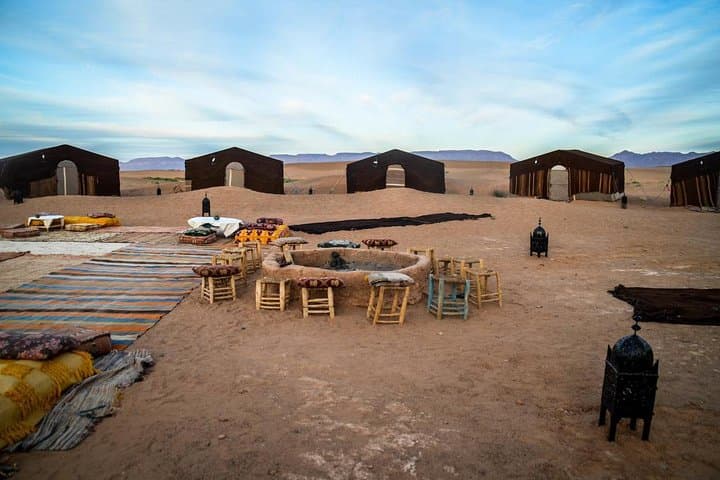
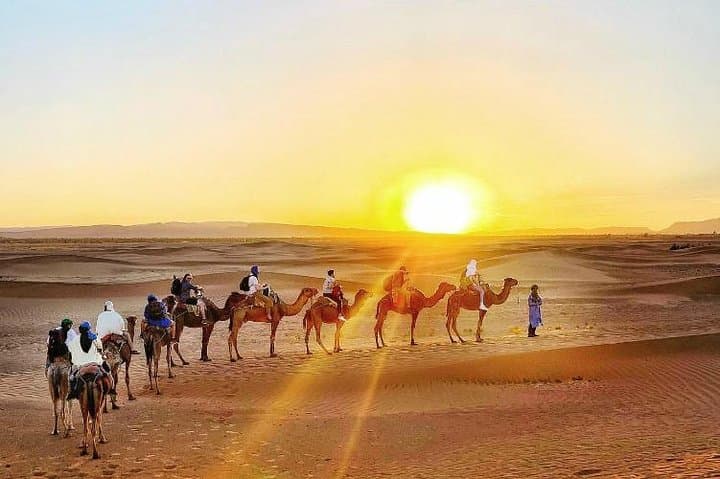
Short on time but wanting the Sahara: this 2-day tour from Marrakech reaches Zagora for a sunset camel trek and an overnight in Berber tents, returning via the iconic Aït Benhaddou. Expect long drives, dramatic mountain passes, and authentic desert camp nights.
Short on time but wanting the Sahara: this 2-day tour from Marrakech reaches Zagora for a sunset camel trek and an overnight in Berber tents, returning via the iconic Aït Benhaddou. Expect long drives, dramatic mountain passes, and authentic desert camp nights.
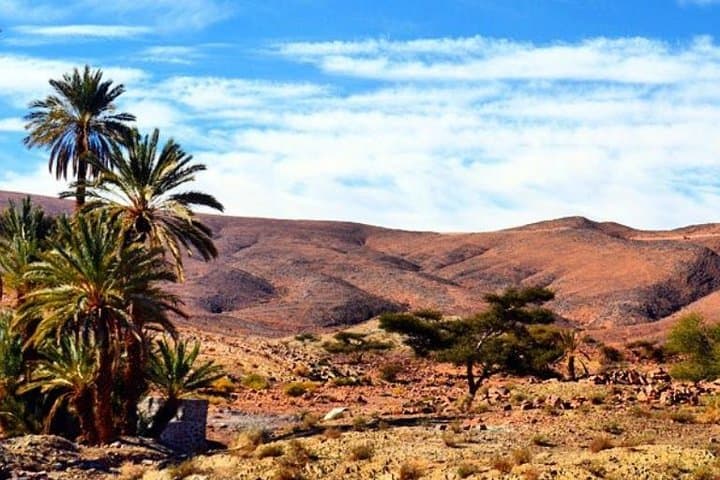
You arrive out of Marrakech before dawn, the city lights shrinking as the road climbs toward the Tizi n’Tichka pass. The air sharpens at 2,260 m and the Atlas Mountains open like a folded map, terraces and ochre kasbahs sliding past the van’s windows. By late afternoon you cross the Draa Valley—palm groves and alluvial banks—then the landscape thins into wind-sculpted plains where the first dunes catch the sun.
Verified experiences and guided adventures in the surrounding area.
Operated by Marrakech Tours Excursions · Zagora, Drâa-Tafilalet
You arrive out of Marrakech before dawn, the city lights shrinking as the road climbs toward the Tizi n’Tichka pass. The air sharpens at 2,260 m and the Atlas Mountains open like a folded map, terraces and ochre kasbahs sliding past the van’s windows. By late afternoon you cross the Draa Valley—palm groves and alluvial banks—then the landscape thins into wind-sculpted plains where the first dunes catch the sun.
This two-day loop follows centuries-old caravan routes. Aït Benhaddou, on Day 2, is a fortified ksar along the old trans-Saharan road and a UNESCO site; its earthen towers speak to mud-brick building techniques adapted for arid climates. Geologically the area shifts from hard volcanic and metamorphic massifs in the High Atlas to sedimentary basins and dune fields as you descend; the Draa River’s seasonal flow historically supported date palms and oasis settlements.
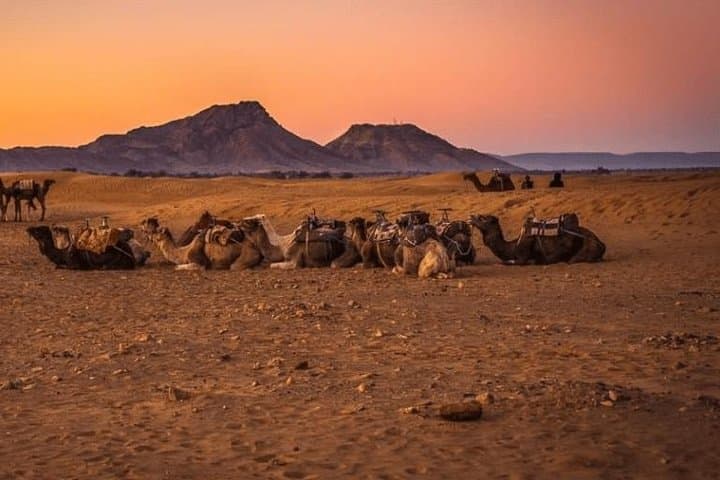
Culturally, expect Berber hospitality—simple food, shared tea, and evening music around a fire. Practicalities matter: the tour includes a one-hour sunset camel ride and an optional sunrise ride before breakfast, plus an overnight in Berber tents in Zagora. Plan for long driving stretches across varied road surfaces, intermittent cell coverage, and temperature swings from cool mountain mornings to warm desert nights.
Bring layered clothing, sun protection, and a small daypack for camera gear and water. Time your bathroom breaks and cash needs before long legs of the route. With straightforward planning, this short Sahara overnight delivers desert light, starlit campfire evenings, and a compact window into southern Morocco’s landscapes and history.
moderate.
2 days (48 hours).
Moderate — comfortable sitting in a vehicle for several hours, short camel rides, and light walking on sand and uneven ground.
The standard camel experience on this tour is about one hour at sunset, with an optional shorter ride at sunrise the next morning.
Yes—dinner is served at the Berber tent camp on Night 1 and breakfast is provided before departure on Day 2; a lunch stop is included near Aït Benhaddou.
Coverage is intermittent along remote stretches and in desert areas; expect usable signal near towns like Ouarzazate and very limited service while crossing dunes.
No; the operator advises against participation for pregnant travelers and those with serious spinal or cardiovascular conditions due to long drives and camel riding.
The route follows historic trans-Saharan caravan corridors; Aït Benhaddou preserves mud-brick architecture tied to regional trade in salt and dates.
Water is scarce—use supplied water sparingly and avoid single-use plastics; choose operators that manage waste at camps and respect local grazing rules.
Marrakech Tours Excursions operates guided outdoor trips and adventures with an emphasis on safety, stewardship, and memorable experiences.
You arrive out of Marrakech before dawn, the city lights shrinking as the road climbs toward the Tizi n’Tichka pass. The air sharpens at 2,260 m and the Atlas Mountains open like a folded map, terraces and ochre kasbahs sliding past the van’s windows. By late afternoon you cross the Draa Valley—palm groves and alluvial banks—then the landscape thins into wind-sculpted plains where the first dunes catch the sun.
You arrive out of Marrakech before dawn, the city lights shrinking as the road climbs toward the Tizi n’Tichka pass. The air sharpens at 2,260 m and the Atlas Mountains open like a folded map, terraces and ochre kasbahs sliding past the van’s windows. By late afternoon you cross the Draa Valley—palm groves and alluvial banks—then the landscape thins into wind-sculpted plains where the first dunes catch the sun.
This two-day loop follows centuries-old caravan routes. Aït Benhaddou, on Day 2, is a fortified ksar along the old trans-Saharan road and a UNESCO site; its earthen towers speak to mud-brick building techniques adapted for arid climates. Geologically the area shifts from hard volcanic and metamorphic massifs in the High Atlas to sedimentary basins and dune fields as you descend; the Draa River’s seasonal flow historically supported date palms and oasis settlements.
Culturally, expect Berber hospitality—simple food, shared tea, and evening music around a fire. Practicalities matter: the tour includes a one-hour sunset camel ride and an optional sunrise ride before breakfast, plus an overnight in Berber tents in Zagora. Plan for long driving stretches across varied road surfaces, intermittent cell coverage, and temperature swings from cool mountain mornings to warm desert nights.
Bring layered clothing, sun protection, and a small daypack for camera gear and water. Time your bathroom breaks and cash needs before long legs of the route. With straightforward planning, this short Sahara overnight delivers desert light, starlit campfire evenings, and a compact window into southern Morocco’s landscapes and history.