THE ADVENTURE COLLECTIVE® · Independent discovery and booking for outdoor travel

Cross the Atlas, ride a camel at sunset and spend a night under Sahara stars on this compact 2-day Zagora trip from Marrakech. Expect panoramic passes, UNESCO kasbahs and a hands-on desert camp experience.
Cross the Atlas, ride a camel at sunset and spend a night under Sahara stars on this compact 2-day Zagora trip from Marrakech. Expect panoramic passes, UNESCO kasbahs and a hands-on desert camp experience.
Dawn slices across the Atlas, and the road toward Zagora unfurls like an old caravan route—red earth, palm oases and the Tizi N’Tichka pass folding into the distance.
Verified experiences and guided adventures in the surrounding area.
Operated by Yaz Travel · Zagora, Drâa-Tafilalet
Dawn slices across the Atlas, and the road toward Zagora unfurls like an old caravan route—red earth, palm oases and the Tizi N’Tichka pass folding into the distance.
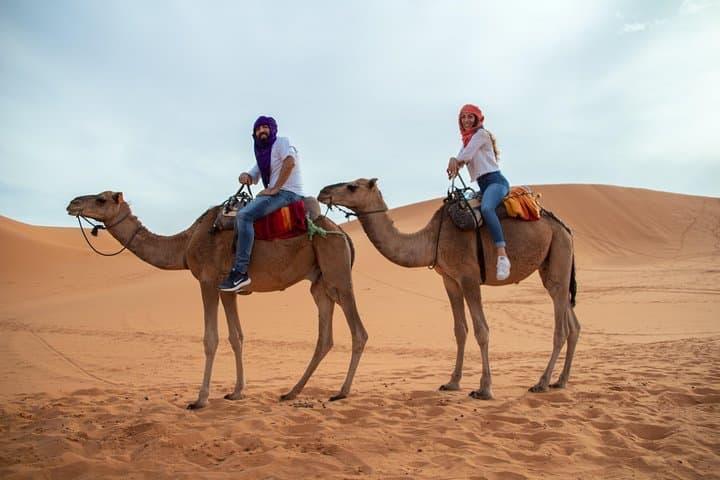
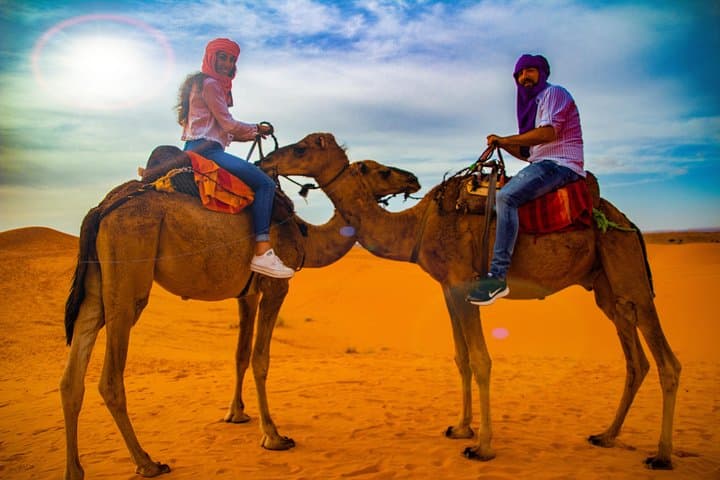
By late afternoon the dunes of Zagora take shape: wind-sculpted ridges that glow under a low sun. On this two-day loop from Marrakech you cross high-mountain granite, pass the clay towers of Aït Benhaddou and descend through the Draa Valley’s palm groves before mounting a camel for a 90‑minute sunset ride to your desert camp. Night in the Sahara is a study in contrast—hot sand by day, sharply cold air and a sky dense with stars.
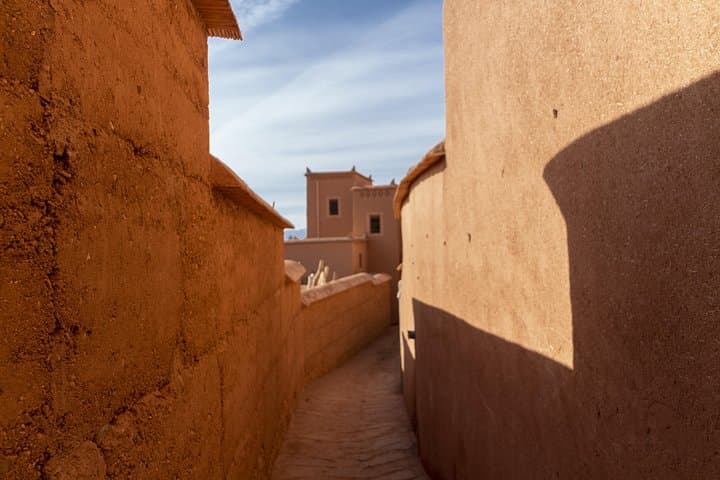
Geologically, the landscape shifts from uplifted Atlas ranges to alluvial valley and aeolian dunes, reflecting millennia of tectonic and wind-driven change. Culturally, the route traces traditional trans-Saharan caravan corridors and Berber settlements; Aït Benhaddou is a UNESCO kasbah complex that speaks to regional trade and film history.
Practically: the itinerary includes private transport, one night in a desert camp with dinner and breakfast, and two camel rides timed for sunset and sunrise. Expect basic to luxury camp options depending on operator; bring layers, sun protection and a sense of pacing—camel rides follow rolling terrain and uneven sand. Hydrate well, keep electronics protected from fine sand, and allow extra time for photography stops at passes and kasbahs. The trip is accessible to travelers in moderate fitness condition and offers an efficient way to experience desert nightfall and morning light without extended trekking.
moderate.
2 days.
Moderate fitness: able to handle several hours of travel, short walks on uneven terrain and 1–1.5 hour camel rides
Camel rides are low-impact but involve mounting and sitting on a swaying animal for about 90 minutes; ability to get on/off a camel and basic balance are sufficient.
The standard package includes a desert camp stay with dinner and breakfast; options may range from basic tents to luxury camps—confirm with the operator before booking.
Families can join, but the tour isn’t recommended for people with serious heart conditions or limited mobility; infant seats and service animals may be accommodated—check specifics with the operator.
Some camps provide charging stations or solar chargers, but bring spare batteries or power banks—electric access is not guaranteed in all camps.
The route follows historic caravan corridors; Aït Benhaddou served as an important fortified trading post and later as a film location for many movies.
Stick to marked paths and camps, avoid disturbing vegetation and animals, and minimize single-use plastics—local communities rely on sustainable tourism to protect scarce desert resources.
Yaz Travel operates guided outdoor trips and adventures with an emphasis on safety, stewardship, and memorable experiences.
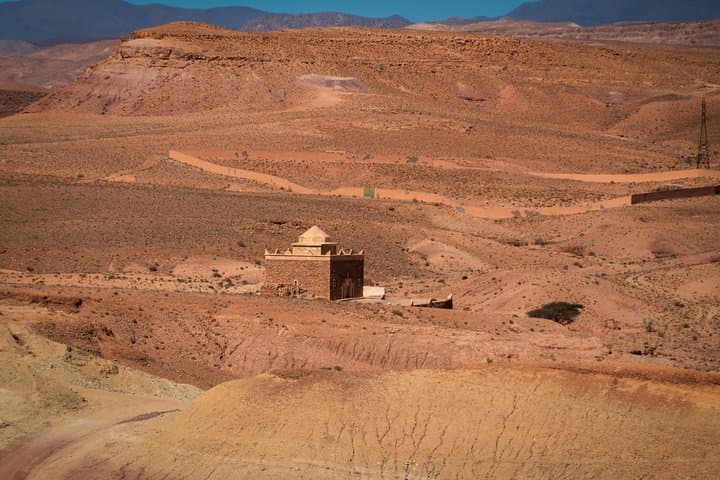
Dawn slices across the Atlas, and the road toward Zagora unfurls like an old caravan route—red earth, palm oases and the Tizi N’Tichka pass folding into the distance.
Dawn slices across the Atlas, and the road toward Zagora unfurls like an old caravan route—red earth, palm oases and the Tizi N’Tichka pass folding into the distance.
By late afternoon the dunes of Zagora take shape: wind-sculpted ridges that glow under a low sun. On this two-day loop from Marrakech you cross high-mountain granite, pass the clay towers of Aït Benhaddou and descend through the Draa Valley’s palm groves before mounting a camel for a 90‑minute sunset ride to your desert camp. Night in the Sahara is a study in contrast—hot sand by day, sharply cold air and a sky dense with stars.
Geologically, the landscape shifts from uplifted Atlas ranges to alluvial valley and aeolian dunes, reflecting millennia of tectonic and wind-driven change. Culturally, the route traces traditional trans-Saharan caravan corridors and Berber settlements; Aït Benhaddou is a UNESCO kasbah complex that speaks to regional trade and film history.
Practically: the itinerary includes private transport, one night in a desert camp with dinner and breakfast, and two camel rides timed for sunset and sunrise. Expect basic to luxury camp options depending on operator; bring layers, sun protection and a sense of pacing—camel rides follow rolling terrain and uneven sand. Hydrate well, keep electronics protected from fine sand, and allow extra time for photography stops at passes and kasbahs. The trip is accessible to travelers in moderate fitness condition and offers an efficient way to experience desert nightfall and morning light without extended trekking.