THE ADVENTURE COLLECTIVE® · Independent discovery and booking for outdoor travel

Leave Marrakech for an overnight Zagora desert escape: cross the High Atlas, visit Ait Ben Haddou, ride camels into the dunes and sleep under an unfiltered star field at a luxury camp. Practical tips on timing, gear and what to expect on the road.
Leave Marrakech for an overnight Zagora desert escape: cross the High Atlas, visit Ait Ben Haddou, ride camels into the dunes and sleep under an unfiltered star field at a luxury camp. Practical tips on timing, gear and what to expect on the road.
The road peels away from Marrakech and climbs the High Atlas, the Tizi n’Tichka pass carving the skyline into serrated horizons. By late afternoon the orchards and kasbahs of the Draa Valley fall behind you and the dunes begin to roll—gold ridges that seem to breathe as the wind reshapes them.
Verified experiences and guided adventures in the surrounding area.
Operated by Noun Travel · Zagora, Drâa-Tafilalet
The road peels away from Marrakech and climbs the High Atlas, the Tizi n’Tichka pass carving the skyline into serrated horizons. By late afternoon the orchards and kasbahs of the Draa Valley fall behind you and the dunes begin to roll—gold ridges that seem to breathe as the wind reshapes them.
This overnight trip threads history and geology: Ait Ben Haddou’s earthen towers speak to centuries of caravan trade and film sets, while the Atlas is a folded record of tectonic uplift. The Draa Valley’s palm groves and mudbrick villages reveal traditional Berber life—tea, cushioned tents, and hand-laid irrigation channels.
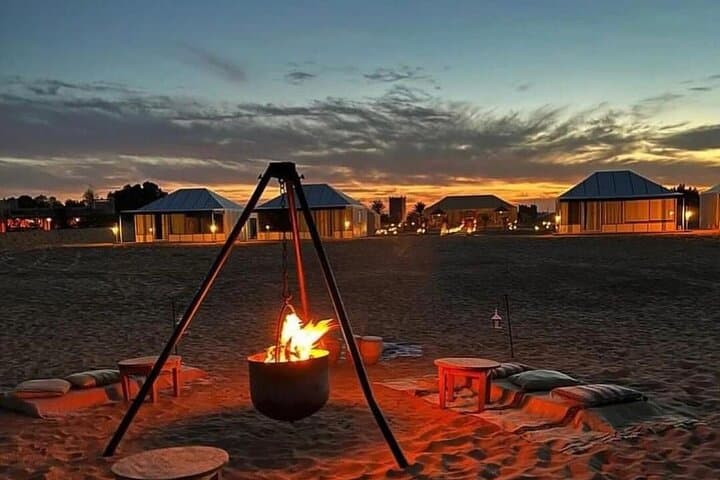
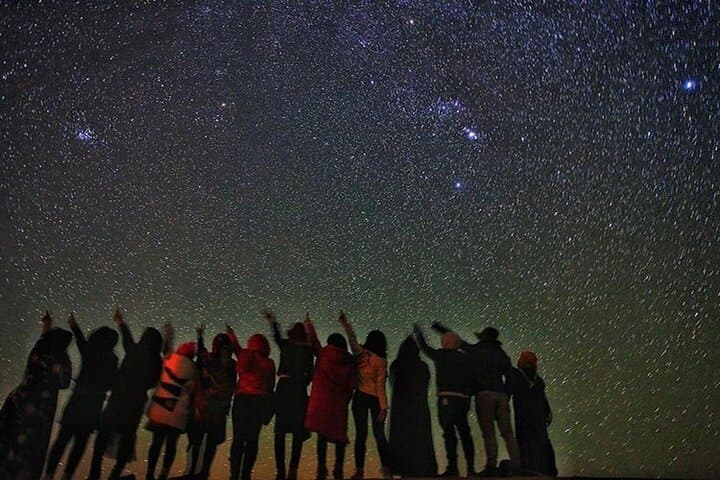
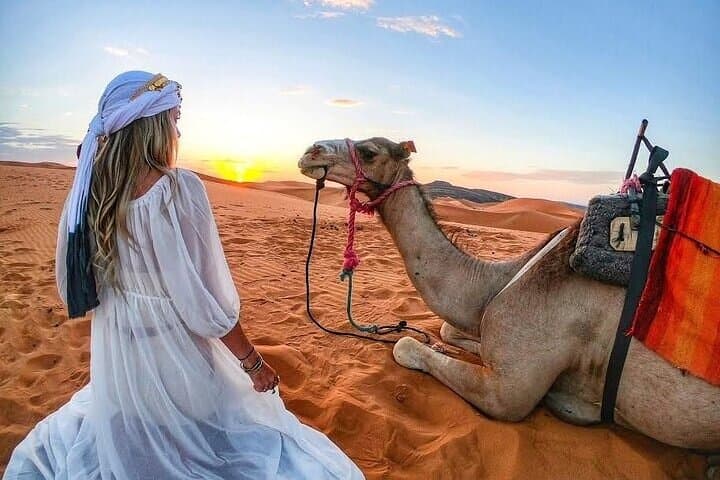
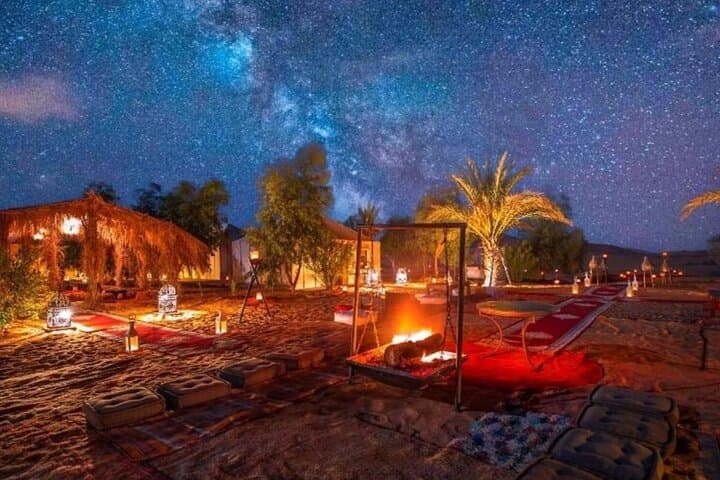
Expect a 6–8 hour drive from Marrakech (roughly 360–400 km) with photo stops at Ait Ben Haddou and the Draa’s palm oases. In Zagora you switch to camel for a 30–60 minute trek over small dunes toward a luxury desert camp. Nights open to an extraordinary sky; without city glare the Milky Way and shooting stars dominate, while mornings bring a quiet desert sunrise and cool, crisp air. The second day routes back via Ouarzazate and the Atlas Film Studios.
Practical guidance: carry layered clothing for large diurnal swings, sun protection, and a 1–2 liter water bottle; the camp provides dinner, breakfast, and sleeping arrangements. If you’re prone to motion sickness, plan rest and antiemetics for the mountain drive. Travel time makes this a long, immersive outing—book a flexible pickup early in the morning and bring a camera with extra batteries for dawn and dusk light.
moderate.
1.5 days (approx. 36 hours).
Suitable for moderately fit travelers who can sit through long drives and manage short camel treks; minimal walking required at the camp
Yes—hotel pickup and drop-off in an air-conditioned vehicle are included; confirm your pickup point at booking.
Typically 30–60 minutes each way, designed for general comfort rather than challenging trekking.
Guests stay in furnished desert tents with bedding; luxury camps usually offer private tents, shared bathrooms, and evening dining.
The tour is marketed as suitable for all fitness levels, but camel mounts and vehicle transfers may be difficult for those with severe mobility limits—check accessibility when booking.
Ait Ben Haddou and the Draa Valley were key stops on trans-Saharan trade routes; kasbahs served as fortified caravan stops and film locations in recent decades.
Stick to marked paths, avoid collecting plants or stones, and support camps that use local staff and sustainable water practices to limit desert impact.
Noun Travel operates guided outdoor trips and adventures with an emphasis on safety, stewardship, and memorable experiences.
The road peels away from Marrakech and climbs the High Atlas, the Tizi n’Tichka pass carving the skyline into serrated horizons. By late afternoon the orchards and kasbahs of the Draa Valley fall behind you and the dunes begin to roll—gold ridges that seem to breathe as the wind reshapes them.
The road peels away from Marrakech and climbs the High Atlas, the Tizi n’Tichka pass carving the skyline into serrated horizons. By late afternoon the orchards and kasbahs of the Draa Valley fall behind you and the dunes begin to roll—gold ridges that seem to breathe as the wind reshapes them.
This overnight trip threads history and geology: Ait Ben Haddou’s earthen towers speak to centuries of caravan trade and film sets, while the Atlas is a folded record of tectonic uplift. The Draa Valley’s palm groves and mudbrick villages reveal traditional Berber life—tea, cushioned tents, and hand-laid irrigation channels.
Expect a 6–8 hour drive from Marrakech (roughly 360–400 km) with photo stops at Ait Ben Haddou and the Draa’s palm oases. In Zagora you switch to camel for a 30–60 minute trek over small dunes toward a luxury desert camp. Nights open to an extraordinary sky; without city glare the Milky Way and shooting stars dominate, while mornings bring a quiet desert sunrise and cool, crisp air. The second day routes back via Ouarzazate and the Atlas Film Studios.
Practical guidance: carry layered clothing for large diurnal swings, sun protection, and a 1–2 liter water bottle; the camp provides dinner, breakfast, and sleeping arrangements. If you’re prone to motion sickness, plan rest and antiemetics for the mountain drive. Travel time makes this a long, immersive outing—book a flexible pickup early in the morning and bring a camera with extra batteries for dawn and dusk light.