THE ADVENTURE COLLECTIVE® · Independent discovery and booking for outdoor travel

Spend two days trading city heat for desert stars: explore Nurata’s springs and ruins, ride camels on the shores of Aydarkul, and sleep overnight in a traditional yurt camp with local music and home-cooked meals.
Spend two days trading city heat for desert stars: explore Nurata’s springs and ruins, ride camels on the shores of Aydarkul, and sleep overnight in a traditional yurt camp with local music and home-cooked meals.
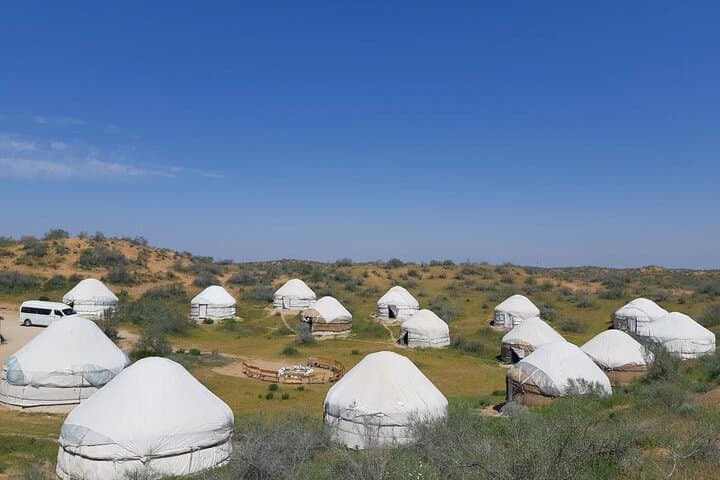
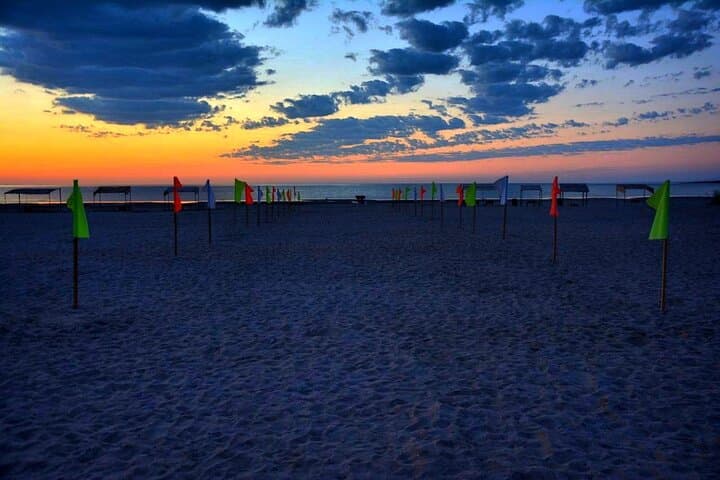
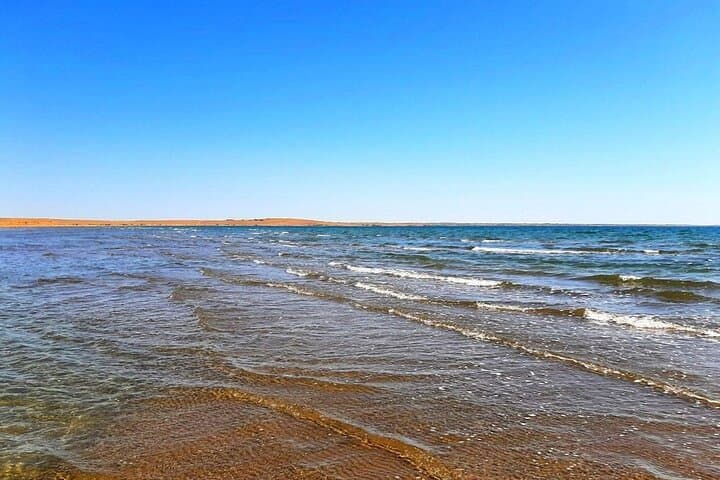
When the van pulls off the paved road and the Kyzylkum desert opens, a low horizon widens into pale sand and a flat, unexpected shoreline. You step out into wind that sketches ripples across a shallow lake and follow a narrow track toward a ring of felt yurts where a single fire throws orange light across the sand.
Verified experiences and guided adventures in the surrounding area.
Operated by TravelBliss LLC · Nurata, Navoiy Region
When the van pulls off the paved road and the Kyzylkum desert opens, a low horizon widens into pale sand and a flat, unexpected shoreline. You step out into wind that sketches ripples across a shallow lake and follow a narrow track toward a ring of felt yurts where a single fire throws orange light across the sand.
This two-day excursion moves between living history and open desert. Start with Nurata’s Chashma spring and the weathered stones of a fortress linked in local lore to Alexander the Great; these sites sit at the edge of a dry plain that has borne Silk Road caravans for centuries. Aydarkul itself is a relatively recent landscape feature—created by mid-20th-century Soviet water projects—and now supports reed-lined shallows, migrating birds, and a fragile shoreline ecosystem in the Kyzylkum.
Culturally, the trip pairs homestyle Uzbek lunches and pottery visits with a night in a yurt camp, camel saddle time and an akyn’s songs around the fire. Practicalities: expect desert sand underfoot, strong daytime sun and sharp temperature drops after dusk. Activities include short camel rides (10–15 minutes), walks along the lake edge, and visits to Rabat‑i‑Malik caravanserai and a Gijduvan pottery workshop on the return.
Bring sun protection, layered clothing for cold nights, and a durable pair of shoes for sandy, occasionally uneven terrain. The itinerary is gentle—suitable for most travelers—but plan for long transfers between sites; hydration, modest dress at cultural stops, and an appetite for rustic overnight comfort will make the two-day loop seamless and memorable.
easy.
2 days (48 hours).
Suitable for travelers of most fitness levels; requires ability to mount a camel and walk short sandy stretches.
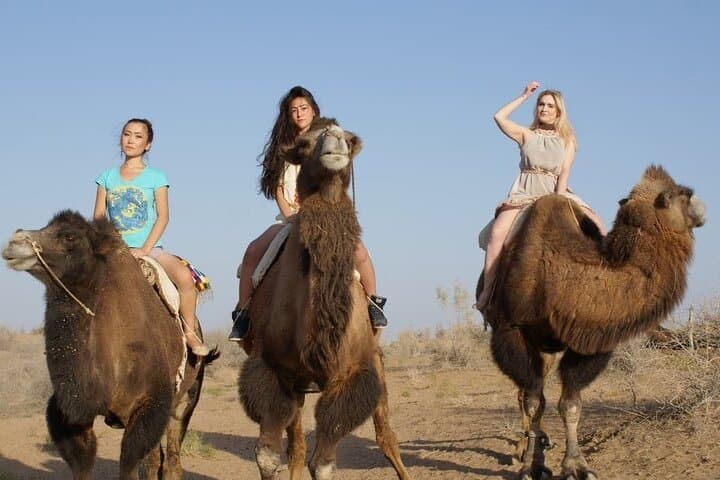
Camel rides on this tour are short—typically 10–15 minutes—designed for first-time riders and photo opportunities.
Yes—the tour offers pickup and drop-off options from Samarkand or Bukhara as listed at booking.
Overnight accommodation is in traditional felt yurts at a desert camp with shared facilities and a campfire evening performance.
The tour is family-friendly for most children but is not recommended for pregnant travelers; check operator guidance when booking.
Nurata’s Chashma spring and the nearby fortress are tied to centuries of regional pilgrimage and Silk Road traffic; Rabat‑i‑Malik is a classic roadside caravanserai from that trade era.
Aydarkul is part of a fragile desert-lake system created by mid-20th-century irrigation; visitors should avoid disturbing shoreline vegetation and pack out all trash to protect habitat.
TravelBliss LLC operates guided outdoor trips and adventures with an emphasis on safety, stewardship, and memorable experiences.
When the van pulls off the paved road and the Kyzylkum desert opens, a low horizon widens into pale sand and a flat, unexpected shoreline. You step out into wind that sketches ripples across a shallow lake and follow a narrow track toward a ring of felt yurts where a single fire throws orange light across the sand.
When the van pulls off the paved road and the Kyzylkum desert opens, a low horizon widens into pale sand and a flat, unexpected shoreline. You step out into wind that sketches ripples across a shallow lake and follow a narrow track toward a ring of felt yurts where a single fire throws orange light across the sand.
This two-day excursion moves between living history and open desert. Start with Nurata’s Chashma spring and the weathered stones of a fortress linked in local lore to Alexander the Great; these sites sit at the edge of a dry plain that has borne Silk Road caravans for centuries. Aydarkul itself is a relatively recent landscape feature—created by mid-20th-century Soviet water projects—and now supports reed-lined shallows, migrating birds, and a fragile shoreline ecosystem in the Kyzylkum.
Culturally, the trip pairs homestyle Uzbek lunches and pottery visits with a night in a yurt camp, camel saddle time and an akyn’s songs around the fire. Practicalities: expect desert sand underfoot, strong daytime sun and sharp temperature drops after dusk. Activities include short camel rides (10–15 minutes), walks along the lake edge, and visits to Rabat‑i‑Malik caravanserai and a Gijduvan pottery workshop on the return.
Bring sun protection, layered clothing for cold nights, and a durable pair of shoes for sandy, occasionally uneven terrain. The itinerary is gentle—suitable for most travelers—but plan for long transfers between sites; hydration, modest dress at cultural stops, and an appetite for rustic overnight comfort will make the two-day loop seamless and memorable.