THE ADVENTURE COLLECTIVE® · Independent discovery and booking for outdoor travel

Two days in Oman carry you from Muscat’s coast to the stacked dunes of Wahiba Sands and on to canyon pools that invite a swim. This private overnight blends desert driving, oasis time, and a classic Wadi Shab hike with practical comforts and cultural context.
Two days in Oman carry you from Muscat’s coast to the stacked dunes of Wahiba Sands and on to canyon pools that invite a swim. This private overnight blends desert driving, oasis time, and a classic Wadi Shab hike with practical comforts and cultural context.
The highway slips out of Muscat before sunrise, mountains shouldering the sky as the city’s lights fade in the rearview. By the time the Hajar range breaks into broad desert, the land widens and breathes. Watchtowers in Ibra and Al Mudayrib still scan the horizon, their mudbrick faces weathered by wind that never quite rests. The road bends toward Wadi Bani Khalid and, suddenly, the desert gives way—date palms whisper over chalky limestone and a chain of emerald pools urges you in. The water is cool and steady, fed by springs that have kept this oasis alive for generations.
Verified experiences and guided adventures in the surrounding area.
Operated by AFAQ Travel & Tourism · Bidiyah, Ash Sharqiyah North
The highway slips out of Muscat before sunrise, mountains shouldering the sky as the city’s lights fade in the rearview. By the time the Hajar range breaks into broad desert, the land widens and breathes. Watchtowers in Ibra and Al Mudayrib still scan the horizon, their mudbrick faces weathered by wind that never quite rests. The road bends toward Wadi Bani Khalid and, suddenly, the desert gives way—date palms whisper over chalky limestone and a chain of emerald pools urges you in. The water is cool and steady, fed by springs that have kept this oasis alive for generations.
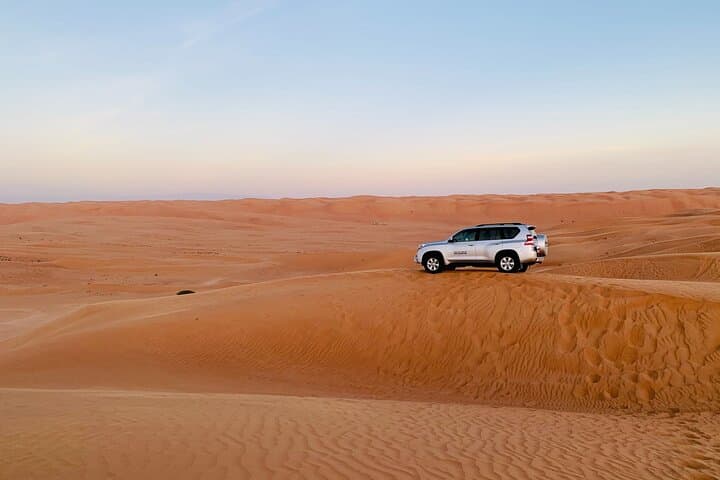
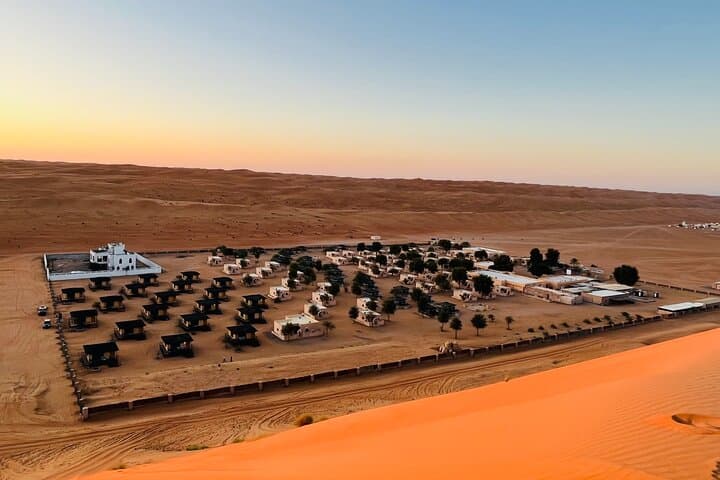
By afternoon, the dunes of Wahiba Sands begin to rise, one wave after another. The 4x4 noses up a 150-meter face and the sand answers back, sliding under the tires, daring you to climb higher. At the crest, sunset burns to copper and then drops into violet. Camp feels quiet and grounded—Bedouin-style tents, Omani coffee, and a sky that switches on with a thousand points of light. The night air moves like a tide through the dunes, reshaping edges while you sleep.
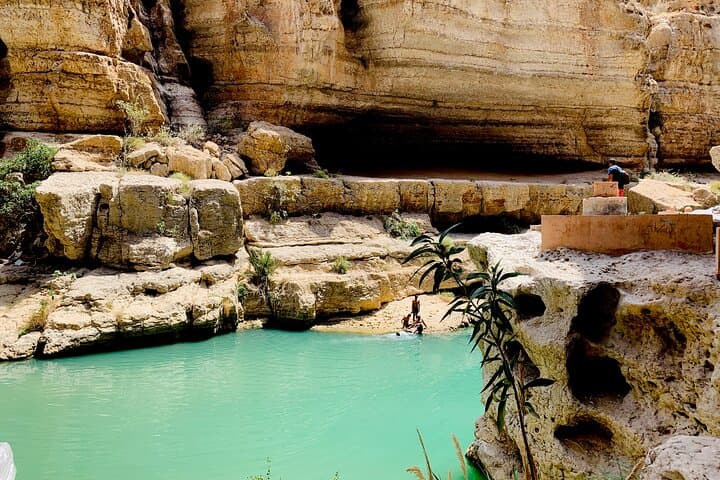
Morning points you east toward the coast. Wadi Shab begins with a short boat hop and a 35–45 minute hike along a cliffed path where the canyon tightens and bright pools gather below. The wadi calls for a swim; currents nudge you forward toward the “Keyhole,” a narrow slot leading to a hidden chamber crowned by a small waterfall. If you’re a confident swimmer, it’s a highlight. If you’d rather stay dry, the wadi rewards with shade, stone, and sound.
On the return to Muscat, one last stop: Bimmah Sinkhole, a circular limestone crater where turquoise water turns electric at midday. It’s a reminder that Oman’s geology likes surprises—a country sculpted by uplift, erosion, and seasonal wadis that refuse to sit still.
This two-day private journey blends cultural touchpoints with active exploration. You’ll learn how aflaj channels still feed date groves, how Bedouin families read dunes like maps, and why Sharqiyah’s sands shift from honey to white in the span of a kilometer. Logistically, it’s straightforward: hotel pickup in Muscat, air-conditioned transport, guided off-road driving, and a desert camp dinner and breakfast included. Bring sturdy footwear for rocky wadis, modest swimwear for local norms, and a willingness to move with the heat—start early, hydrate often, rest when the sun asks you to. In Oman, the landscape leads and you follow—one watchtower, one dune, one clear pool at a time.
moderate.
2 days, 1 night.
Able to hike 3–5 km on uneven terrain in heat and swim short distances in calm pools.
Plan on 35–45 minutes each way on an undulating path with some rock-hopping, plus time to swim if you choose.
You should be comfortable swimming short distances in freshwater. A life vest can be requested in advance; non-swimmers can enjoy the hike without entering deep pools.
Expect comfortable, air-conditioned rooms or tents, buffet dinner and breakfast, and shared or en-suite bathrooms depending on camp allocation.
Coverage is spotty in the dunes, but camps provide electricity for charging. Bring a power bank for the wadi day.
Soft-sided luggage is easiest for the 4x4. Pack a small daypack with water, snacks, hat, and swim kit for Wadi Shab.
Availability is limited and regulated in Oman; many desert camps are not licensed. Check with your operator in advance and follow local laws.
The Sharqiyah Sands are home to Bani Wahiba tribes, whose camel herding and desert navigation shaped routes still used today. Aflaj irrigation channels—an Omani tradition—feed oases like Wadi Bani Khalid.
Pack out all trash and avoid soaps in natural pools. Stay on established sand tracks to prevent dune crust damage and erosion around fragile vegetation.
AFAQ Travel & Tourism operates guided outdoor trips and adventures with an emphasis on safety, stewardship, and memorable experiences.
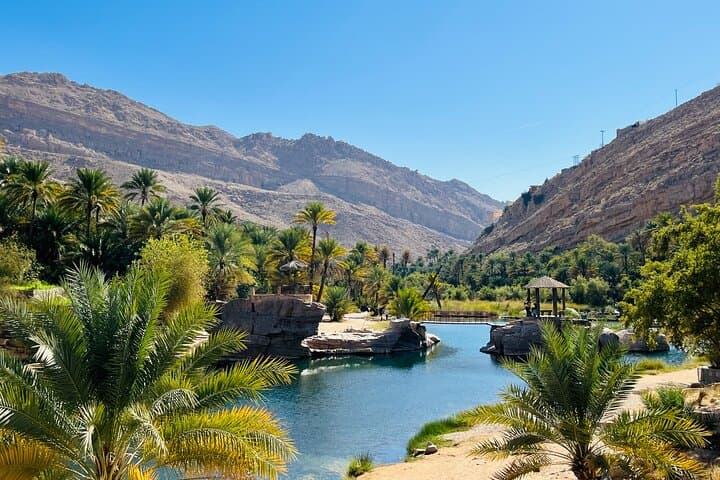
The highway slips out of Muscat before sunrise, mountains shouldering the sky as the city’s lights fade in the rearview. By the time the Hajar range breaks into broad desert, the land widens and breathes. Watchtowers in Ibra and Al Mudayrib still scan the horizon, their mudbrick faces weathered by wind that never quite rests. The road bends toward Wadi Bani Khalid and, suddenly, the desert gives way—date palms whisper over chalky limestone and a chain of emerald pools urges you in. The water is cool and steady, fed by springs that have kept this oasis alive for generations.
The highway slips out of Muscat before sunrise, mountains shouldering the sky as the city’s lights fade in the rearview. By the time the Hajar range breaks into broad desert, the land widens and breathes. Watchtowers in Ibra and Al Mudayrib still scan the horizon, their mudbrick faces weathered by wind that never quite rests. The road bends toward Wadi Bani Khalid and, suddenly, the desert gives way—date palms whisper over chalky limestone and a chain of emerald pools urges you in. The water is cool and steady, fed by springs that have kept this oasis alive for generations.
By afternoon, the dunes of Wahiba Sands begin to rise, one wave after another. The 4x4 noses up a 150-meter face and the sand answers back, sliding under the tires, daring you to climb higher. At the crest, sunset burns to copper and then drops into violet. Camp feels quiet and grounded—Bedouin-style tents, Omani coffee, and a sky that switches on with a thousand points of light. The night air moves like a tide through the dunes, reshaping edges while you sleep.
Morning points you east toward the coast. Wadi Shab begins with a short boat hop and a 35–45 minute hike along a cliffed path where the canyon tightens and bright pools gather below. The wadi calls for a swim; currents nudge you forward toward the “Keyhole,” a narrow slot leading to a hidden chamber crowned by a small waterfall. If you’re a confident swimmer, it’s a highlight. If you’d rather stay dry, the wadi rewards with shade, stone, and sound.
On the return to Muscat, one last stop: Bimmah Sinkhole, a circular limestone crater where turquoise water turns electric at midday. It’s a reminder that Oman’s geology likes surprises—a country sculpted by uplift, erosion, and seasonal wadis that refuse to sit still.
This two-day private journey blends cultural touchpoints with active exploration. You’ll learn how aflaj channels still feed date groves, how Bedouin families read dunes like maps, and why Sharqiyah’s sands shift from honey to white in the span of a kilometer. Logistically, it’s straightforward: hotel pickup in Muscat, air-conditioned transport, guided off-road driving, and a desert camp dinner and breakfast included. Bring sturdy footwear for rocky wadis, modest swimwear for local norms, and a willingness to move with the heat—start early, hydrate often, rest when the sun asks you to. In Oman, the landscape leads and you follow—one watchtower, one dune, one clear pool at a time.