THE ADVENTURE COLLECTIVE® · Independent discovery and booking for outdoor travel

A compact two-day rafting trip on the Trishuli River that pairs class II–III whitewater with a riverside overnight and village exploration. Ideal for travelers looking for a short, accessible river adventure outside Kathmandu.
A compact two-day rafting trip on the Trishuli River that pairs class II–III whitewater with a riverside overnight and village exploration. Ideal for travelers looking for a short, accessible river adventure outside Kathmandu.
The raft noses into cold current and the river answers with a liquid pulse that seems to push the group forward. Banks of tall grasses and small foothill forests slip by as the guide calls commands, and sandy beaches open like small invitations to stop and listen.
Verified experiences and guided adventures in the surrounding area.
Operated by Himalayan Adventure Treks and Tours Pvt Ltd · Charaudi, Nuwakot
The raft noses into cold current and the river answers with a liquid pulse that seems to push the group forward. Banks of tall grasses and small foothill forests slip by as the guide calls commands, and sandy beaches open like small invitations to stop and listen.
The Trishuli River takes its name from Hindu lore and from a landscape carved by Himalayan runoff; its bed alternates between gravel bars and bedrock drops that produce reliable class II–III rapids outside the monsoon. The valley around Charaudi has long supported riverside villages whose livelihoods mix agriculture and small trade; modern rafters share the river with fishermen and local ferry crossings. Geologically the corridor is young — steep slopes, frequent alluvial deposits — so the channel can shift between seasons.
Practically, the trip is a two-day package: a 3–4 hour drive from Kathmandu (roughly 85 km) to Charaudi, a 3–4 hour first-day river run with lunch on a beach, riverside overnight at a resort or deluxe tent, then a short morning village walk and an optional second half-day paddle before return. Expect moderate paddling, active bracing in rapids labeled “Ladise Delight,” “Upset” and “Surprise,” and sandy stopovers for tea. Bring quick-dry clothing, secure footwear, a small dry bag, and sun protection; waterproof cameras and a light jacket for evenings are useful. Avoid peak monsoon rains when flows spike and always follow the guide’s briefing and lifejacket instructions. With basic fitness and common-sense preparation, this overnight rafting loop balances river adrenaline with a close-up look at rural riverside life.
moderate.
2 days (approx. 48 hours with 3–4 hour river runs).
Moderate aerobic fitness and ability to follow guide commands; not technical but requires steady balance and arm strength for paddling.
The rafting portions are class II–III and require moderate exertion; participants should be comfortable paddling and able to brace in rapids.
No — guides provide instruction and safety gear, but listening to commands and basic teamwork are necessary for safety.
Round-trip transport, rafting and safety equipment, meals (lunch, dinner, breakfast), snacks, riverside overnight in a tent or room, and a village walk.
Age and ability limits vary by operator; declare ages at booking and check with the provider — children may join if they meet the operator’s safety criteria.
The Trishuli corridor has long connected hill communities to Kathmandu and is named after the trident (trishula) of Shiva, reflecting local religious ties to river sites.
Erosion and litter are visible issues along some banks; choose operators that follow leave-no-trace practices and avoid lighting uncontrolled fires on beaches.
Himalayan Adventure Treks and Tours Pvt Ltd operates guided outdoor trips and adventures with an emphasis on safety, stewardship, and memorable experiences.
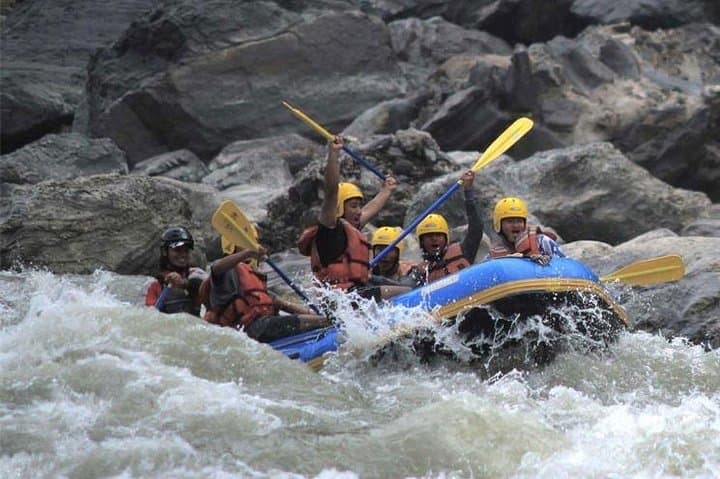


The raft noses into cold current and the river answers with a liquid pulse that seems to push the group forward. Banks of tall grasses and small foothill forests slip by as the guide calls commands, and sandy beaches open like small invitations to stop and listen.
The raft noses into cold current and the river answers with a liquid pulse that seems to push the group forward. Banks of tall grasses and small foothill forests slip by as the guide calls commands, and sandy beaches open like small invitations to stop and listen.
The Trishuli River takes its name from Hindu lore and from a landscape carved by Himalayan runoff; its bed alternates between gravel bars and bedrock drops that produce reliable class II–III rapids outside the monsoon. The valley around Charaudi has long supported riverside villages whose livelihoods mix agriculture and small trade; modern rafters share the river with fishermen and local ferry crossings. Geologically the corridor is young — steep slopes, frequent alluvial deposits — so the channel can shift between seasons.
Practically, the trip is a two-day package: a 3–4 hour drive from Kathmandu (roughly 85 km) to Charaudi, a 3–4 hour first-day river run with lunch on a beach, riverside overnight at a resort or deluxe tent, then a short morning village walk and an optional second half-day paddle before return. Expect moderate paddling, active bracing in rapids labeled “Ladise Delight,” “Upset” and “Surprise,” and sandy stopovers for tea. Bring quick-dry clothing, secure footwear, a small dry bag, and sun protection; waterproof cameras and a light jacket for evenings are useful. Avoid peak monsoon rains when flows spike and always follow the guide’s briefing and lifejacket instructions. With basic fitness and common-sense preparation, this overnight rafting loop balances river adrenaline with a close-up look at rural riverside life.