THE ADVENTURE COLLECTIVE® · Independent discovery and booking for outdoor travel

Travel from Fes through the Atlas Mountains to the wind‑shaped dunes of Erg Chebbi on an overnight tour. Ride camels at sunset, sleep in a Berber desert camp, and return to Fes after a sunrise camel trek and mountain drive.
Travel from Fes through the Atlas Mountains to the wind‑shaped dunes of Erg Chebbi on an overnight tour. Ride camels at sunset, sleep in a Berber desert camp, and return to Fes after a sunrise camel trek and mountain drive.
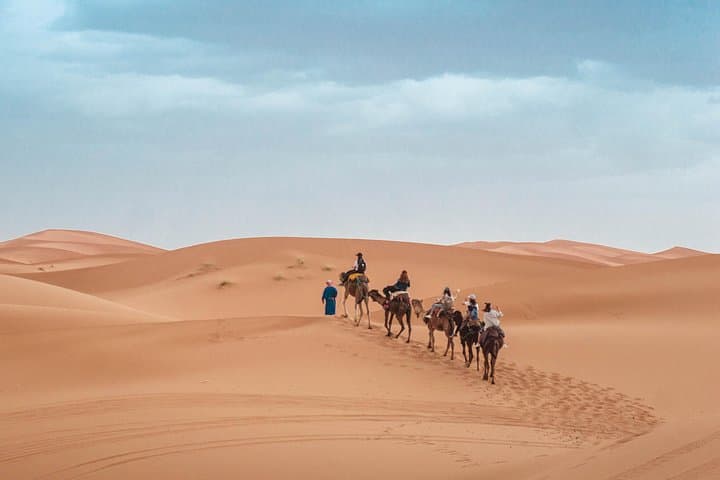
Dawn pulls the Atlas Mountains into relief as your driver threads cedar forests and tiny towns toward the pale horizon. By afternoon the road opens, and the dunes of Erg Chebbi rise like shifting hills of light; wind sculpts them daily, and the sand seems to breathe as you approach.
Verified experiences and guided adventures in the surrounding area.
Operated by ALL MOROCCO TOUR · Merzouga, Drâa-Tafilalet
Dawn pulls the Atlas Mountains into relief as your driver threads cedar forests and tiny towns toward the pale horizon. By afternoon the road opens, and the dunes of Erg Chebbi rise like shifting hills of light; wind sculpts them daily, and the sand seems to breathe as you approach.
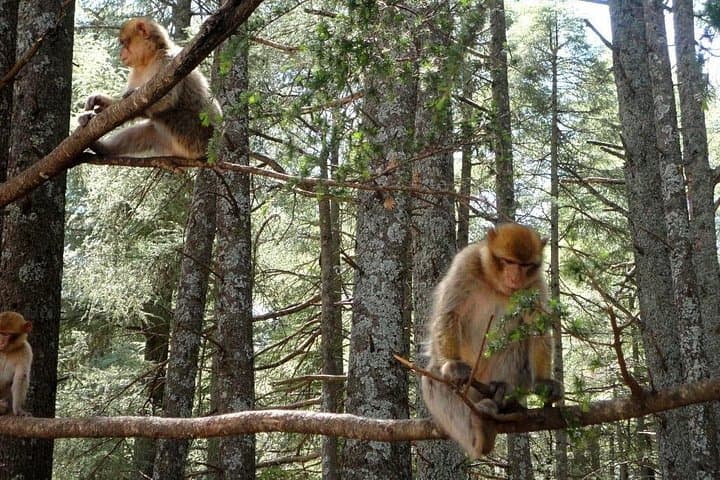
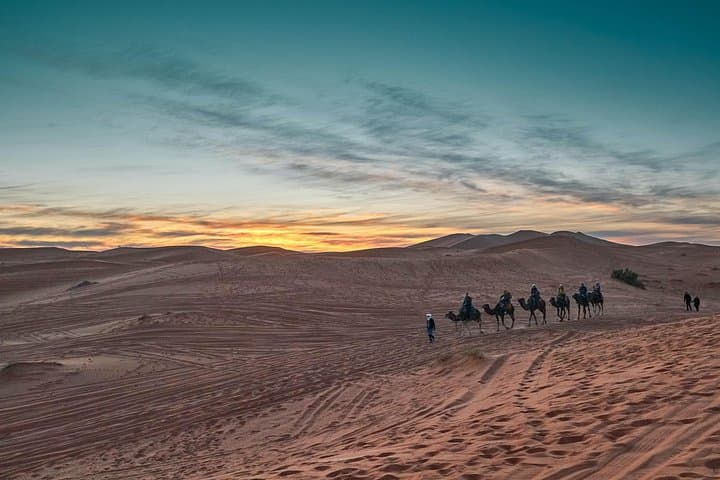
This overnight tour links Fes’s medieval medina—whose foundations date to the 9th century—with the desert landscapes shaped by millions of years of erosion and wind. The route passes Ifrane, a high‑altitude town with Alpine architecture, then Azrou where Barbary macaques move through cedar groves. Rissani’s market is a living reminder of trans‑Saharan trade routes. At Merzouga you mount a camel for a slow, rocking trek to a Berber camp where local musicians play and the Milky Way fills a desert sky untouched by city light.
Expect sand, silence, and a cold night even after a hot day; dunes can be hot by noon and drop quickly in temperature after sunset. The camel ride is steady but requires basic balance. Camps generally offer sleeping mats or simple mattresses and a communal dinner; facilities are rustic.
Practical tips: time rides for sunset or sunrise for cooler light and better photos; bring layered clothing, sun protection, and at least 2–3 liters of water per person; carry cash for small purchases in villages. If you’re sensitive to cold, pack a warm sleeping layer. This trip pairs cultural stops with outdoor time—ideal for travelers who want active, short‑distance trekking and a clear night sky for stargazing.
moderate.
2 days (approx. 48 hours).
Moderate fitness: comfortable with several hours of light walking and brief periods on camelback.
Camel treks to the main campsite typically last 45–90 minutes depending on the route and pace, timed to arrive at sunset.
Camps usually provide mattresses or sleeping pads and blankets in shared tents; facilities are basic and often communal.
The tour accommodates many ages but requires moderate mobility for mounting camels and walking on sand; consult the operator for specific medical concerns.
Yes—most operators transfer luggage in the vehicle between Fes and Merzouga; bring a small daypack for the camel portion.
This route follows historic caravan corridors that linked Saharan trade hubs to northern Moroccan cities; Merzouga rose as a local center where oasis life met desert routes.
Dune ecosystems are fragile—stick to established paths, avoid littering, and support local guides who practice low‑impact camping.
ALL MOROCCO TOUR operates guided outdoor trips and adventures with an emphasis on safety, stewardship, and memorable experiences.
Dawn pulls the Atlas Mountains into relief as your driver threads cedar forests and tiny towns toward the pale horizon. By afternoon the road opens, and the dunes of Erg Chebbi rise like shifting hills of light; wind sculpts them daily, and the sand seems to breathe as you approach.
Dawn pulls the Atlas Mountains into relief as your driver threads cedar forests and tiny towns toward the pale horizon. By afternoon the road opens, and the dunes of Erg Chebbi rise like shifting hills of light; wind sculpts them daily, and the sand seems to breathe as you approach.
This overnight tour links Fes’s medieval medina—whose foundations date to the 9th century—with the desert landscapes shaped by millions of years of erosion and wind. The route passes Ifrane, a high‑altitude town with Alpine architecture, then Azrou where Barbary macaques move through cedar groves. Rissani’s market is a living reminder of trans‑Saharan trade routes. At Merzouga you mount a camel for a slow, rocking trek to a Berber camp where local musicians play and the Milky Way fills a desert sky untouched by city light.
Expect sand, silence, and a cold night even after a hot day; dunes can be hot by noon and drop quickly in temperature after sunset. The camel ride is steady but requires basic balance. Camps generally offer sleeping mats or simple mattresses and a communal dinner; facilities are rustic.
Practical tips: time rides for sunset or sunrise for cooler light and better photos; bring layered clothing, sun protection, and at least 2–3 liters of water per person; carry cash for small purchases in villages. If you’re sensitive to cold, pack a warm sleeping layer. This trip pairs cultural stops with outdoor time—ideal for travelers who want active, short‑distance trekking and a clear night sky for stargazing.