THE ADVENTURE COLLECTIVE® · Independent discovery and booking for outdoor travel

Spend a night at a mountaintop observatory south of Cairo where powerful telescopes, a campfire, and expert astronomers reveal planets, constellations, and historic artifacts. This guided overnight pairs hands-on stargazing with a morning visit to the historic Helwan facility.
Spend a night at a mountaintop observatory south of Cairo where powerful telescopes, a campfire, and expert astronomers reveal planets, constellations, and historic artifacts. This guided overnight pairs hands-on stargazing with a morning visit to the historic Helwan facility.
You arrive in late afternoon as the bus climbs away from the city—the air thins, the horizon opens, and a ring of mountains frames the sky. By dusk the observatory sits high and quiet, far from sodium lights, its domes glossy against a bruised twilight. The first task is simple: breathe. The desert night will stretch above you, patient and wide.
Verified experiences and guided adventures in the surrounding area.
Operated by Explore the cosmos at a mountaintop observatory · Helwan, Cairo Governorate
You arrive in late afternoon as the bus climbs away from the city—the air thins, the horizon opens, and a ring of mountains frames the sky. By dusk the observatory sits high and quiet, far from sodium lights, its domes glossy against a bruised twilight. The first task is simple: breathe. The desert night will stretch above you, patient and wide.
The site dates to the mid-20th century as the region expanded modern astronomy; a larger, older Helwan facility nearby (est. 1903) preserves instruments and manuscripts that trace Egypt’s long relationship with the stars. Geologically the area is dry, rocky highland—good for clear seeing because of low humidity and minimal light pollution—so telescopes here pick out planets, tight star clusters, and faint nebulae with uncommon clarity.
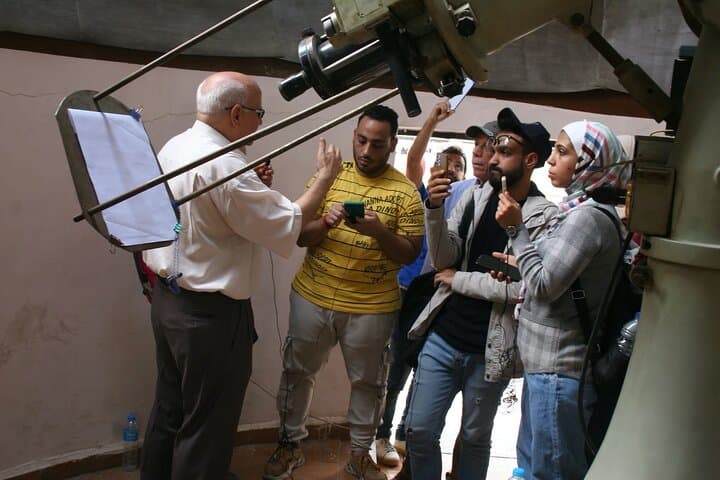
Culturally, the program blends scientific observation with local hospitality: a shared campfire, simple dinner, and an Egyptian breakfast in the morning. Expect guided telescope sessions led by professional astronomers, artifact tours of the historic observatory, and guided sunrise measurements to close the experience.
Practical notes: wear layered, windproof clothing and sturdy shoes—temperatures drop sharply after sunset. Bring a headlamp with a red filter, a refillable water bottle, and a charged camera if you want to try long exposures. The tour provides private transport, snacks, dinner, and a private room if needed; most activities are accessible to all fitness levels. Plan for a roughly 17-hour outing from pickup to return, and confirm passport details when booking. For anyone curious about the sky, this is less a show and more a guided conversation with the cosmos.
easy.
16–18 hours.
Suitable for most fitness levels; requires ability to walk short uneven sections and stand during telescope viewing
Stargazing sessions often continue past midnight; the activity includes an option for a private room to rest if you choose to sleep before sunrise.
Yes—guides use large telescopes to show planets, star clusters, and brighter deep-sky objects; visibility depends on sky conditions and the specific night’s program.
Yes—private round-trip transportation from a central Cairo meeting point is included in the booking.
Children are welcome; infants must sit on an adult’s lap and all participants should be registered with passport details where required.
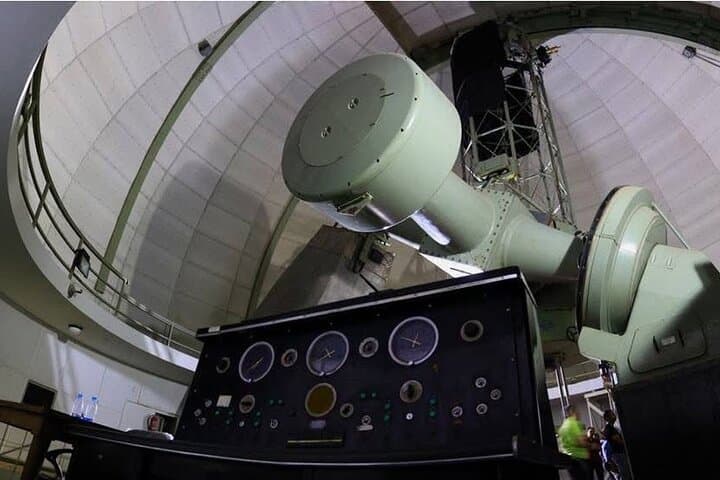
The modern observatory complex expanded in the mid-20th century and hosts one of the region’s largest research telescopes; the older Helwan facility (est. 1903) preserves instruments and archives from early Egyptian astronomical research.
Light pollution management is key here—visitors are asked to use red lights and minimize bright sources. The facility follows low-impact practices to protect the fragile highland environment.
Explore the cosmos at a mountaintop observatory operates guided outdoor trips and adventures with an emphasis on safety, stewardship, and memorable experiences.
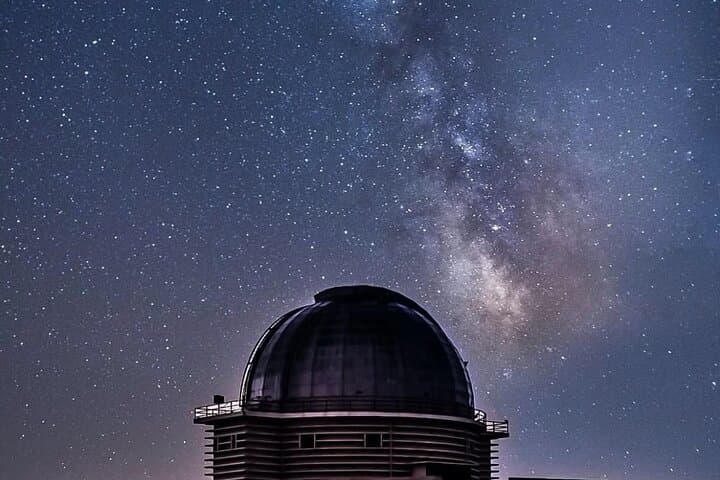
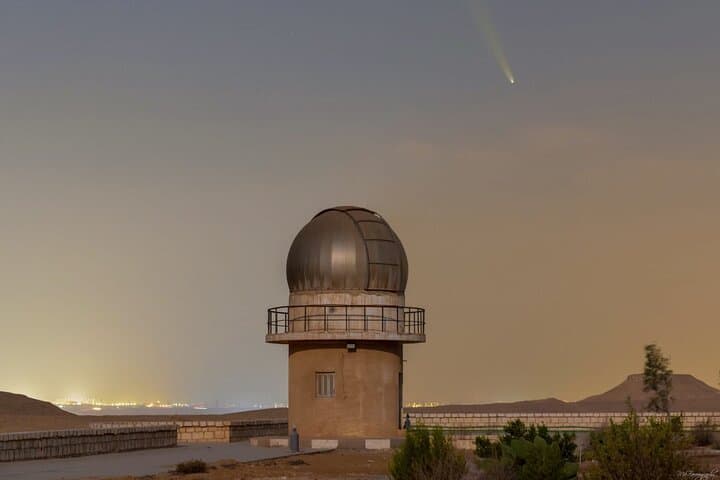
You arrive in late afternoon as the bus climbs away from the city—the air thins, the horizon opens, and a ring of mountains frames the sky. By dusk the observatory sits high and quiet, far from sodium lights, its domes glossy against a bruised twilight. The first task is simple: breathe. The desert night will stretch above you, patient and wide.
You arrive in late afternoon as the bus climbs away from the city—the air thins, the horizon opens, and a ring of mountains frames the sky. By dusk the observatory sits high and quiet, far from sodium lights, its domes glossy against a bruised twilight. The first task is simple: breathe. The desert night will stretch above you, patient and wide.
The site dates to the mid-20th century as the region expanded modern astronomy; a larger, older Helwan facility nearby (est. 1903) preserves instruments and manuscripts that trace Egypt’s long relationship with the stars. Geologically the area is dry, rocky highland—good for clear seeing because of low humidity and minimal light pollution—so telescopes here pick out planets, tight star clusters, and faint nebulae with uncommon clarity.
Culturally, the program blends scientific observation with local hospitality: a shared campfire, simple dinner, and an Egyptian breakfast in the morning. Expect guided telescope sessions led by professional astronomers, artifact tours of the historic observatory, and guided sunrise measurements to close the experience.
Practical notes: wear layered, windproof clothing and sturdy shoes—temperatures drop sharply after sunset. Bring a headlamp with a red filter, a refillable water bottle, and a charged camera if you want to try long exposures. The tour provides private transport, snacks, dinner, and a private room if needed; most activities are accessible to all fitness levels. Plan for a roughly 17-hour outing from pickup to return, and confirm passport details when booking. For anyone curious about the sky, this is less a show and more a guided conversation with the cosmos.