THE ADVENTURE COLLECTIVE® · Independent discovery and booking for outdoor travel

Climb Mount Sinai for a pre-dawn summit and overnight visit to the ancient St. Catherine Monastery. This 2-day guided trip from Cairo pairs a strenuous, spiritual ascent with one of the Sinai’s most famous sunrise views.
Climb Mount Sinai for a pre-dawn summit and overnight visit to the ancient St. Catherine Monastery. This 2-day guided trip from Cairo pairs a strenuous, spiritual ascent with one of the Sinai’s most famous sunrise views.
The desert wind bites as the van eases up the Sinai foothills and the cluster of flat-roofed buildings around St. Catherine appears like a human anchor in a sea of stone. You arrive before midnight, sleep a few hours, then set out in the blue-black air with headlamp cones cutting through the dark—local guides lead the way as the trail narrows and the mountain takes on a silhouette that dares you to climb.
Verified experiences and guided adventures in the surrounding area.
Operated by Hamodi Eid · St. Catherine, South Sinai Governorate
The desert wind bites as the van eases up the Sinai foothills and the cluster of flat-roofed buildings around St. Catherine appears like a human anchor in a sea of stone. You arrive before midnight, sleep a few hours, then set out in the blue-black air with headlamp cones cutting through the dark—local guides lead the way as the trail narrows and the mountain takes on a silhouette that dares you to climb.
The monastery here dates to late antiquity, with a formal foundation in the 6th century and traditions tied to an older 4th‑century pilgrim presence. Geologically, Jebel Musa is a granite massif carved by eons of erosion; its ridges and gullies throw crisp shadows at sunrise, revealing a barren but textured landscape. Culturally this is a working pilgrimage—Orthodox, Catholic and Muslim visitors come for the same spectacle: the dawn over Sinai.
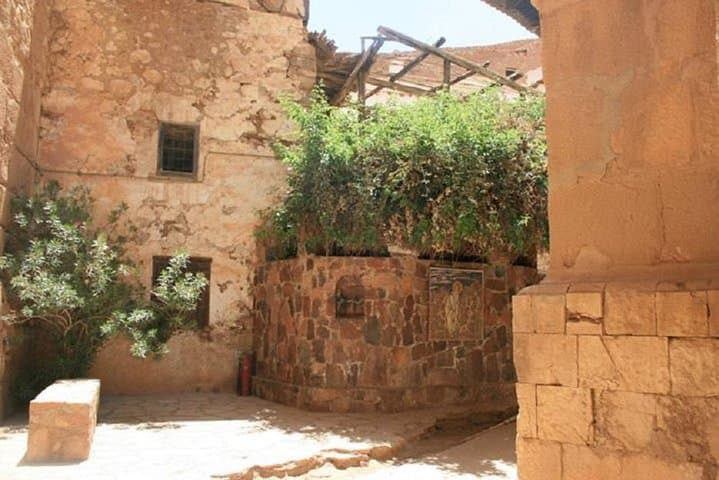
Expect steep stone steps on the classic route (several thousand carved stones), or a longer zigzag mule path for a gentler grade. The summit sits at about 2,285 m (7,497 ft), and the pre-dawn climb is cold and windy; layers and a headlamp are essential. The visit also includes the ancient Monastery of St. Catherine—home to Byzantine icons, a living “burning bush” tradition and compact museum galleries.
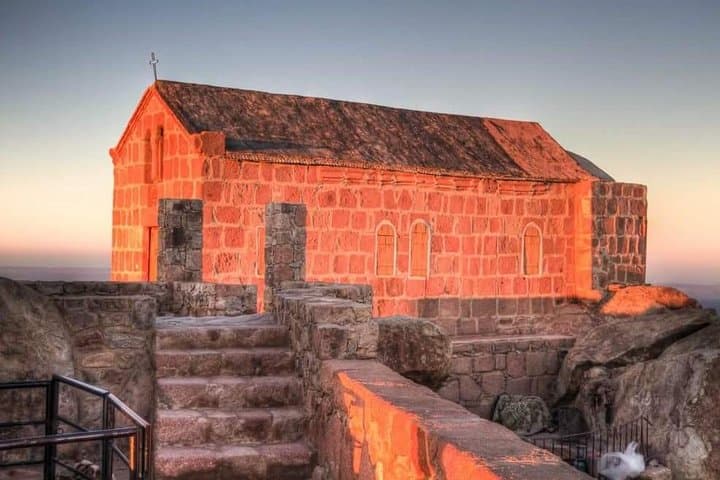
Practical notes: leave Cairo the day before, budget roughly 6 hours driving each way, allow a 3–5 hour summit window depending on pace, and bring water, snacks, and a small daypack. Respect monastery rules, carry ID for entrance, and be prepared for basic hotel accommodation in St. Catherine town. The reward—sunlight filling the valleys and the hush of a sacred place—is immediate and unforgettably clear.
moderate.
2 days (overnight; summit ascent 3–5 hours each way depending on route and pace).
Travelers should have moderate cardiovascular fitness and be comfortable on steep uneven stone steps for extended periods.
The popular summit (Jebel Musa) reaches approximately 2,285 meters (7,497 feet) above sea level.
Expect 3–5 hours round-trip depending on route and fitness; the classic stone-step route is shorter but steeper, while the mule/zigzag path is longer with a gentler grade.
Yes—the Monastery of St. Catherine is open to visitors during daytime hours; modest dress and quiet behavior are required, and some interior areas may restrict photography.
Altitude is moderate; most visitors adapt fine, but those with serious heart or respiratory conditions should consult a doctor before the climb.
St. Catherine Monastery traces its roots to early Christian pilgrimage in the 4th century and was formally founded in the 6th century; it houses one of the oldest continuously operating monastic communities and early Byzantine artifacts.
The area sits within the St. Catherine Protectorate—entry fees support conservation; stay on marked trails, avoid removing plants or stones, and minimize water waste in this arid environment.
Hamodi Eid operates guided outdoor trips and adventures with an emphasis on safety, stewardship, and memorable experiences.
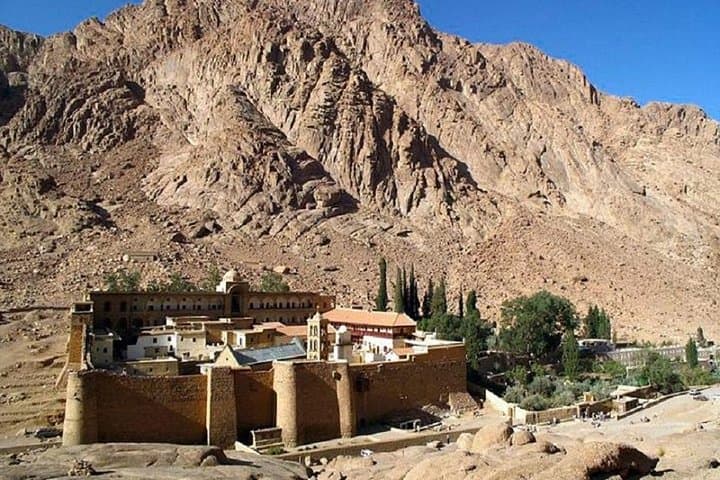
The desert wind bites as the van eases up the Sinai foothills and the cluster of flat-roofed buildings around St. Catherine appears like a human anchor in a sea of stone. You arrive before midnight, sleep a few hours, then set out in the blue-black air with headlamp cones cutting through the dark—local guides lead the way as the trail narrows and the mountain takes on a silhouette that dares you to climb.
The desert wind bites as the van eases up the Sinai foothills and the cluster of flat-roofed buildings around St. Catherine appears like a human anchor in a sea of stone. You arrive before midnight, sleep a few hours, then set out in the blue-black air with headlamp cones cutting through the dark—local guides lead the way as the trail narrows and the mountain takes on a silhouette that dares you to climb.
The monastery here dates to late antiquity, with a formal foundation in the 6th century and traditions tied to an older 4th‑century pilgrim presence. Geologically, Jebel Musa is a granite massif carved by eons of erosion; its ridges and gullies throw crisp shadows at sunrise, revealing a barren but textured landscape. Culturally this is a working pilgrimage—Orthodox, Catholic and Muslim visitors come for the same spectacle: the dawn over Sinai.
Expect steep stone steps on the classic route (several thousand carved stones), or a longer zigzag mule path for a gentler grade. The summit sits at about 2,285 m (7,497 ft), and the pre-dawn climb is cold and windy; layers and a headlamp are essential. The visit also includes the ancient Monastery of St. Catherine—home to Byzantine icons, a living “burning bush” tradition and compact museum galleries.
Practical notes: leave Cairo the day before, budget roughly 6 hours driving each way, allow a 3–5 hour summit window depending on pace, and bring water, snacks, and a small daypack. Respect monastery rules, carry ID for entrance, and be prepared for basic hotel accommodation in St. Catherine town. The reward—sunlight filling the valleys and the hush of a sacred place—is immediate and unforgettably clear.