THE ADVENTURE COLLECTIVE® · Independent discovery and booking for outdoor travel

Cross the High Atlas, ride camels into Erg Lihoudi and spend a night in a Berber camp on this two-day desert safari from Marrakech. Expect long scenic drives, a film-set kasbah stop and a starlit dinner by the fire.
Cross the High Atlas, ride camels into Erg Lihoudi and spend a night in a Berber camp on this two-day desert safari from Marrakech. Expect long scenic drives, a film-set kasbah stop and a starlit dinner by the fire.
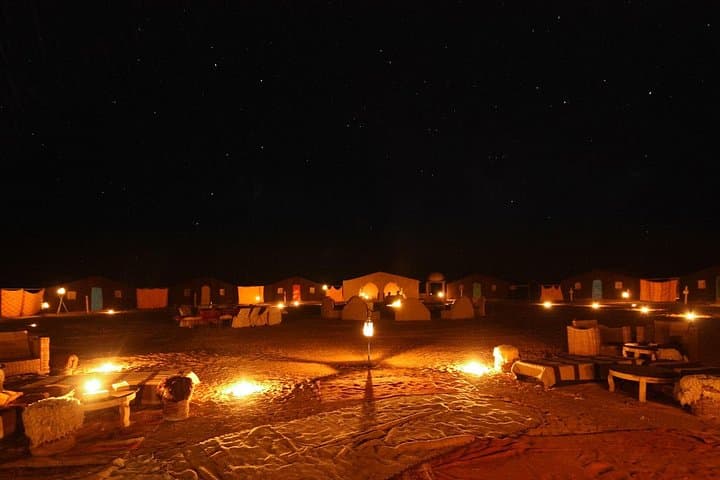
A pale ribbon of headlights leaves Marrakech before dawn and the city drops away into the High Atlas. By midafternoon the road peels open into the Draa Valley's palm-lined riverbeds and the dunes of Erg Lihoudi rise like warm waves. At camp, a fire cracks; a small group of musicians tunes simple drums and the scent of mint tea threads through the night air.
Verified experiences and guided adventures in the surrounding area.
Operated by Tombouctour · Mhamid El Ghizlane, Drâa-Tafilalet
A pale ribbon of headlights leaves Marrakech before dawn and the city drops away into the High Atlas. By midafternoon the road peels open into the Draa Valley's palm-lined riverbeds and the dunes of Erg Lihoudi rise like warm waves. At camp, a fire cracks; a small group of musicians tunes simple drums and the scent of mint tea threads through the night air.
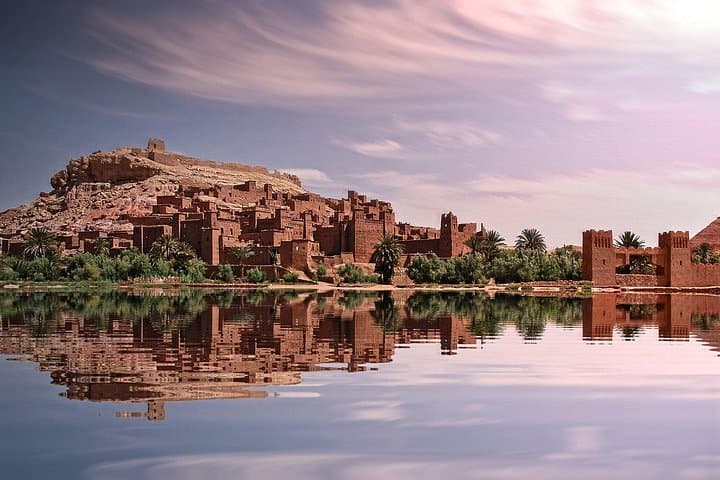
This two-day private tour follows a classic southern route: the Tizin’Tichka pass at 2,260 m across the High Atlas, a stop at Ait Benhaddou (a UNESCO kasbah and frequent film set), Ouarzazate’s studios, and the age-old Draa oasis system. Geologically the region shifts from folded metamorphic ridges of the Atlas to wind-sculpted sand sheets—an abrupt change that underpins the Sahara’s shifting character. Culturally, the itinerary highlights southern Moroccan hospitality: shared tagines, Berber songs, and nomadic tent life that remains more performance of tradition than unchanged isolation.
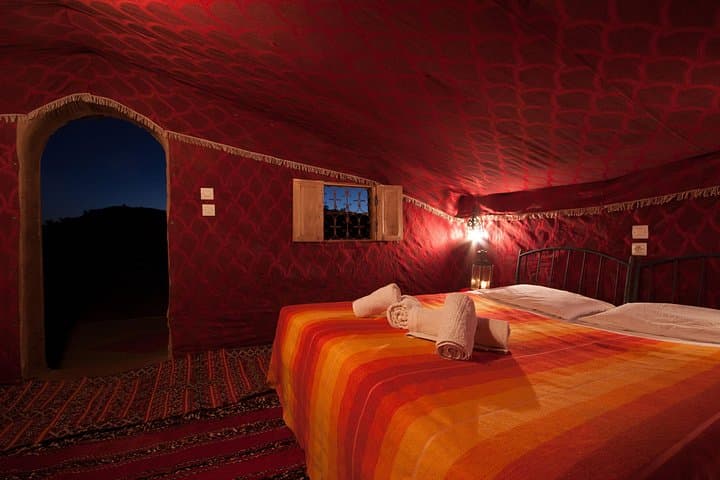
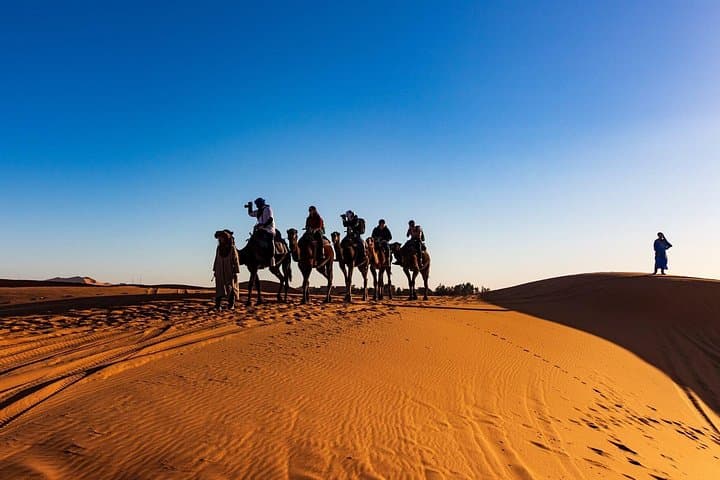
Practicalities are straightforward: expect long stretches of driving (roughly 8–10 hours each way with stops), short camel rides into the dunes at sunset and sunrise, and an overnight in a furnished Berber tent with simple sleeping pads and blankets. Bring layered clothing for hot days and cool desert nights, sun protection, and a refillable water bottle; mobility demands are light though uneven sand and vehicle transfers require care. Plan to leave Marrakech early, keep a flexible schedule for photo stops, and arrive with a ready sense of pace—this trip is as much about the road and the community you meet as the dune silhouette at dusk.
moderate.
2 days (approx. 48 hours).
Suitable for travelers in average fitness: mostly vehicle travel with short camel rides and easy dune walking.
Camel rides are typically 30–60 minutes each way—enough to reach a duneside camp and see sunset or sunrise, but not an extended trek.
You’ll sleep in furnished nomad-style tents with mattresses and blankets; toilet facilities vary from basic camp latrines to simple private tents depending on the operator.
Expect long driving days (8–10 hours with stops) over mountain pass roads and desert tracks; drivers are experienced but prepare for bumps and full-day travel.
Yes—this tour is rated easy physically, but camel rides and camp conditions may be uncomfortable for very young children, pregnant travelers or those with serious heart problems.
The Draa Valley has been a caravan corridor for centuries, with kasbahs and ksars marking old trade and irrigation routes; Ait Benhaddou reflects fortified architecture used by southern caravan towns.
The Sahara’s fragile soils and sparse vegetation recover slowly; stick to marked tracks, avoid single-use plastics and respect local grazing patterns to reduce impact.
Tombouctour operates guided outdoor trips and adventures with an emphasis on safety, stewardship, and memorable experiences.
A pale ribbon of headlights leaves Marrakech before dawn and the city drops away into the High Atlas. By midafternoon the road peels open into the Draa Valley's palm-lined riverbeds and the dunes of Erg Lihoudi rise like warm waves. At camp, a fire cracks; a small group of musicians tunes simple drums and the scent of mint tea threads through the night air.
A pale ribbon of headlights leaves Marrakech before dawn and the city drops away into the High Atlas. By midafternoon the road peels open into the Draa Valley's palm-lined riverbeds and the dunes of Erg Lihoudi rise like warm waves. At camp, a fire cracks; a small group of musicians tunes simple drums and the scent of mint tea threads through the night air.
This two-day private tour follows a classic southern route: the Tizin’Tichka pass at 2,260 m across the High Atlas, a stop at Ait Benhaddou (a UNESCO kasbah and frequent film set), Ouarzazate’s studios, and the age-old Draa oasis system. Geologically the region shifts from folded metamorphic ridges of the Atlas to wind-sculpted sand sheets—an abrupt change that underpins the Sahara’s shifting character. Culturally, the itinerary highlights southern Moroccan hospitality: shared tagines, Berber songs, and nomadic tent life that remains more performance of tradition than unchanged isolation.
Practicalities are straightforward: expect long stretches of driving (roughly 8–10 hours each way with stops), short camel rides into the dunes at sunset and sunrise, and an overnight in a furnished Berber tent with simple sleeping pads and blankets. Bring layered clothing for hot days and cool desert nights, sun protection, and a refillable water bottle; mobility demands are light though uneven sand and vehicle transfers require care. Plan to leave Marrakech early, keep a flexible schedule for photo stops, and arrive with a ready sense of pace—this trip is as much about the road and the community you meet as the dune silhouette at dusk.