THE ADVENTURE COLLECTIVE® · Independent discovery and booking for outdoor travel

A compact, small-group overnight from Fez to Erg Chebbi that pairs a scenic multi-stop drive through the Middle Atlas with a camel-led sunset and dawn over towering dunes. Ideal for travelers wanting a low-effort desert night with basic tent comforts.
A compact, small-group overnight from Fez to Erg Chebbi that pairs a scenic multi-stop drive through the Middle Atlas with a camel-led sunset and dawn over towering dunes. Ideal for travelers wanting a low-effort desert night with basic tent comforts.
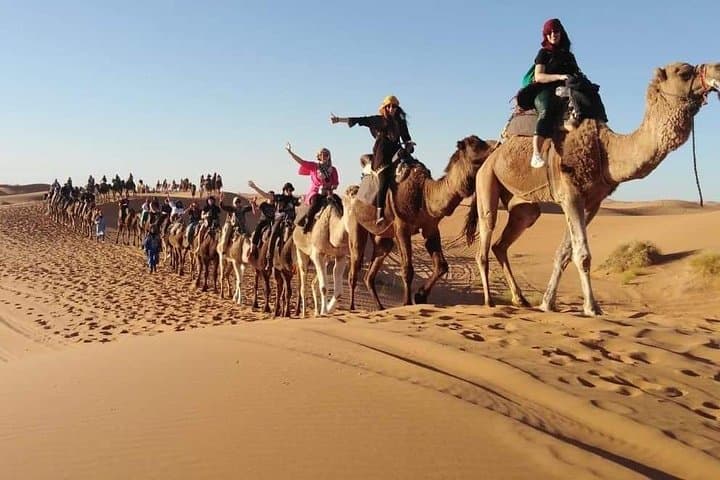
You leave Fez before dawn, the city receding and the road unspooling through cedar forests, apple orchards and basalt ridgelines. The van moves from green valleys into the warm, stony approach to the Sahara; by late afternoon the dunes of Erg Chebbi rise like a living landscape, their ridges catching low light while the camp waits behind a crescent of sand.
Verified experiences and guided adventures in the surrounding area.
Operated by Adil Sahara Tours · Merzouga, Errachidia
You leave Fez before dawn, the city receding and the road unspooling through cedar forests, apple orchards and basalt ridgelines. The van moves from green valleys into the warm, stony approach to the Sahara; by late afternoon the dunes of Erg Chebbi rise like a living landscape, their ridges catching low light while the camp waits behind a crescent of sand.
This route follows historic caravan corridors between the Middle Atlas and the Tafilalet oases. Geologically, Erg Chebbi is a wind-sculpted sea of sand—dunes reach up to 150–200 meters locally—and sits at the edge of older, rocky pre-Saharan plateaus. Culturally the region is marked by Berber villages, ksours (fortified granaries) and markets in towns like Rissani where long-distance trade once concentrated.
Expect a comfortable minivan transfer with staged stops (Ifrane, Azrou, Midelt, Errachidia), a late-afternoon camel ride into camp, and a night in a shared private tent with basic hot-water facilities. Sunrise over the dunes is the highlight: sharp light, skeletal shadow lines and a quiet that feels deliberate.
Practical notes: pack sun protection and a headlamp, bring at least 2–3 liters of water per person, and wear closed-toe shoes for dune walks. Temperatures swing dramatically—hot by day, cold after midnight—so layer. The camel ride is gentle but uneven; those with severe back or heart conditions should consult their doctor. Book with time to spare: road travel between Fez and Merzouga is long (about 7–9 hours one way with stops).
moderate.
2 days (approx. 48 hours).
Suitable for travelers of average fitness who can manage short dune hikes and uneven camel rides.
Expect roughly 7–9 hours of driving total with scheduled stops for rest, photos and short visits to towns like Ifrane and Midelt.
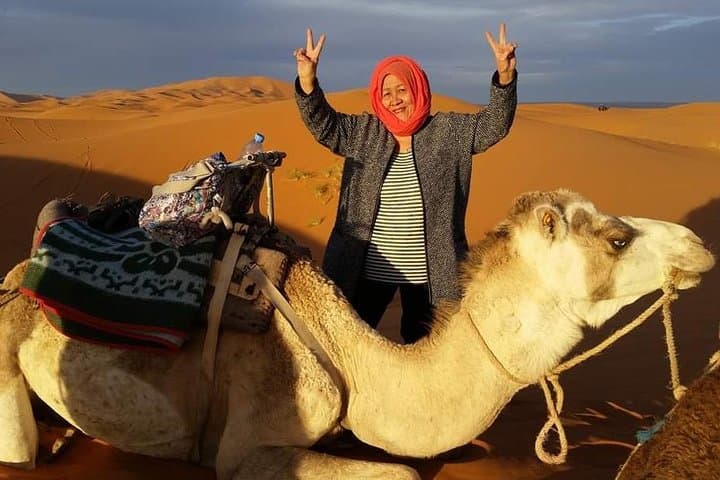
Yes—camel rides to and from the camp are included; typically each ride is 20–40 minutes across the dunes depending on the exact camp location.
Camps offer private tents (shared facilities in some camps), basic bedding and a hot-water shower; standards vary so check if you need more privacy or upgraded amenities.
Not recommended for pregnant travelers, people with serious heart or back conditions, or anyone unable to handle a bumpy camel ride or long van transfers.
The route links Middle Atlas towns and the pre-Saharan Tafilalet region, an historic corridor for trans-Saharan trade and the rise of local dynasties like those centered in Rissani.
Dune ecosystems are fragile; stick to established tracks and avoid disturbing local plants and any wildlife. Support local guides and camps that manage waste and limit vehicle impact.
Adil Sahara Tours operates guided outdoor trips and adventures with an emphasis on safety, stewardship, and memorable experiences.
You leave Fez before dawn, the city receding and the road unspooling through cedar forests, apple orchards and basalt ridgelines. The van moves from green valleys into the warm, stony approach to the Sahara; by late afternoon the dunes of Erg Chebbi rise like a living landscape, their ridges catching low light while the camp waits behind a crescent of sand.
You leave Fez before dawn, the city receding and the road unspooling through cedar forests, apple orchards and basalt ridgelines. The van moves from green valleys into the warm, stony approach to the Sahara; by late afternoon the dunes of Erg Chebbi rise like a living landscape, their ridges catching low light while the camp waits behind a crescent of sand.
This route follows historic caravan corridors between the Middle Atlas and the Tafilalet oases. Geologically, Erg Chebbi is a wind-sculpted sea of sand—dunes reach up to 150–200 meters locally—and sits at the edge of older, rocky pre-Saharan plateaus. Culturally the region is marked by Berber villages, ksours (fortified granaries) and markets in towns like Rissani where long-distance trade once concentrated.
Expect a comfortable minivan transfer with staged stops (Ifrane, Azrou, Midelt, Errachidia), a late-afternoon camel ride into camp, and a night in a shared private tent with basic hot-water facilities. Sunrise over the dunes is the highlight: sharp light, skeletal shadow lines and a quiet that feels deliberate.
Practical notes: pack sun protection and a headlamp, bring at least 2–3 liters of water per person, and wear closed-toe shoes for dune walks. Temperatures swing dramatically—hot by day, cold after midnight—so layer. The camel ride is gentle but uneven; those with severe back or heart conditions should consult their doctor. Book with time to spare: road travel between Fez and Merzouga is long (about 7–9 hours one way with stops).