THE ADVENTURE COLLECTIVE® · Independent discovery and booking for outdoor travel

Two days from Hammamet take you across palm oases and into the golden dunes around Douz for a private overnight in a luxury tented camp, with a visit to Matmata’s underground troglodyte homes. Expect long drives, dramatic skies, and star-lit campfires.
Two days from Hammamet take you across palm oases and into the golden dunes around Douz for a private overnight in a luxury tented camp, with a visit to Matmata’s underground troglodyte homes. Expect long drives, dramatic skies, and star-lit campfires.
You drive south from the Mediterranean coast and the world simplifies: palm groves thin, gullies of baked clay open, and the dunes begin to breathe under a late-afternoon sun. By evening the 4x4 pulls into a private tented camp near Douz, where canvas rooms, a low fire, and drums shape the night. The dunes around you are not static monuments but living sand—wind-sculpted ridges that push and pull as the desert shifts.
Verified experiences and guided adventures in the surrounding area.
Operated by SAHARANSKY · Douz, Kebili Governorate
You drive south from the Mediterranean coast and the world simplifies: palm groves thin, gullies of baked clay open, and the dunes begin to breathe under a late-afternoon sun. By evening the 4x4 pulls into a private tented camp near Douz, where canvas rooms, a low fire, and drums shape the night. The dunes around you are not static monuments but living sand—wind-sculpted ridges that push and pull as the desert shifts.
This route crosses land once threaded by camel caravans; Douz grew as a caravan gateway and market town. Matmata’s troglodyte homes—hand-excavated underground dwellings carved into soft sandstone and clay—reflect millennia of adaptation to heat and scarcity. Geologically, you’re on the northern edge of the Sahara erg, where wind, salt pans and ancient alluvial deposits meet.
Culturally the nights are communal: shared bread and stories, Berber-influenced music, and markets in Douz selling hand-stitched textiles and metalwork. Conservation here is practical—water is scarce and camps operate with local resources and low-impact protocols.
Practical guidance: expect long drives in a comfortable private vehicle, short guided walks among dunes, and an overnight in a luxury-style desert tent with basic amenities. Pack layered clothing for hot days and cool nights, sun protection, and a small daypack. Bring cash for souks in Douz and a camera with a low-light setting for stargazing. Plan pickup from Hammamet early to maximize daylight in the south—sunrise on the dunes is the clearest measure of the Sahara’s scale.
moderate.
2 days (approx. 48 hours).
Suitable for travelers in average physical condition; involves long vehicle transfers and short walks in sand and villages.
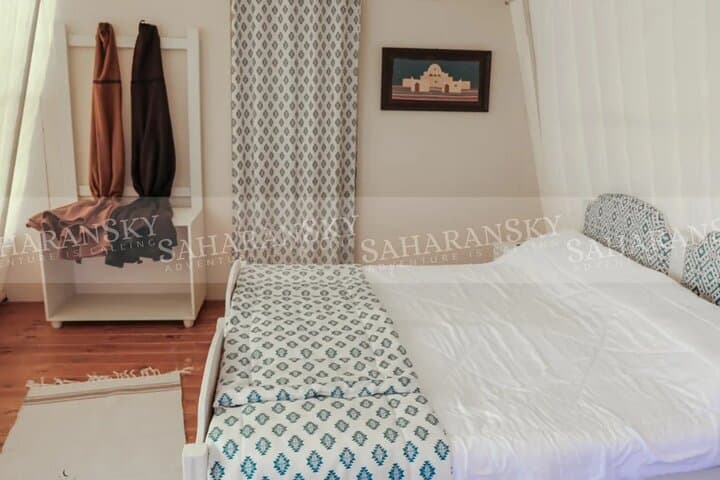
The overnight stay is in a luxury-style tented camp offering private canvas rooms with basic bedding and communal dining; facilities vary by camp but typically include shared toilets and hot water.
Yes—this tour includes private transfer pickup from hotels in Hammamet; confirm your exact pickup point at booking.
Yes; camps are family-friendly with guided areas around the site, but parents should supervise children near campfires and during dune walks.
Matmata’s underground dwellings involve uneven steps and low passages; visitors with mobility limitations should check specifics with the operator and may be able to view from safer vantage points.
Douz developed as a caravan gateway on trans-Saharan routes and Matmata’s troglodyte homes reflect centuries of Berber adaptation to arid climates.
Water is a limiting resource; choose operators that limit single-use plastics, follow marked camp areas, and support local communities by buying crafts directly from vendors.
SAHARANSKY operates guided outdoor trips and adventures with an emphasis on safety, stewardship, and memorable experiences.
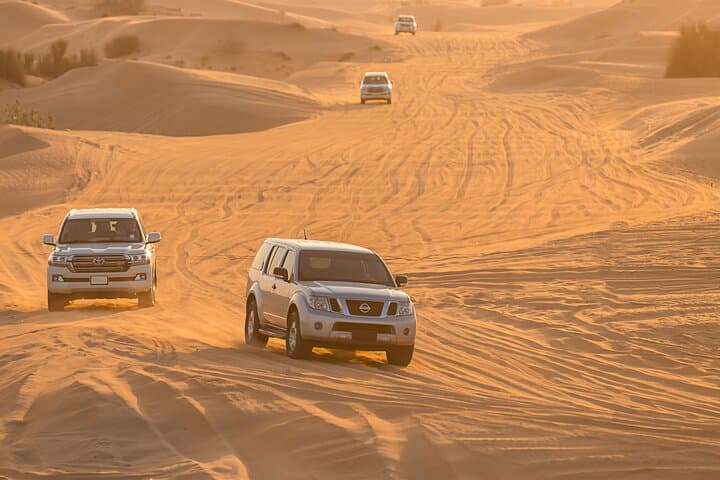
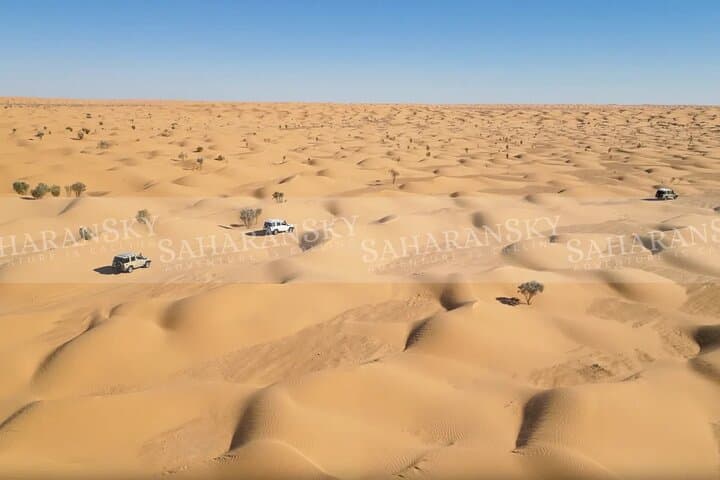
You drive south from the Mediterranean coast and the world simplifies: palm groves thin, gullies of baked clay open, and the dunes begin to breathe under a late-afternoon sun. By evening the 4x4 pulls into a private tented camp near Douz, where canvas rooms, a low fire, and drums shape the night. The dunes around you are not static monuments but living sand—wind-sculpted ridges that push and pull as the desert shifts.
You drive south from the Mediterranean coast and the world simplifies: palm groves thin, gullies of baked clay open, and the dunes begin to breathe under a late-afternoon sun. By evening the 4x4 pulls into a private tented camp near Douz, where canvas rooms, a low fire, and drums shape the night. The dunes around you are not static monuments but living sand—wind-sculpted ridges that push and pull as the desert shifts.
This route crosses land once threaded by camel caravans; Douz grew as a caravan gateway and market town. Matmata’s troglodyte homes—hand-excavated underground dwellings carved into soft sandstone and clay—reflect millennia of adaptation to heat and scarcity. Geologically, you’re on the northern edge of the Sahara erg, where wind, salt pans and ancient alluvial deposits meet.
Culturally the nights are communal: shared bread and stories, Berber-influenced music, and markets in Douz selling hand-stitched textiles and metalwork. Conservation here is practical—water is scarce and camps operate with local resources and low-impact protocols.
Practical guidance: expect long drives in a comfortable private vehicle, short guided walks among dunes, and an overnight in a luxury-style desert tent with basic amenities. Pack layered clothing for hot days and cool nights, sun protection, and a small daypack. Bring cash for souks in Douz and a camera with a low-light setting for stargazing. Plan pickup from Hammamet early to maximize daylight in the south—sunrise on the dunes is the clearest measure of the Sahara’s scale.