THE ADVENTURE COLLECTIVE® · Independent discovery and booking for outdoor travel

Ride camels across Erg Chebbi’s rippled dunes, watch sunset from the crest, and sleep under Saharan stars in a Berber camp. This overnight trek from Merzouga combines easy-paced travel with hands-on cultural moments and private tent comforts.
Ride camels across Erg Chebbi’s rippled dunes, watch sunset from the crest, and sleep under Saharan stars in a Berber camp. This overnight trek from Merzouga combines easy-paced travel with hands-on cultural moments and private tent comforts.
The sun leans low over Erg Chebbi and the camels step like slow metronomes—each sway a rhythm that pulls Merzouga’s village further behind you. By late afternoon the dunes change color underfoot: ochre to copper to a deep, cool bronze as shadow slides down the ridges. You crest a dune to watch the horizon eat the sun, then dismount to try a run of sandboarding before the caravan leads you to the Berber camp for the night.
Verified experiences and guided adventures in the surrounding area.
Operated by Sahara Riders · Merzouga, Drâa-Tafilalet (Errachidia Province)
The sun leans low over Erg Chebbi and the camels step like slow metronomes—each sway a rhythm that pulls Merzouga’s village further behind you. By late afternoon the dunes change color underfoot: ochre to copper to a deep, cool bronze as shadow slides down the ridges. You crest a dune to watch the horizon eat the sun, then dismount to try a run of sandboarding before the caravan leads you to the Berber camp for the night.
This is a landscape shaped by wind and time. Erg Chebbi’s dunes formed from Sahara sands blown from the south and accumulated against the Atlas foothills; human history here is shaped by nomadic routes and salt-trading paths. Local culture emerges at camp—Gnawa rhythms, Tamazight laughter—and the tents reflect traditional Berber hospitality adapted for modern comfort, often with private shower facilities at larger camps.
Expect an easy-paced trek: camel travel is steady but can be tiring on first ride. Nights are cold and stark, the stars unusually bright where artificial light is absent. Morning brings a quiet sunrise walk and breakfast before returning to Merzouga.
Practical notes: bring layered clothing for temperature swings, strong sun protection, and comfortable, closed-toe shoes for walking dunes. Hydrate well; the sand stores heat long after dusk. Respect camp rules about fires and waste—dune ecology recovers slowly. For travelers wanting a short desert immersion with cultural rhythm and minimal navigation stress, an overnight camel trek in Erg Chebbi is a direct, manageable way to experience the Sahara’s scale and silence.
easy.
12–14 hours.
Suitable for most fitness levels; you should be able to mount/dismount a camel and walk short stretches on sand.
The camel trek from Merzouga into the camp usually takes about one hour each direction, with additional walking time if you explore nearby dunes.
Many camps offer private tents with basic beds and, in higher-standard camps, private shower/bathroom facilities as listed in inclusions.
Sandboarding is often included and operators provide boards; beginners can try short runs on gentle slopes with instructor tips.
Pickup options vary—confirm when booking. Standard cancellation allows a full refund if you cancel at least 24 hours before departure.
The Merzouga area has long been a stop on nomadic and salt caravan routes; local Berber families continue desert traditions while hosting visitors.
Dunes are sensitive to disturbance—stay on established paths, minimize campfire wood use, and pack out all waste to protect fragile desert soils.
Sahara Riders operates guided outdoor trips and adventures with an emphasis on safety, stewardship, and memorable experiences.


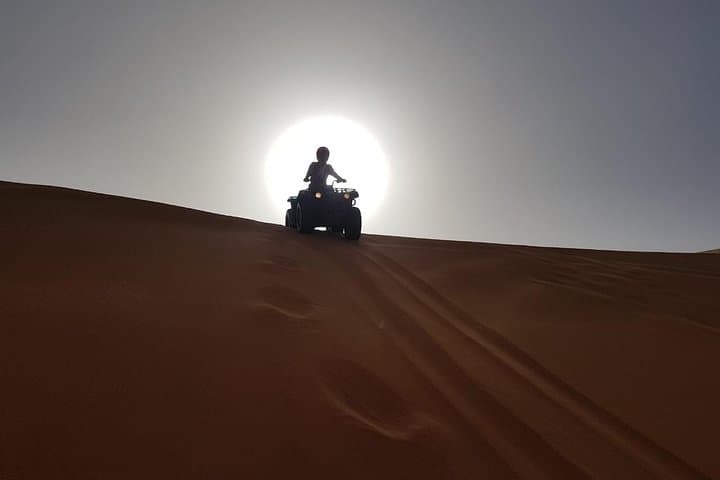

The sun leans low over Erg Chebbi and the camels step like slow metronomes—each sway a rhythm that pulls Merzouga’s village further behind you. By late afternoon the dunes change color underfoot: ochre to copper to a deep, cool bronze as shadow slides down the ridges. You crest a dune to watch the horizon eat the sun, then dismount to try a run of sandboarding before the caravan leads you to the Berber camp for the night.
The sun leans low over Erg Chebbi and the camels step like slow metronomes—each sway a rhythm that pulls Merzouga’s village further behind you. By late afternoon the dunes change color underfoot: ochre to copper to a deep, cool bronze as shadow slides down the ridges. You crest a dune to watch the horizon eat the sun, then dismount to try a run of sandboarding before the caravan leads you to the Berber camp for the night.
This is a landscape shaped by wind and time. Erg Chebbi’s dunes formed from Sahara sands blown from the south and accumulated against the Atlas foothills; human history here is shaped by nomadic routes and salt-trading paths. Local culture emerges at camp—Gnawa rhythms, Tamazight laughter—and the tents reflect traditional Berber hospitality adapted for modern comfort, often with private shower facilities at larger camps.
Expect an easy-paced trek: camel travel is steady but can be tiring on first ride. Nights are cold and stark, the stars unusually bright where artificial light is absent. Morning brings a quiet sunrise walk and breakfast before returning to Merzouga.
Practical notes: bring layered clothing for temperature swings, strong sun protection, and comfortable, closed-toe shoes for walking dunes. Hydrate well; the sand stores heat long after dusk. Respect camp rules about fires and waste—dune ecology recovers slowly. For travelers wanting a short desert immersion with cultural rhythm and minimal navigation stress, an overnight camel trek in Erg Chebbi is a direct, manageable way to experience the Sahara’s scale and silence.