THE ADVENTURE COLLECTIVE® · Independent discovery and booking for outdoor travel

Ride camels over golden dunes, bake traditional "Mella" sand bread over an open fire, and spend a star-filled night in a tent at Les Dunes Insolites near Douz. This hands-on 2-day bivouac combines Bedouin hospitality with accessible desert travel.
Ride camels over golden dunes, bake traditional "Mella" sand bread over an open fire, and spend a star-filled night in a tent at Les Dunes Insolites near Douz. This hands-on 2-day bivouac combines Bedouin hospitality with accessible desert travel.
Late afternoon light spills across an ocean of sand as riders and camels slip over the dune crests, the desert already cooling under a broad sky. This one-night bivouac from Les Dunes Insolites puts travelers in the rhythm of the Sahara: slow camel steps, a fire-lit meal, and a tent pitched where the horizon feels close enough to touch.
Verified experiences and guided adventures in the surrounding area.
Operated by Route Insolite · Douz, Kebili Governorate
Late afternoon light spills across an ocean of sand as riders and camels slip over the dune crests, the desert already cooling under a broad sky. This one-night bivouac from Les Dunes Insolites puts travelers in the rhythm of the Sahara: slow camel steps, a fire-lit meal, and a tent pitched where the horizon feels close enough to touch.
The Douz region is long known as the southern gateway to the Tunisian Sahara and a historic caravan route linking oases and salt flats. Geologically, the landscape is wind-sculpted sand sheets and linear dunes overlaying older sebkha (salt pan) formations like nearby Chott el-Jerid. Culturally, the ride draws on Bedouin and Berber traditions — shared meals, fire-wood baking of “Mella” sand bread, and oral storytelling under a sky free of light pollution.
Practical guidance: expect a 2-day experience with moderate physical demand; camel saddles are stable but bring padded shorts if you’re sensitive. Nights swing cold even after hot days — layers are essential. Water is limited in the field, so carry at least 2 liters per person and protect skin from sun and reflective sand. The camp provides dinner and breakfast; sites are basic tent accommodations emphasizing authenticity over luxury.
Timing: afternoons are best for rides and sunset photos, while mornings offer calm air for walking and photography. Respect local customs — dress modestly, ask before photographing people, and follow guides on route and camp etiquette. With preparation, the bivouac is a compact, immersive way to experience Sahara light, sound and space.
moderate.
2 days.
Moderate fitness: able to mount/dismount camels, walk short stretches on sand, and manage basic outdoor sleeping.
The camel trek is moderate: camels are steady but mounting and sitting for an hour or two requires basic balance and the ability to climb on and off with assistance.
Yes — the bivouac includes a traditional dinner (including participation in making "Mella" sand bread) and breakfast, plus tent accommodation for the night.
Light, breathable layers for daytime, a warm jacket for night, closed-toe shoes for walking on sand, and sun protection for daytime.
Children are generally welcome but infants must sit on laps; the tour is not recommended for travelers with serious cardiovascular issues due to heat and exertion.
Douz has long served as a caravan hub and cultural crossroads between arid interior routes and coastal markets; local Bedouin customs influence the bivouac experience.
Operators emphasize low-impact camping and fire control; visitors should pack out waste, conserve water, and avoid disturbing fragile dune vegetation.
Route Insolite operates guided outdoor trips and adventures with an emphasis on safety, stewardship, and memorable experiences.


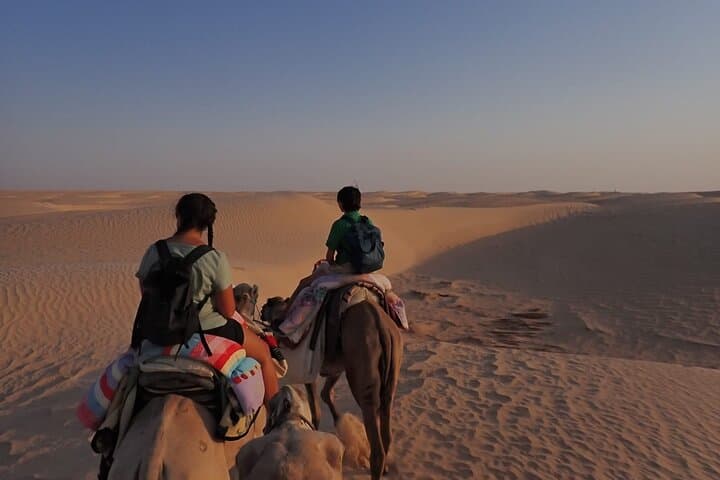

Late afternoon light spills across an ocean of sand as riders and camels slip over the dune crests, the desert already cooling under a broad sky. This one-night bivouac from Les Dunes Insolites puts travelers in the rhythm of the Sahara: slow camel steps, a fire-lit meal, and a tent pitched where the horizon feels close enough to touch.
Late afternoon light spills across an ocean of sand as riders and camels slip over the dune crests, the desert already cooling under a broad sky. This one-night bivouac from Les Dunes Insolites puts travelers in the rhythm of the Sahara: slow camel steps, a fire-lit meal, and a tent pitched where the horizon feels close enough to touch.
The Douz region is long known as the southern gateway to the Tunisian Sahara and a historic caravan route linking oases and salt flats. Geologically, the landscape is wind-sculpted sand sheets and linear dunes overlaying older sebkha (salt pan) formations like nearby Chott el-Jerid. Culturally, the ride draws on Bedouin and Berber traditions — shared meals, fire-wood baking of “Mella” sand bread, and oral storytelling under a sky free of light pollution.
Practical guidance: expect a 2-day experience with moderate physical demand; camel saddles are stable but bring padded shorts if you’re sensitive. Nights swing cold even after hot days — layers are essential. Water is limited in the field, so carry at least 2 liters per person and protect skin from sun and reflective sand. The camp provides dinner and breakfast; sites are basic tent accommodations emphasizing authenticity over luxury.
Timing: afternoons are best for rides and sunset photos, while mornings offer calm air for walking and photography. Respect local customs — dress modestly, ask before photographing people, and follow guides on route and camp etiquette. With preparation, the bivouac is a compact, immersive way to experience Sahara light, sound and space.