THE ADVENTURE COLLECTIVE® · Independent discovery and booking for outdoor travel

An overnight trek to Vinicunca (Rainbow Mountain) gives you quiet sunrise views of the painted slopes and a high-altitude hike through Andean grasslands. Prepare for steep climbs, thin air and rapid weather shifts while passing pastoral villages and grazing llamas.
An overnight trek to Vinicunca (Rainbow Mountain) gives you quiet sunrise views of the painted slopes and a high-altitude hike through Andean grasslands. Prepare for steep climbs, thin air and rapid weather shifts while passing pastoral villages and grazing llamas.
A pre-dawn van pulls away from Cusco and the night thins into high puna grasslands. Under a sky that hardens into blue, the trail to Vinicunca rises like a painted ridge, bands of rust, ochre and mint-green daring you upward while Ausangate watches with snow-capped reserve. Walking here means working against altitude as much as slope; each step is a conversation between lungs and thin air.
Verified experiences and guided adventures in the surrounding area.
Operated by Ayni Peru Expedition SAC · Cusco, Cusco Region
A pre-dawn van pulls away from Cusco and the night thins into high puna grasslands. Under a sky that hardens into blue, the trail to Vinicunca rises like a painted ridge, bands of rust, ochre and mint-green daring you upward while Ausangate watches with snow-capped reserve. Walking here means working against altitude as much as slope; each step is a conversation between lungs and thin air.
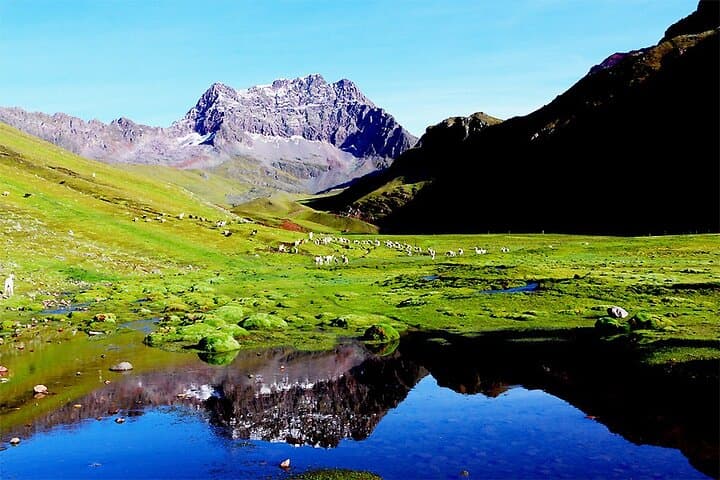
Geology explains the palette: layered sedimentary deposits rich in iron oxides, clays and other minerals were uplifted and eroded to expose streaked strata. The mountain sits within the high Andes, flanked by pastoral communities whose herds of llamas and alpacas frequently drift across the route. Historically the area is part of the Ausangate ceremonial landscape, and local families maintain seasonal grazing patterns and traditional weaving practices in the valleys below.
Expect rocky, often exposed trails with steep pitches and 600–900 m of elevation change depending on your starting point; the summit area reaches roughly 5,000–5,200 m (16,400–17,060 ft). Weather swings fast — sun one hour, wind and sleet the next — so move deliberately and respect acclimatization.
Practical guidance: acclimatize in Cusco for 48–72 hours, carry layered insulation, high-SPF sun protection, and ample water. Trekking poles reduce knee strain on steep sections; a slow, steady pace lowers the risk of altitude sickness. There is usually a small entrance fee at the trailhead—bring cash—and local guides or homestays support the communities you pass. Arriving early or choosing an overnight option reduces crowds and lets you meet the mountain in quieter light.
challenging.
24–36 hours.
Good cardiovascular fitness and prior experience hiking at altitude recommended; be comfortable with sustained uphill walking.
Vinicunca’s summit area reaches about 5,000–5,200 m; most visitors experience thinner air—acclimatize in Cusco and ascend slowly to reduce symptoms.
Local guides improve logistics, safety and cultural interaction; many visitors choose guided trips, especially for overnight options.
Facilities are minimal—basic vendors and composting toilets occasionally at the trailhead; bring supplies and cash for small purchases.
Early starts, overnight departures that reach the ridge at sunrise, and the shoulder seasons (May or September) tend to be less crowded than peak dry-season months.
The area lies within ancestral Andean lands linked to the Ausangate ceremonial region; local communities maintain pastoral traditions and seasonal grazing routes.
High-altitude grasslands are fragile—stick to established trails, pack out waste and support local guides who contribute to community-based tourism.
Ayni Peru Expedition SAC operates guided outdoor trips and adventures with an emphasis on safety, stewardship, and memorable experiences.


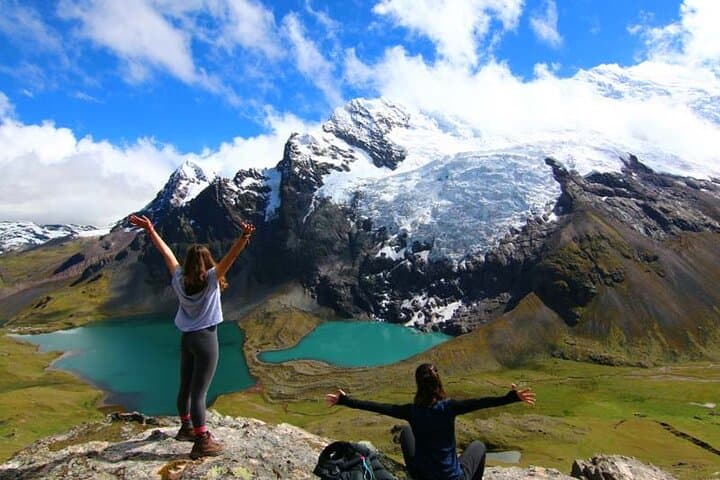
A pre-dawn van pulls away from Cusco and the night thins into high puna grasslands. Under a sky that hardens into blue, the trail to Vinicunca rises like a painted ridge, bands of rust, ochre and mint-green daring you upward while Ausangate watches with snow-capped reserve. Walking here means working against altitude as much as slope; each step is a conversation between lungs and thin air.
A pre-dawn van pulls away from Cusco and the night thins into high puna grasslands. Under a sky that hardens into blue, the trail to Vinicunca rises like a painted ridge, bands of rust, ochre and mint-green daring you upward while Ausangate watches with snow-capped reserve. Walking here means working against altitude as much as slope; each step is a conversation between lungs and thin air.
Geology explains the palette: layered sedimentary deposits rich in iron oxides, clays and other minerals were uplifted and eroded to expose streaked strata. The mountain sits within the high Andes, flanked by pastoral communities whose herds of llamas and alpacas frequently drift across the route. Historically the area is part of the Ausangate ceremonial landscape, and local families maintain seasonal grazing patterns and traditional weaving practices in the valleys below.
Expect rocky, often exposed trails with steep pitches and 600–900 m of elevation change depending on your starting point; the summit area reaches roughly 5,000–5,200 m (16,400–17,060 ft). Weather swings fast — sun one hour, wind and sleet the next — so move deliberately and respect acclimatization.
Practical guidance: acclimatize in Cusco for 48–72 hours, carry layered insulation, high-SPF sun protection, and ample water. Trekking poles reduce knee strain on steep sections; a slow, steady pace lowers the risk of altitude sickness. There is usually a small entrance fee at the trailhead—bring cash—and local guides or homestays support the communities you pass. Arriving early or choosing an overnight option reduces crowds and lets you meet the mountain in quieter light.