THE ADVENTURE COLLECTIVE® · Independent discovery and booking for outdoor travel

Raft the legendary Zambezi below Victoria Falls on a 2–3 day expedition through Batoka Gorge. Expect class III–V rapids, beach camps, swims under the falls and professional guides—ideal for strong swimmers seeking technical whitewater and backcountry nights.
Raft the legendary Zambezi below Victoria Falls on a 2–3 day expedition through Batoka Gorge. Expect class III–V rapids, beach camps, swims under the falls and professional guides—ideal for strong swimmers seeking technical whitewater and backcountry nights.
The first light on the Zambezi throws a cigarette of gold across flat pools, and the gorge answers with a low, relentless roar. On an overnight rafting trip beneath Victoria Falls, the river becomes both playground and route: it dares you into foam-churned corridors, then offers quiet beaches where you sleep under a sky so clear the Milky Way seems close enough to touch.
Verified experiences and guided adventures in the surrounding area.
Operated by Bundu Rafting · Livingstone, Southern Province
The first light on the Zambezi throws a cigarette of gold across flat pools, and the gorge answers with a low, relentless roar. On an overnight rafting trip beneath Victoria Falls, the river becomes both playground and route: it dares you into foam-churned corridors, then offers quiet beaches where you sleep under a sky so clear the Milky Way seems close enough to touch.
This stretch of river carved the Batoka Gorge after the falls dropped the landscape thousands of years ago; the channel is deep, high-volume and, during the low-water months of August to December, exposes the raw architecture of ledges and chutes that make these rapids world-famous. Local lore ties the current to the region's colonial and pre-colonial stories—Livingstone, the nearby town, carries the name of the explorer who first publicized Victoria Falls to the West. But the river belongs to the pachyderms and hippos that visit the shoreline, and to the guides whose generations have learned to read the water.
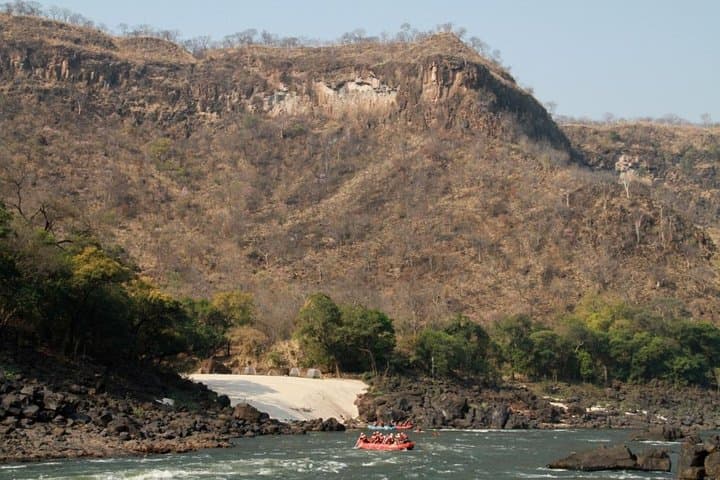
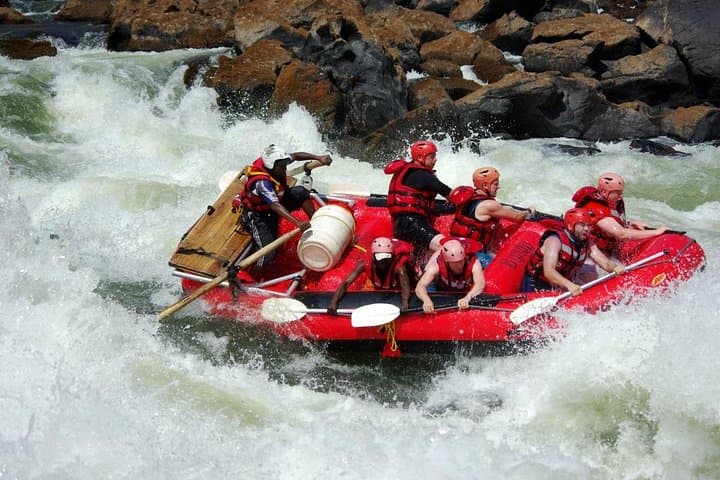
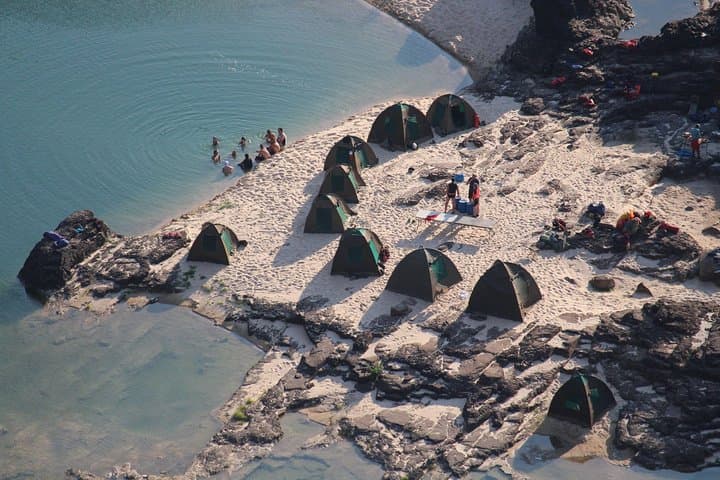
A two- or three-day itinerary balances adrenaline and wilderness: long runs of class III to V rapids punctuated by calm pools, swims beneath the spray of the falls, evenings cooking over open flames, and beach camps on sandbars that feel entirely remote though pickup from Livingstone is simple. The geology is visible at every turn—vertical basalt walls scored by floodwater—and the wildlife comes to the river edges at dusk. Guides will often shoot photos and video on day one, leaving you free to focus on the river.
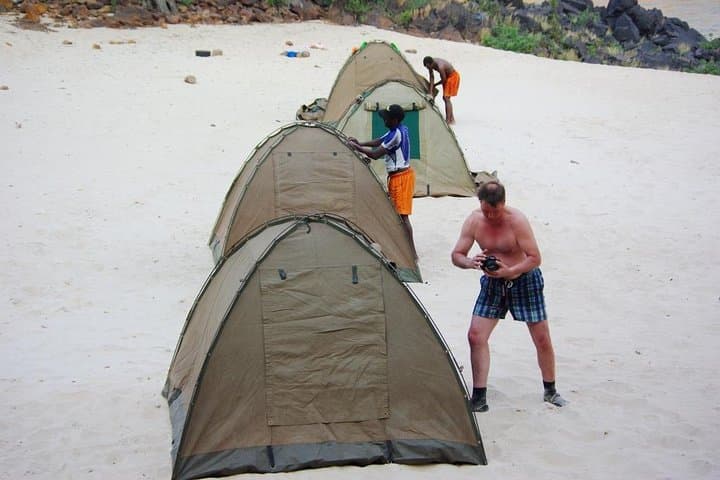
Practicalities matter: trips run roughly 48–72 hours depending on the option, require a minimum age of 15 and a moderate to strong level of fitness. Water is warm in the low season, but currents are powerful—strong swimming skills and a willingness to follow guide commands are essential. You’ll sleep in expedition tents or under the stars on sand, eat campfire-cooked dinners, and rinse off in the river.
Timing your trip for early morning departures and late-afternoon camps gives the best light for photography and the quietest wildlife encounters. Pack a dry bag, sturdy water shoes, reef-safe sunscreen and a warm mid-layer for nights in the gorge. Hydrate before and during the run—heat and exertion add up fast.
For adventurous travelers who want technical whitewater, backcountry nights, and the unique thrill of rafting one of the planet’s signature rivers, this overnight Zambezi trip delivers an efficient, raw and unforgettable experience—where every rapid pushes you forward and every campfire anchors you to place.
challenging.
2–3 days.
Moderate to high—participants should be comfortable with prolonged physical effort, strong swimming and working as a team in rapids.
Minimum age is 15 years; participants must be able to follow guide instructions and swim.
Expect a demanding 2–3 day itinerary with repeated rapid runs, swimming and campsite setup—good fitness is required.
Prior whitewater experience is helpful for confidence in class IV–V rapids, but professional guides run safety briefings and coach paddling technique.
Guides supply helmets, lifejackets, expedition rafts, throw bags and first-aid kits; personal flotation devices are mandatory.
Yes—meals (breakfast, lunch and dinner as specified) and basic camping equipment are included; check provider details for sleeping bag availability.
Yes—swimming under the spray is included when conditions and safety allow, typically on day one during the low-water season.
The Batoka Gorge below Victoria Falls was carved as the falls migrated upstream; the area around Livingstone carries the explorer's name and long local histories tied to the river.
Trips run during low-water months when boat traffic is concentrated; operators emphasize leave-no-trace camping and minimizing campfire impact on vegetation.
Bundu Rafting operates guided outdoor trips and adventures with an emphasis on safety, stewardship, and memorable experiences.
The first light on the Zambezi throws a cigarette of gold across flat pools, and the gorge answers with a low, relentless roar. On an overnight rafting trip beneath Victoria Falls, the river becomes both playground and route: it dares you into foam-churned corridors, then offers quiet beaches where you sleep under a sky so clear the Milky Way seems close enough to touch.
The first light on the Zambezi throws a cigarette of gold across flat pools, and the gorge answers with a low, relentless roar. On an overnight rafting trip beneath Victoria Falls, the river becomes both playground and route: it dares you into foam-churned corridors, then offers quiet beaches where you sleep under a sky so clear the Milky Way seems close enough to touch.
This stretch of river carved the Batoka Gorge after the falls dropped the landscape thousands of years ago; the channel is deep, high-volume and, during the low-water months of August to December, exposes the raw architecture of ledges and chutes that make these rapids world-famous. Local lore ties the current to the region's colonial and pre-colonial stories—Livingstone, the nearby town, carries the name of the explorer who first publicized Victoria Falls to the West. But the river belongs to the pachyderms and hippos that visit the shoreline, and to the guides whose generations have learned to read the water.
A two- or three-day itinerary balances adrenaline and wilderness: long runs of class III to V rapids punctuated by calm pools, swims beneath the spray of the falls, evenings cooking over open flames, and beach camps on sandbars that feel entirely remote though pickup from Livingstone is simple. The geology is visible at every turn—vertical basalt walls scored by floodwater—and the wildlife comes to the river edges at dusk. Guides will often shoot photos and video on day one, leaving you free to focus on the river.
Practicalities matter: trips run roughly 48–72 hours depending on the option, require a minimum age of 15 and a moderate to strong level of fitness. Water is warm in the low season, but currents are powerful—strong swimming skills and a willingness to follow guide commands are essential. You’ll sleep in expedition tents or under the stars on sand, eat campfire-cooked dinners, and rinse off in the river.
Timing your trip for early morning departures and late-afternoon camps gives the best light for photography and the quietest wildlife encounters. Pack a dry bag, sturdy water shoes, reef-safe sunscreen and a warm mid-layer for nights in the gorge. Hydrate before and during the run—heat and exertion add up fast.
For adventurous travelers who want technical whitewater, backcountry nights, and the unique thrill of rafting one of the planet’s signature rivers, this overnight Zambezi trip delivers an efficient, raw and unforgettable experience—where every rapid pushes you forward and every campfire anchors you to place.