THE ADVENTURE COLLECTIVE® · Independent discovery and booking for outdoor travel

Spend a night inside Plitvice and arrive at Krka before the crowds on this private, two-day adventure from Split. Early-entry access, local guides, and park-side accommodation let you experience waterfalls and travertine lakes with time and quiet.
Spend a night inside Plitvice and arrive at Krka before the crowds on this private, two-day adventure from Split. Early-entry access, local guides, and park-side accommodation let you experience waterfalls and travertine lakes with time and quiet.
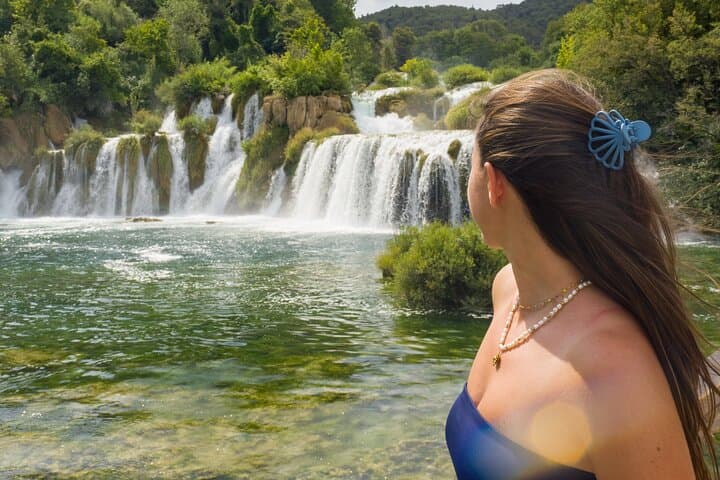
At dawn your minivan slips away from Split, headlights cutting a ribbon through coastal mist as the first cascades of Krka begin to announce themselves. Boardwalks glint with spray, and the river dares you to step closer; limestone terraces reflect pale green where water moves slow and sudden.
Verified experiences and guided adventures in the surrounding area.
Operated by Np Tours Croatia · Plitvička Jezera, Lika-Senj County
At dawn your minivan slips away from Split, headlights cutting a ribbon through coastal mist as the first cascades of Krka begin to announce themselves. Boardwalks glint with spray, and the river dares you to step closer; limestone terraces reflect pale green where water moves slow and sudden.
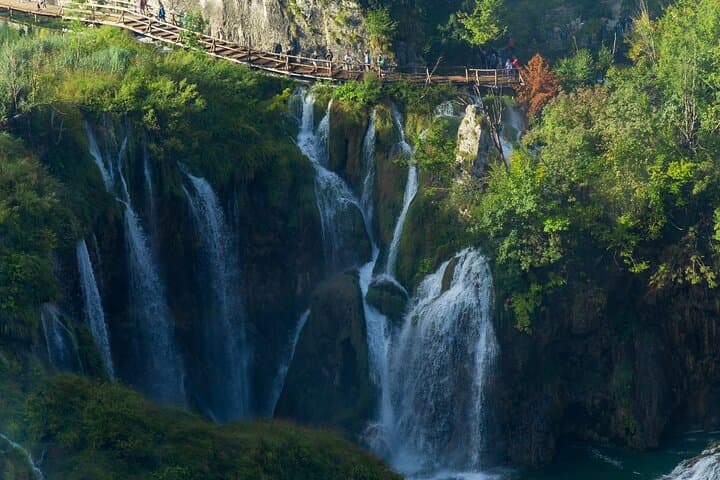
This overnight links two distinct karst systems. Krka’s canyons and Skradinski Buk grew from soluble limestone shaped over millennia, while Plitvice’s stepped travertine lakes—protected as Croatia’s first national park in 1949 and a UNESCO site in 1979—continue to build the shelves that hold its emerald pools. Local guides weave geology with regional food, monastery histories, and practical route knowledge.
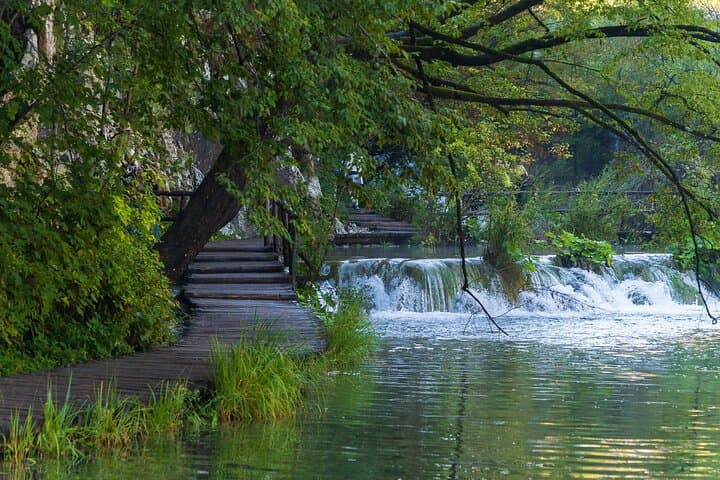
Expect Krka to be tactile and social: accessible boardwalks, sprays of mist, and authorized swimming in designated spots. Plitvice is more restrained; early-entry access gives you hours of near-solitude on wooden paths that curl above jade water while waterfalls push the air into motion.
Staying inside Plitvice alters the day: an evening meal of local dishes, a quiet night near park lights, then a pre-dawn circuit when light reveals travertine details few visitors see.
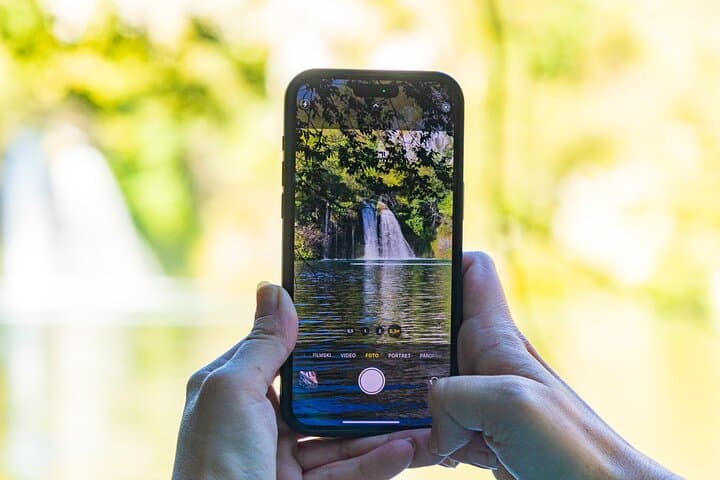
Practical guidance: bring sturdy waterproof shoes, a light rain layer, and a refillable water bottle—boardwalks stay wet and temperatures can vary. Cameras with protective covers are useful. Swimming is allowed at Krka but strictly forbidden at Plitvice; follow your guide and park signs. Moderate fitness is required for several hours of walking and stair sections; reserve entrance times and pack layers for earlier starts.
moderate.
2 days (approx. 48 hours).
Should be comfortable walking 3–6 hours across uneven boardwalks and stairs; basic stamina required.
Yes — entrance fees for both Krka and Plitvice are included in the tour price.
No — swimming in designated areas is allowed at Krka but strictly prohibited throughout Plitvice to protect travertine formations.
Accommodation is twin-share bungalow-style lodging within the park zone with shared bathrooms and an on-site restaurant.
The tour requires a moderate fitness level: expect several hours of walking each day on boardwalks and stairs; it is not recommended for travelers with serious back, heart, or pregnancy-related restrictions.
Plitvice was established as Croatia’s first national park in 1949 and became a UNESCO World Heritage site in 1979; Krka’s river corridors host medieval monasteries and traditional river mills.
Both parks enforce stay-on-trail rules to protect travertine and karst systems; avoid single-use plastics, and follow swimming restrictions to reduce erosion and ecological impact.
Np Tours Croatia operates guided outdoor trips and adventures with an emphasis on safety, stewardship, and memorable experiences.
At dawn your minivan slips away from Split, headlights cutting a ribbon through coastal mist as the first cascades of Krka begin to announce themselves. Boardwalks glint with spray, and the river dares you to step closer; limestone terraces reflect pale green where water moves slow and sudden.
At dawn your minivan slips away from Split, headlights cutting a ribbon through coastal mist as the first cascades of Krka begin to announce themselves. Boardwalks glint with spray, and the river dares you to step closer; limestone terraces reflect pale green where water moves slow and sudden.
This overnight links two distinct karst systems. Krka’s canyons and Skradinski Buk grew from soluble limestone shaped over millennia, while Plitvice’s stepped travertine lakes—protected as Croatia’s first national park in 1949 and a UNESCO site in 1979—continue to build the shelves that hold its emerald pools. Local guides weave geology with regional food, monastery histories, and practical route knowledge.
Expect Krka to be tactile and social: accessible boardwalks, sprays of mist, and authorized swimming in designated spots. Plitvice is more restrained; early-entry access gives you hours of near-solitude on wooden paths that curl above jade water while waterfalls push the air into motion.
Staying inside Plitvice alters the day: an evening meal of local dishes, a quiet night near park lights, then a pre-dawn circuit when light reveals travertine details few visitors see.
Practical guidance: bring sturdy waterproof shoes, a light rain layer, and a refillable water bottle—boardwalks stay wet and temperatures can vary. Cameras with protective covers are useful. Swimming is allowed at Krka but strictly forbidden at Plitvice; follow your guide and park signs. Moderate fitness is required for several hours of walking and stair sections; reserve entrance times and pack layers for earlier starts.