THE ADVENTURE COLLECTIVE® · Independent discovery and booking for outdoor travel

Spend two days on Lake Titicaca visiting floating Uros islands, sleeping in a Taquile family hut and exploring Amantani’s weaving traditions. This private expedition combines boat crossings, short island hikes and immersive local hospitality.
Spend two days on Lake Titicaca visiting floating Uros islands, sleeping in a Taquile family hut and exploring Amantani’s weaving traditions. This private expedition combines boat crossings, short island hikes and immersive local hospitality.
The wind on Lake Titicaca has a way of moving you — not only across water but back through time. You leave Puno early, climb into a private motor boat and slide onto the lake’s high plain; the surface opens into a broad, wind-polished mirror and the Andes press in like an audience. First stop: the Uros, a cluster of man-made totora reed islands that bob gently and smell faintly of lake and sun. A local canoe glides through narrow channels as guides demonstrate reed weaving and daily life afloat.
Verified experiences and guided adventures in the surrounding area.
Operated by Cultural Immersion Travel Peru E.I.R.L. · Puno, Puno
The wind on Lake Titicaca has a way of moving you — not only across water but back through time. You leave Puno early, climb into a private motor boat and slide onto the lake’s high plain; the surface opens into a broad, wind-polished mirror and the Andes press in like an audience. First stop: the Uros, a cluster of man-made totora reed islands that bob gently and smell faintly of lake and sun. A local canoe glides through narrow channels as guides demonstrate reed weaving and daily life afloat.
Later the boat threads toward Taquile, a raised island of stone terraces and slow, deliberate craft. Taquile’s terraces and stairways are pre-Incan in origin; its knitwear and textiles are locally celebrated and worn with pride as a language of identity. On day two a quick hop to Amantani reveals simple earthen houses, communal fields and weaver’s workshops — no hotels, limited electricity, a rhythm set by sunrise and the lake.
Geologically, Titicaca sits atop a high Andean basin at roughly 3,800 meters (12,500 ft), a freshwater expanse shaped by glacial and tectonic forces. Culturally, islands retain Quechua and Aymara traditions: hospitality, shared meals, and textiles that signal family ties.
Practical notes: expect gentle to moderate walking over stone steps and terraces, short boat crossings (commonly 30–90 minutes), and basic overnight huts with family-hosted meals. Hydrate and sleep low the night before to help with altitude; carry cash for small purchases, wear sun protection and layers for rapid temperature swings. With private transfers, an English-speaking guide, and two full days on the water and shore, this trip mixes easy travel logistics with deep cultural exchange.
moderate.
2 days (multi-day tour).
Suitable for travelers in reasonable health who can manage short hikes on uneven stone steps and tolerate high altitude.
Yes — you’ll be asked for passport details at booking and should carry your passport for identification when boarding boats.
It can be; symptoms range from mild headache to nausea. Hydrate, rest beforehand, avoid heavy alcohol and speak to a doctor about medication if you’ve had problems at altitude.
Overnight stays are in family huts with basic comforts: shared meals, simple bedding and limited electricity — it’s homestay-style, not hotel luxury.
Yes—notify the operator at booking. Meals are home-cooked and hosts will usually adapt dishes when given advance notice.
Lake Titicaca is a high Andean basin with pre-Incan and Incan cultural layers; islands like Taquile preserve communal land use and centuries-old textile traditions.
Visitors should avoid discarding non-biodegradable waste on islands and support local economies directly by buying crafts and using family homestays; freshwater preservation is critical to island livelihoods.
Cultural Immersion Travel Peru E.I.R.L. operates guided outdoor trips and adventures with an emphasis on safety, stewardship, and memorable experiences.


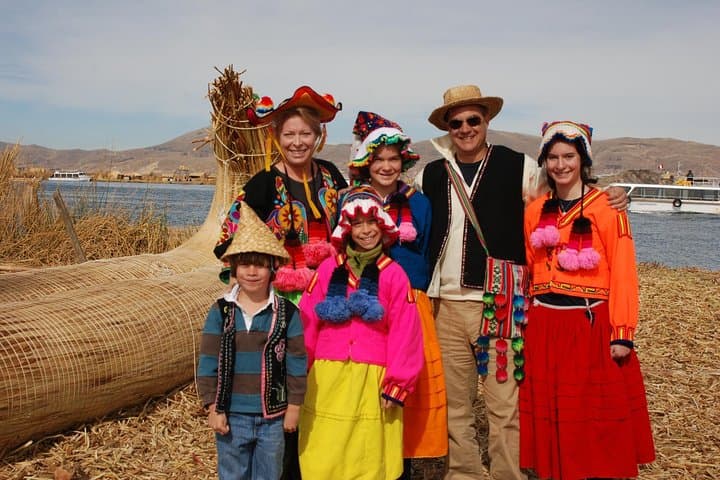
The wind on Lake Titicaca has a way of moving you — not only across water but back through time. You leave Puno early, climb into a private motor boat and slide onto the lake’s high plain; the surface opens into a broad, wind-polished mirror and the Andes press in like an audience. First stop: the Uros, a cluster of man-made totora reed islands that bob gently and smell faintly of lake and sun. A local canoe glides through narrow channels as guides demonstrate reed weaving and daily life afloat.
The wind on Lake Titicaca has a way of moving you — not only across water but back through time. You leave Puno early, climb into a private motor boat and slide onto the lake’s high plain; the surface opens into a broad, wind-polished mirror and the Andes press in like an audience. First stop: the Uros, a cluster of man-made totora reed islands that bob gently and smell faintly of lake and sun. A local canoe glides through narrow channels as guides demonstrate reed weaving and daily life afloat.
Later the boat threads toward Taquile, a raised island of stone terraces and slow, deliberate craft. Taquile’s terraces and stairways are pre-Incan in origin; its knitwear and textiles are locally celebrated and worn with pride as a language of identity. On day two a quick hop to Amantani reveals simple earthen houses, communal fields and weaver’s workshops — no hotels, limited electricity, a rhythm set by sunrise and the lake.
Geologically, Titicaca sits atop a high Andean basin at roughly 3,800 meters (12,500 ft), a freshwater expanse shaped by glacial and tectonic forces. Culturally, islands retain Quechua and Aymara traditions: hospitality, shared meals, and textiles that signal family ties.
Practical notes: expect gentle to moderate walking over stone steps and terraces, short boat crossings (commonly 30–90 minutes), and basic overnight huts with family-hosted meals. Hydrate and sleep low the night before to help with altitude; carry cash for small purchases, wear sun protection and layers for rapid temperature swings. With private transfers, an English-speaking guide, and two full days on the water and shore, this trip mixes easy travel logistics with deep cultural exchange.