THE ADVENTURE COLLECTIVE® · Independent discovery and booking for outdoor travel

Spend a night in Erg Chebbi on a classic camel caravan from Merzouga—watch the sunset from dune crests, share a campfire dinner with Berber music, and wake for a desert sunrise. This overnight trip blends easy-paced travel with authentic local hospitality and unforgettable star-filled skies.
Spend a night in Erg Chebbi on a classic camel caravan from Merzouga—watch the sunset from dune crests, share a campfire dinner with Berber music, and wake for a desert sunrise. This overnight trip blends easy-paced travel with authentic local hospitality and unforgettable star-filled skies.
A low sun slides along the crests of Erg Chebbi and the caravan moves like a slow punctuation against gold—camels padding through soft sand, guides calling quietly, and the desert widening into a horizon with no edges. Travelers arrive from Merzouga in late afternoon, lead their camels up a wind-sculpted dune and watch the sky burn from ochre to violet before the camp lanterns glow.
Verified experiences and guided adventures in the surrounding area.
Operated by Unforgettable Merzouga Sahara Desert Camel Trekking Experience · Merzouga, Drâa-Tafilalet
A low sun slides along the crests of Erg Chebbi and the caravan moves like a slow punctuation against gold—camels padding through soft sand, guides calling quietly, and the desert widening into a horizon with no edges. Travelers arrive from Merzouga in late afternoon, lead their camels up a wind-sculpted dune and watch the sky burn from ochre to violet before the camp lanterns glow.
Erg Chebbi is a relatively young dune field on Morocco’s southeastern margin, formed by Saharan winds depositing sand against a rocky plateau. The area has long been crossed by Amazigh (Berber) and nomadic routes; tonight’s camp continues that tradition with music, stories and simple hospitality around an open fire. Local culture is present in the food—tagine and mint tea—and in Gnawa rhythms that link the living landscape to older caravan histories.
Practical details are straightforward: expect sandy terrain and dune climbs up to 100–150 m of relief at the highest crests, minimal shade, and clear, dry nights ideal for starwatching. The overnight format typically includes a sunset camel transfer, dinner, a private or shared tent, and an early-morning sunrise view before return by camel or 4x4.
Prepare for temperature swings—hot daytime, cold desert night—bring layered clothing, head protection and a reliable water bottle. Footwear should handle sand and brief rocky approaches. Cameras, binoculars and a small flashlight improve the experience, while travel insurance and awareness of local customs (ask before photographing people) make the visit smoother.
For many visitors this is less a trek than a cultural immersion: a chance to move slowly through an elemental landscape, to sleep under a sky that feels impossibly close, and to begin the day with the dunes unfolding in pastel light.
easy.
24–26 hours.
Suitable for most fitness levels; able to mount/dismount a camel and walk short distances on sand.
The sunset camel transfer typically takes 45–90 minutes depending on the camp location and pace; the return in the morning is similar or may be by 4x4.
Camp options range from shared traditional tents to private luxury tents; some private tents include en-suite facilities—check your booking for specifics.
Yes—this experience is generally suitable for families and older travelers, though mounting camels and sandy walking require basic mobility; infants may need to sit on laps as noted by the operator.
Casual, comfortable layers are best; respectful modest dress is appreciated in rural Moroccan settings—avoid beachwear and reveal too much skin.
Erg Chebbi sits along historic trans-Saharan tracks once used by camel caravans and nomadic Amazigh communities; modern camps continue aspects of that hospitality while catering to visitors.
Dune ecosystems are fragile—avoid littering, stick to walking routes and follow camp guidelines on waste disposal and fuel use to minimize impact.
Unforgettable Merzouga Sahara Desert Camel Trekking Experience operates guided outdoor trips and adventures with an emphasis on safety, stewardship, and memorable experiences.

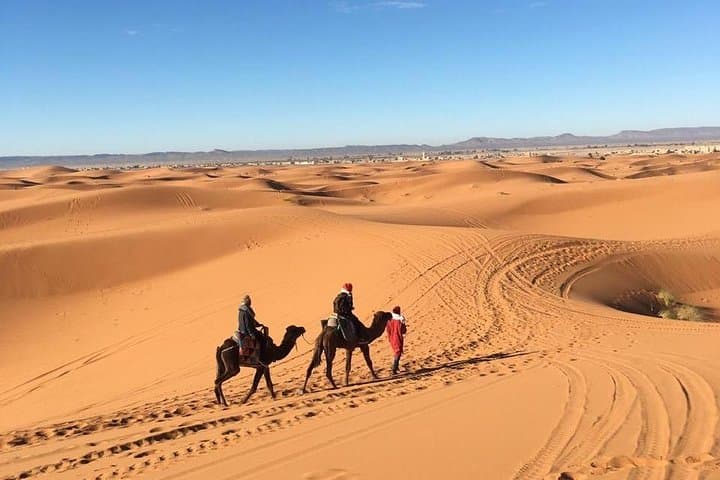

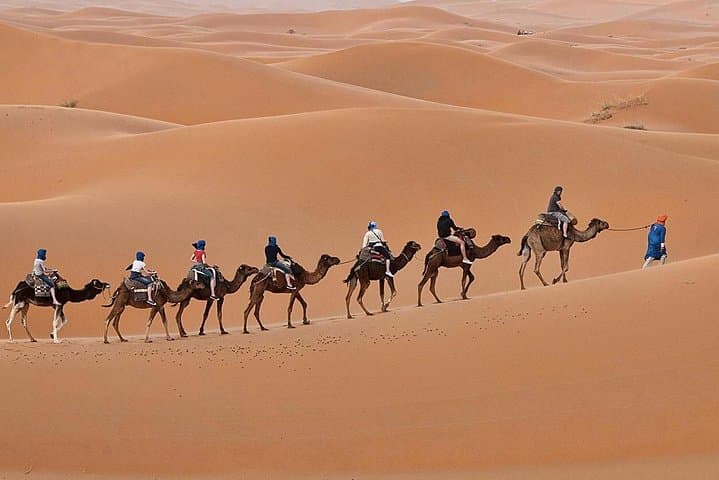
A low sun slides along the crests of Erg Chebbi and the caravan moves like a slow punctuation against gold—camels padding through soft sand, guides calling quietly, and the desert widening into a horizon with no edges. Travelers arrive from Merzouga in late afternoon, lead their camels up a wind-sculpted dune and watch the sky burn from ochre to violet before the camp lanterns glow.
A low sun slides along the crests of Erg Chebbi and the caravan moves like a slow punctuation against gold—camels padding through soft sand, guides calling quietly, and the desert widening into a horizon with no edges. Travelers arrive from Merzouga in late afternoon, lead their camels up a wind-sculpted dune and watch the sky burn from ochre to violet before the camp lanterns glow.
Erg Chebbi is a relatively young dune field on Morocco’s southeastern margin, formed by Saharan winds depositing sand against a rocky plateau. The area has long been crossed by Amazigh (Berber) and nomadic routes; tonight’s camp continues that tradition with music, stories and simple hospitality around an open fire. Local culture is present in the food—tagine and mint tea—and in Gnawa rhythms that link the living landscape to older caravan histories.
Practical details are straightforward: expect sandy terrain and dune climbs up to 100–150 m of relief at the highest crests, minimal shade, and clear, dry nights ideal for starwatching. The overnight format typically includes a sunset camel transfer, dinner, a private or shared tent, and an early-morning sunrise view before return by camel or 4x4.
Prepare for temperature swings—hot daytime, cold desert night—bring layered clothing, head protection and a reliable water bottle. Footwear should handle sand and brief rocky approaches. Cameras, binoculars and a small flashlight improve the experience, while travel insurance and awareness of local customs (ask before photographing people) make the visit smoother.
For many visitors this is less a trek than a cultural immersion: a chance to move slowly through an elemental landscape, to sleep under a sky that feels impossibly close, and to begin the day with the dunes unfolding in pastel light.