THE ADVENTURE COLLECTIVE® · Independent discovery and booking for outdoor travel

Spend a night in a luxury tent on the Erg Chebbi dunes: a camel trek at sunset, a Berber-fire dinner, and a clear-sky stargazing session. This overnight package pairs comfort with an authentic desert rhythm—ideal for travelers seeking a short, immersive Sahara experience.
Spend a night in a luxury tent on the Erg Chebbi dunes: a camel trek at sunset, a Berber-fire dinner, and a clear-sky stargazing session. This overnight package pairs comfort with an authentic desert rhythm—ideal for travelers seeking a short, immersive Sahara experience.
The sun slides low behind the orange teeth of Erg Chebbi and the dunes begin to glow like slow embers. You arrive by a low track from Merzouga, swap a 4x4 for a camel’s sway, and move over a landscape that seems to breathe: wind shaping ridges, sand whispering underfoot, the horizon uninterrupted.
Verified experiences and guided adventures in the surrounding area.
Operated by Morocco travel service · Merzouga, Drâa-Tafilalet
The sun slides low behind the orange teeth of Erg Chebbi and the dunes begin to glow like slow embers. You arrive by a low track from Merzouga, swap a 4x4 for a camel’s sway, and move over a landscape that seems to breathe: wind shaping ridges, sand whispering underfoot, the horizon uninterrupted.
This stretch of the Sahara near Merzouga has been shaped by millennia of wind and episodic floods—an erg of towering dunes that can reach roughly 100–150 meters above the plain. Berber communities have lived on the fringe of these sands for generations, trading dates, salt and stories along historic caravan routes. At camp, hosts serve hot mint tea and a tagine; as night deepens, Gnawa and Berber rhythms unfold around the fire.
Practical guidance: the experience is an overnight package—sunset camel trek (about 1–2 hours, 2–4 km of dune crossings) to a private luxury tent, dinner, Berber music and breakfast the next morning. Temperatures swing widely: hot by day, cold at night—layers are essential. Camps provide mattresses and meals, but accessible water is limited, so carry a refillable bottle. Footing on dunes is soft and uneven; expect short walks and stepping up and down dune crests rather than long hikes.
Timing your visit for late afternoon maximizes sunset light and reduces midday heat. Respect camp rules, minimize light pollution during stargazing, and leave no trace—these dunes recover slowly. This is an overnight that trades convenience for authentic desert rhythm: patience, simple pleasures and a sky full of stars.
easy.
Overnight (approx. 18 hours).
Suitable for most fitness levels; you should be comfortable mounting/ dismounting camels and walking short distances on soft sand.
Expect roughly 1–2 hours of camel riding spread over 2–4 km of dune terrain; guides pace the group for sunset photo stops.
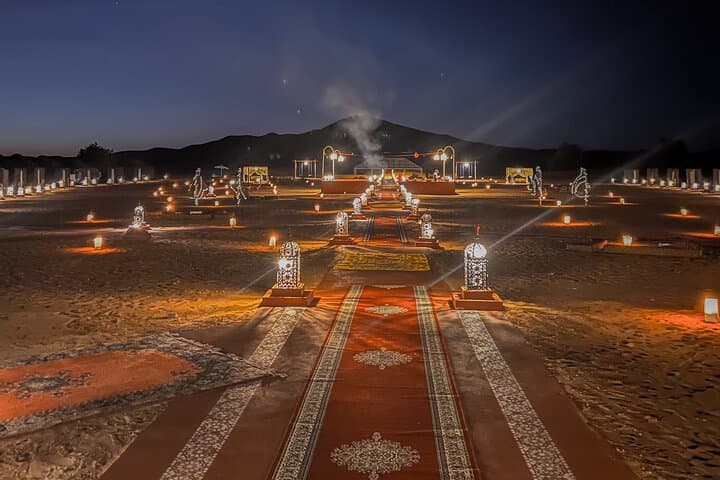
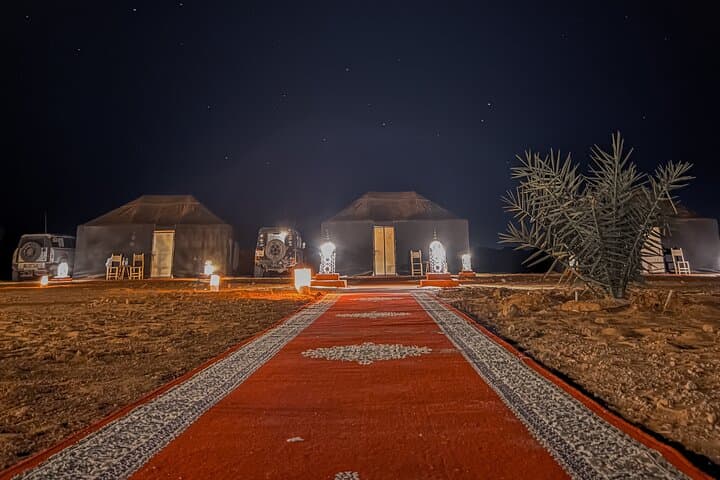
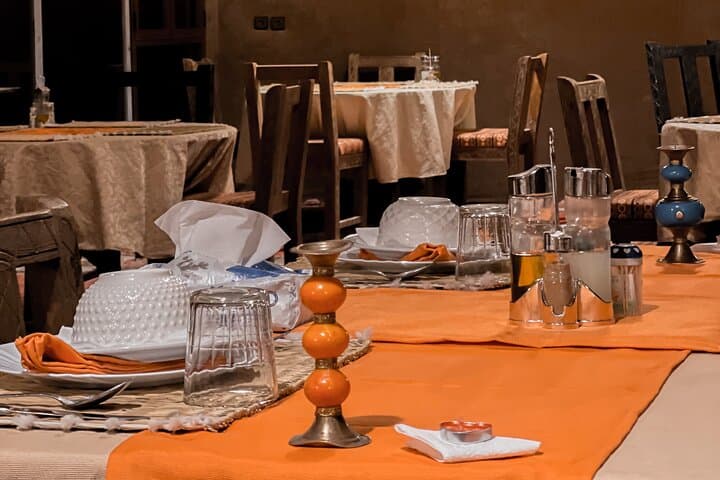
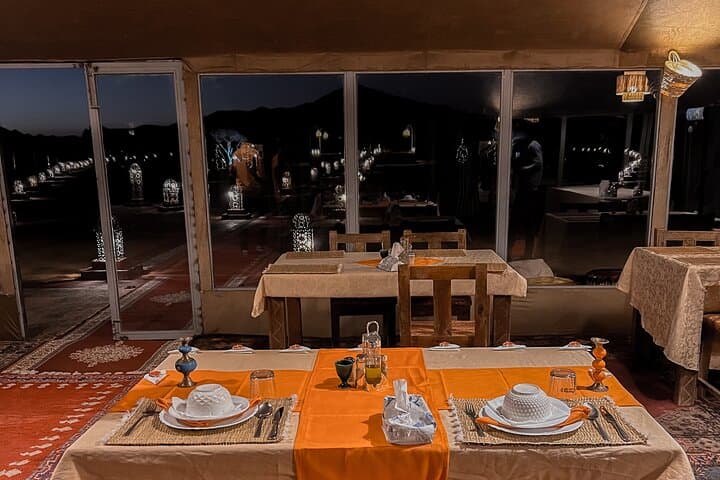
Luxury camps typically offer raised beds or mattresses, shared or en-suite tent bathrooms depending on the package, plus dinner and breakfast included.
Yes—many operators welcome children; infants may need a specialized seat during transfers and should be monitored on camels due to sway.
Operators generally have cancellation policies; extreme sandstorms can alter schedules, so check the provider’s policy and local forecasts before travel.
Erg Chebbi sits on old Saharan trade corridors used by Berber and Tuareg caravans; the region’s camps and music reflect that caravan heritage.
Dune ecosystems are fragile—avoid driving off designated tracks, pack out all waste, and limit nighttime light to preserve dark-sky viewing.
Morocco travel service operates guided outdoor trips and adventures with an emphasis on safety, stewardship, and memorable experiences.
The sun slides low behind the orange teeth of Erg Chebbi and the dunes begin to glow like slow embers. You arrive by a low track from Merzouga, swap a 4x4 for a camel’s sway, and move over a landscape that seems to breathe: wind shaping ridges, sand whispering underfoot, the horizon uninterrupted.
The sun slides low behind the orange teeth of Erg Chebbi and the dunes begin to glow like slow embers. You arrive by a low track from Merzouga, swap a 4x4 for a camel’s sway, and move over a landscape that seems to breathe: wind shaping ridges, sand whispering underfoot, the horizon uninterrupted.
This stretch of the Sahara near Merzouga has been shaped by millennia of wind and episodic floods—an erg of towering dunes that can reach roughly 100–150 meters above the plain. Berber communities have lived on the fringe of these sands for generations, trading dates, salt and stories along historic caravan routes. At camp, hosts serve hot mint tea and a tagine; as night deepens, Gnawa and Berber rhythms unfold around the fire.
Practical guidance: the experience is an overnight package—sunset camel trek (about 1–2 hours, 2–4 km of dune crossings) to a private luxury tent, dinner, Berber music and breakfast the next morning. Temperatures swing widely: hot by day, cold at night—layers are essential. Camps provide mattresses and meals, but accessible water is limited, so carry a refillable bottle. Footing on dunes is soft and uneven; expect short walks and stepping up and down dune crests rather than long hikes.
Timing your visit for late afternoon maximizes sunset light and reduces midday heat. Respect camp rules, minimize light pollution during stargazing, and leave no trace—these dunes recover slowly. This is an overnight that trades convenience for authentic desert rhythm: patience, simple pleasures and a sky full of stars.