THE ADVENTURE COLLECTIVE® · Independent discovery and booking for outdoor travel

Two days of private exploration from Marsa Alam take you to Dendera’s Hathor temple, Abydos’ Seti complex, and Luxor’s Valley of the Kings and Karnak. Expect long drives, expert commentary, and an overnight in Luxor to break the route into manageable stretches.
Two days of private exploration from Marsa Alam take you to Dendera’s Hathor temple, Abydos’ Seti complex, and Luxor’s Valley of the Kings and Karnak. Expect long drives, expert commentary, and an overnight in Luxor to break the route into manageable stretches.
A predawn pickup in Marsa Alam sets the tone: headlights cut through cool desert air as the minivan threads a ribbon of asphalt toward the Nile’s eastern floodplain. By midmorning the landscape changes—soft dunes give way to scrub and then the sudden geometry of carved stone and columns, sun-bleached but sharp against a clear Egyptian sky.
Verified experiences and guided adventures in the surrounding area.
Operated by Egypt Best Day Tours · Marsa Alam, Red Sea Governorate
A predawn pickup in Marsa Alam sets the tone: headlights cut through cool desert air as the minivan threads a ribbon of asphalt toward the Nile’s eastern floodplain. By midmorning the landscape changes—soft dunes give way to scrub and then the sudden geometry of carved stone and columns, sun-bleached but sharp against a clear Egyptian sky.
Day one centers on Dendera and Abydos. At Dendera the Temple of Hathor reveals late Ptolemaic reliefs and a preserved ceiling map; its painted scenes and arched hypostyle hall read like a provincial manifesto of Greco-Roman Egypt. Abydos feels quieter—Seti I’s memorial temple holds the Abydos King List and traces of an older cult site where pharaohs once sought proximity to the land of the dead.
On day two you move deeper into Thebes: Valley of the Kings’ tomb corridors, Hatshepsut’s tiered mortuary temple anchored against limestone cliffs, and the vast colonnades of Karnak. The geology is obvious—limestone escarpments give way to silt-rich plains where civilization clustered, and the monuments themselves are carved from that local stone.
Practical edge: this is a fast-paced, private two-day loop with long drives (expect up to 3–4 hours each leg). Bring sun protection, durable walking shoes, and a compact daypack; keep passport copies handy for ticketing. Comfortable pacing is allowed—guides typically provide time for photography and bazaar stops—but plan for early departures, heat in summer, and uneven tomb steps. The trip blends archaeological depth with logistical convenience: one night in Luxor, guided commentary, entrance fees, and transport back to Marsa Alam included.
moderate.
2 days (approx. 8–12 hours per day).
Suitable for travelers in average fitness; expect walking, stairs in tombs, and long periods seated during transfers.
Plan for roughly 3–4 hours of driving each way depending on traffic and stops—transfers are included in the tour.
The itinerary lists entrance fees among inclusions; confirm specific tomb access on booking as premium tombs in the Valley of the Kings sometimes require separate tickets.
The tour is described as physically easy overall and wheelchair accessible for transfers, but many tombs and ramps have steps; check with the operator about specific mobility arrangements before booking.
This listing provides a private English-speaking Egyptologist guide; ask at booking if you need another language.
Abydos and Dendera span millennia: Dendera’s present temple is largely Ptolemaic with Roman additions, while Abydos centers on Seti I’s New Kingdom memorial and an older royal necropolis that shaped burial cults for generations.
Tourism income supports site maintenance, but visitor pressure and sunlight exposure accelerate pigment and stone wear—follow guide directions, avoid touching reliefs, and use refillable water to limit plastic waste.
Egypt Best Day Tours operates guided outdoor trips and adventures with an emphasis on safety, stewardship, and memorable experiences.

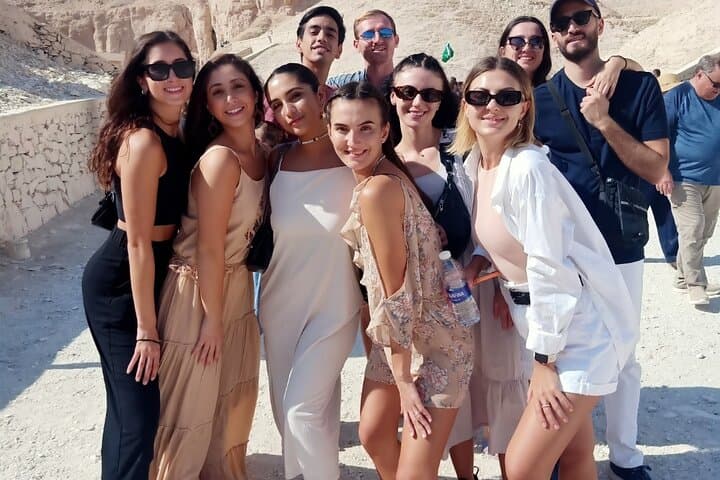


A predawn pickup in Marsa Alam sets the tone: headlights cut through cool desert air as the minivan threads a ribbon of asphalt toward the Nile’s eastern floodplain. By midmorning the landscape changes—soft dunes give way to scrub and then the sudden geometry of carved stone and columns, sun-bleached but sharp against a clear Egyptian sky.
A predawn pickup in Marsa Alam sets the tone: headlights cut through cool desert air as the minivan threads a ribbon of asphalt toward the Nile’s eastern floodplain. By midmorning the landscape changes—soft dunes give way to scrub and then the sudden geometry of carved stone and columns, sun-bleached but sharp against a clear Egyptian sky.
Day one centers on Dendera and Abydos. At Dendera the Temple of Hathor reveals late Ptolemaic reliefs and a preserved ceiling map; its painted scenes and arched hypostyle hall read like a provincial manifesto of Greco-Roman Egypt. Abydos feels quieter—Seti I’s memorial temple holds the Abydos King List and traces of an older cult site where pharaohs once sought proximity to the land of the dead.
On day two you move deeper into Thebes: Valley of the Kings’ tomb corridors, Hatshepsut’s tiered mortuary temple anchored against limestone cliffs, and the vast colonnades of Karnak. The geology is obvious—limestone escarpments give way to silt-rich plains where civilization clustered, and the monuments themselves are carved from that local stone.
Practical edge: this is a fast-paced, private two-day loop with long drives (expect up to 3–4 hours each leg). Bring sun protection, durable walking shoes, and a compact daypack; keep passport copies handy for ticketing. Comfortable pacing is allowed—guides typically provide time for photography and bazaar stops—but plan for early departures, heat in summer, and uneven tomb steps. The trip blends archaeological depth with logistical convenience: one night in Luxor, guided commentary, entrance fees, and transport back to Marsa Alam included.