THE ADVENTURE COLLECTIVE® · Independent discovery and booking for outdoor travel

Board a three-deck catamaran from Cairns for a two-day, one-night liveaboard that visits outer-reef moorings like Saxon and Norman. This trip pairs guided snorkels and night experiences with onboard meals and air-conditioned cabins.
Board a three-deck catamaran from Cairns for a two-day, one-night liveaboard that visits outer-reef moorings like Saxon and Norman. This trip pairs guided snorkels and night experiences with onboard meals and air-conditioned cabins.
You step off the marina jetty and the catamaran hums to life — three decks of open sun, a dive platform that dangles over water the color of crushed aquamarine. OceanQuest slips past the coastal fringe, and by evening the reef lights come alive beneath a star-strewn sky: plankton shimmer, fish scatter, and the hull becomes a slow-moving window into another world.
Verified experiences and guided adventures in the surrounding area.
Operated by Divers Den · Cairns, Queensland
You step off the marina jetty and the catamaran hums to life — three decks of open sun, a dive platform that dangles over water the color of crushed aquamarine. OceanQuest slips past the coastal fringe, and by evening the reef lights come alive beneath a star-strewn sky: plankton shimmer, fish scatter, and the hull becomes a slow-moving window into another world.
Geologically the Great Barrier Reef rides the continental shelf, a network of bommies, shoals and fringing atolls formed over millennia. Sites like Saxon, Norman and Hastings show hard and soft coral gardens, channels shaped by tidal flows and lagoons that shelter juvenile fish. The sea here is also deeply cultural — the waters are country to Traditional Owners such as the Gimuy Walubara Yidinji and Yirrganydji people, whose connection and knowledge shape local stewardship.
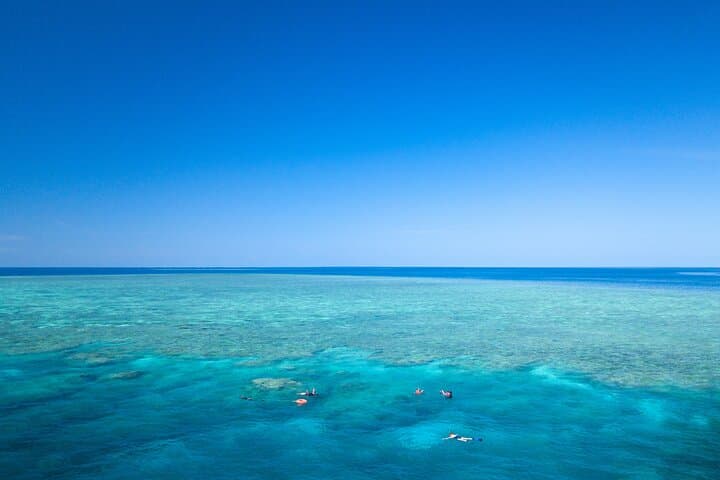
On a two-day liveaboard you’ll visit two outer-reef locations per day, with guided snorkel briefings, evening talks and optional night experiences like Sharks in the Dark. Expect brief transit windows, multiple moorings, and an emphasis on low-impact practices: stick to marked moorings, avoid touching coral, and use reef-safe sunscreen.
Practical planning: pack a well-fitting mask (you can use provided kit but fit matters), bring a lightweight wetsuit or rash guard for sun and chill, and prepare for some rolling seas — motion-sickness meds can save a trip. Stay hydrated, keep valuables dry, and book cabins early if you want a window. For fitness, be comfortable entering and exiting from a swim platform and swimming short distances in current. Two days isn’t just a peek — it gives time to read the reef’s currents, spot turtles at cleaning stations, and return to the boat with salt in your hair and new confidence in open-water snorkeling.
moderate.
2 days (48 hours).
Moderate; should be comfortable entering/exiting from a swim platform and swimming short open-water routes
Yes — masks, snorkels, fins and briefing are provided, but many guests bring a personal mask for fit and comfort.
Non-swimmers can travel but must notify the operator; options include staying on deck, using flotation aids, and staying with a guide in shallow water.
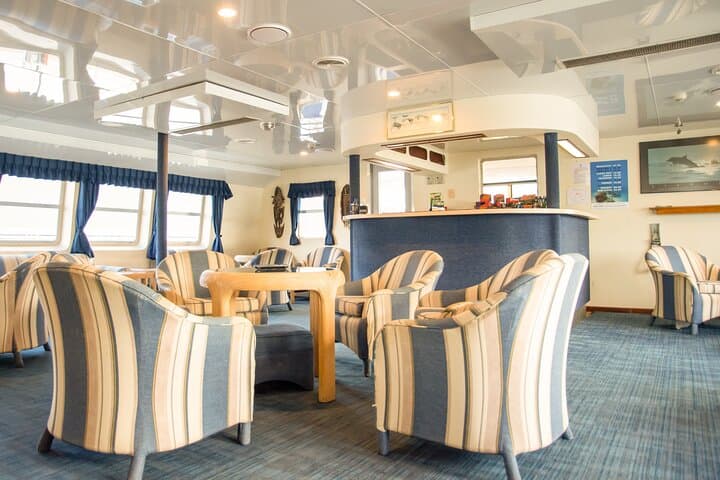
Cabins are air-conditioned and en-suite, though not all cabins have windows; the operator assigns cabins based on booking type.
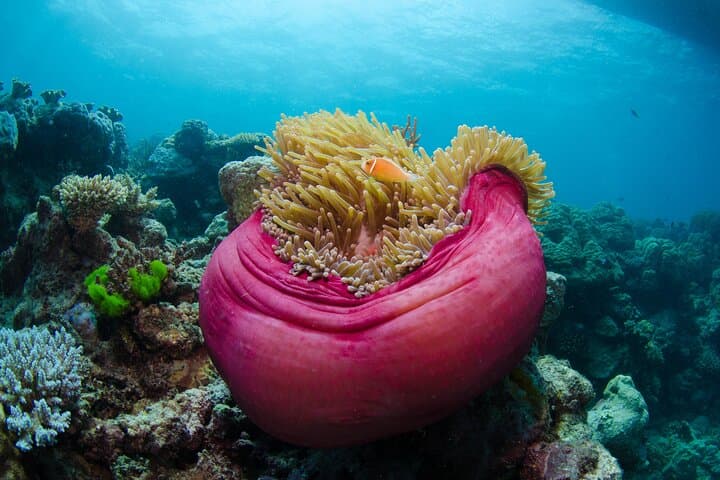
Expect turtles, reef sharks, rays, and abundant reef fish; sightings depend on site conditions and time of day.
The reef’s modern scientific mapping began in the 19th century, but Traditional Owners have navigated and cared for these waters for thousands of years.
The Great Barrier Reef faces warming and bleaching events; operators follow mooring, waste and sunscreen guidelines to reduce visitor impact.
Divers Den operates guided outdoor trips and adventures with an emphasis on safety, stewardship, and memorable experiences.
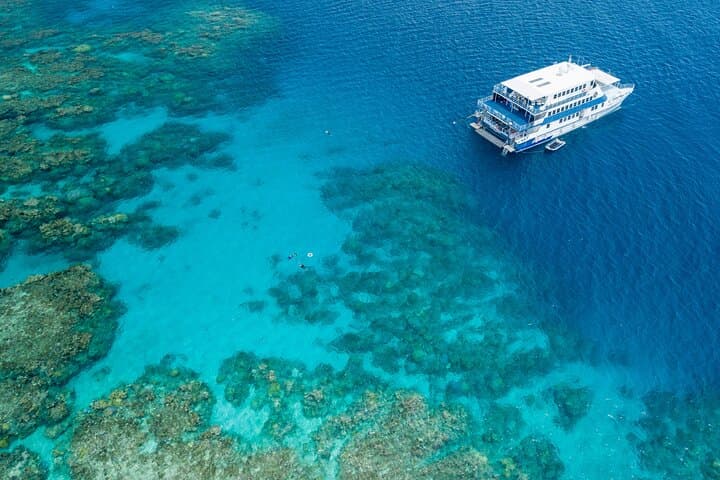
You step off the marina jetty and the catamaran hums to life — three decks of open sun, a dive platform that dangles over water the color of crushed aquamarine. OceanQuest slips past the coastal fringe, and by evening the reef lights come alive beneath a star-strewn sky: plankton shimmer, fish scatter, and the hull becomes a slow-moving window into another world.
You step off the marina jetty and the catamaran hums to life — three decks of open sun, a dive platform that dangles over water the color of crushed aquamarine. OceanQuest slips past the coastal fringe, and by evening the reef lights come alive beneath a star-strewn sky: plankton shimmer, fish scatter, and the hull becomes a slow-moving window into another world.
Geologically the Great Barrier Reef rides the continental shelf, a network of bommies, shoals and fringing atolls formed over millennia. Sites like Saxon, Norman and Hastings show hard and soft coral gardens, channels shaped by tidal flows and lagoons that shelter juvenile fish. The sea here is also deeply cultural — the waters are country to Traditional Owners such as the Gimuy Walubara Yidinji and Yirrganydji people, whose connection and knowledge shape local stewardship.
On a two-day liveaboard you’ll visit two outer-reef locations per day, with guided snorkel briefings, evening talks and optional night experiences like Sharks in the Dark. Expect brief transit windows, multiple moorings, and an emphasis on low-impact practices: stick to marked moorings, avoid touching coral, and use reef-safe sunscreen.
Practical planning: pack a well-fitting mask (you can use provided kit but fit matters), bring a lightweight wetsuit or rash guard for sun and chill, and prepare for some rolling seas — motion-sickness meds can save a trip. Stay hydrated, keep valuables dry, and book cabins early if you want a window. For fitness, be comfortable entering and exiting from a swim platform and swimming short distances in current. Two days isn’t just a peek — it gives time to read the reef’s currents, spot turtles at cleaning stations, and return to the boat with salt in your hair and new confidence in open-water snorkeling.