THE ADVENTURE COLLECTIVE® · Independent discovery and booking for outdoor travel

Sleep beneath clear desert stars and hike to Oman’s highest ridge on a two-day guided trip from Muscat. This overnight summit hike combines cultural stops in Nizwa and Misfat with a challenging summit ascent and panoramic canyon views.
Sleep beneath clear desert stars and hike to Oman’s highest ridge on a two-day guided trip from Muscat. This overnight summit hike combines cultural stops in Nizwa and Misfat with a challenging summit ascent and panoramic canyon views.
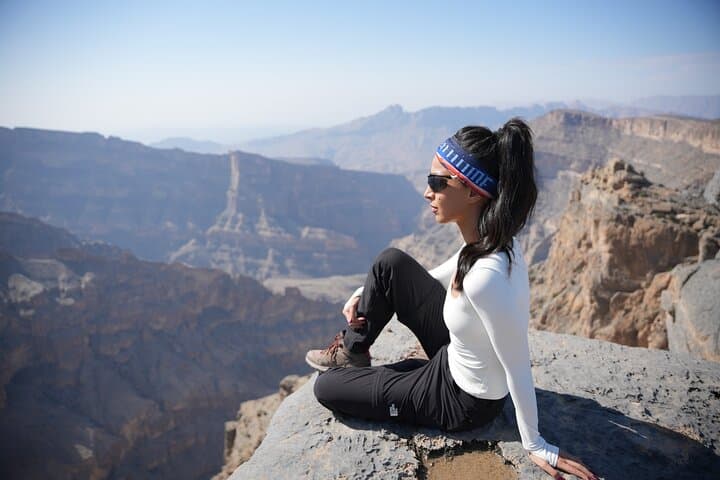
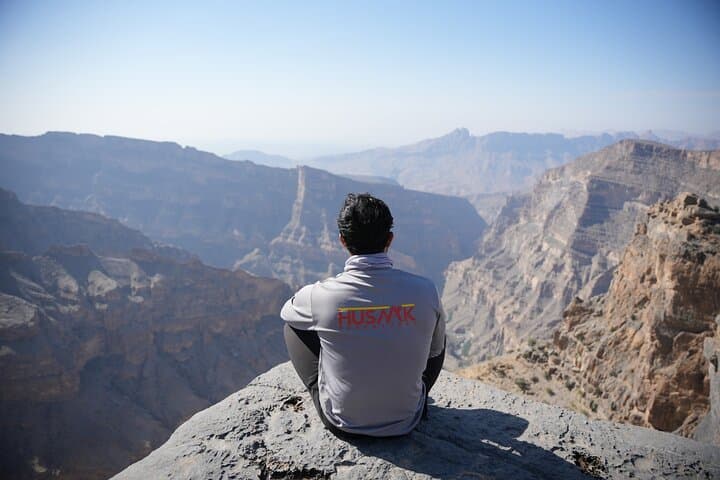
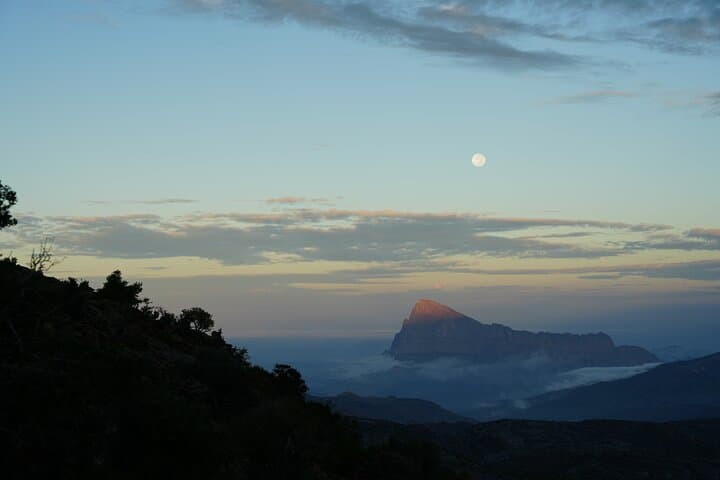
A cold wind rolls across the plateau as you step out of the campfire ring — the dark maw of Wadi Ghul daring you toward the rim. On an overnight trip to Jebel Shams you sleep under stars that feel close enough to touch, then let the dawn push you up steep switchbacks toward Oman’s highest viewpoint.
Verified experiences and guided adventures in the surrounding area.
Operated by Husaak Adventures · Nizwa, Ad Dakhiliyah
A cold wind rolls across the plateau as you step out of the campfire ring — the dark maw of Wadi Ghul daring you toward the rim. On an overnight trip to Jebel Shams you sleep under stars that feel close enough to touch, then let the dawn push you up steep switchbacks toward Oman’s highest viewpoint.
The massif belongs to the Al Hajar range, a band of uplifted limestone carved over millennia into deep canyons and terraces. Nearby villages like Al Hamra and Misfat al Abriyeen reflect centuries of mountain life: dry-stone houses, falaj irrigation channels, and the trade history concentrated at Nizwa Fort, the region’s cultural hub.
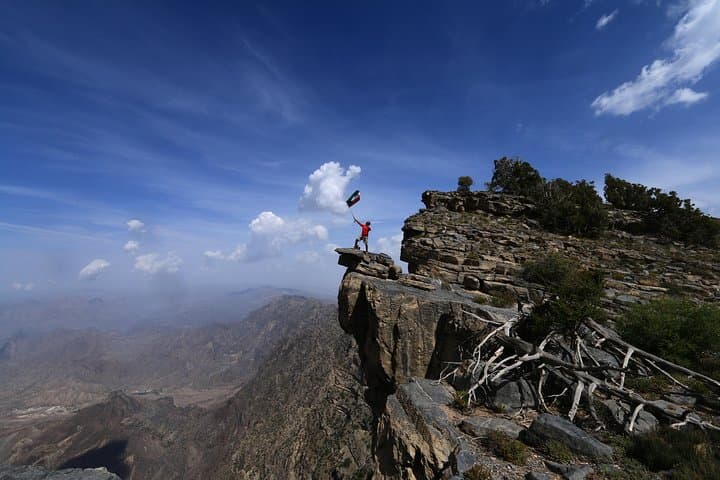
The experience mixes culture with raw geology — a night of simple camping followed by a summit hike to roughly 3,000 m with exposed sections, loose rock and wide canyon vistas. Guides often combine a morning visit to Nizwa souq and the village of Misfat on the drive in; evenings bring a communal BBQ and quiet skies.
Practical notes: expect a challenging day of hiking with steep, rocky terrain and up to 1,000–1,400 m of elevation change depending on start point. Temperatures swing dramatically between cold nights and hot valley days, so layer. Carry 2–3 liters of water for the summit day, use sturdy boots and trekking poles for scree, and bring a headlamp for early starts. Leave no trace — camp on durable surfaces and pack out waste. With proper fitness and preparation, the overnight summit climb is a compact, high-reward mountain adventure that pairs Omani culture with alpine exposure.
challenging.
2 days (overnight).
Good cardiovascular fitness and regular hiking experience; able to carry an 8–12 kg daypack and handle prolonged ascents/descents.
The summit day typically involves 3–5 hours ascent depending on start point, with 800–1,400 m of elevation gain on steep and sometimes loose terrain.
No official permits are usually required for guided trips; basic personal gear (boots, layers, headlamp) is expected—technical climbing gear is not necessary.
Camping is rustic: guided groups use pre-selected sites with simple cooking setups and campfire areas; toilets are basic or portable, so plan accordingly.
Not recommended for young children, pregnant travelers, or those with significant heart or spinal conditions; participants should have high physical fitness.
The Jebel Shams area sits within the Al Hajar Mountains, long inhabited by Omani mountain communities and linked to trade routes served by Nizwa’s historic fort and souq.
The high plateau hosts fragile alpine flora and grazing areas; follow leave-no-trace principles, camp on durable ground and avoid disturbing wildlife or cultural sites.
Husaak Adventures operates guided outdoor trips and adventures with an emphasis on safety, stewardship, and memorable experiences.
A cold wind rolls across the plateau as you step out of the campfire ring — the dark maw of Wadi Ghul daring you toward the rim. On an overnight trip to Jebel Shams you sleep under stars that feel close enough to touch, then let the dawn push you up steep switchbacks toward Oman’s highest viewpoint.
A cold wind rolls across the plateau as you step out of the campfire ring — the dark maw of Wadi Ghul daring you toward the rim. On an overnight trip to Jebel Shams you sleep under stars that feel close enough to touch, then let the dawn push you up steep switchbacks toward Oman’s highest viewpoint.
The massif belongs to the Al Hajar range, a band of uplifted limestone carved over millennia into deep canyons and terraces. Nearby villages like Al Hamra and Misfat al Abriyeen reflect centuries of mountain life: dry-stone houses, falaj irrigation channels, and the trade history concentrated at Nizwa Fort, the region’s cultural hub.
The experience mixes culture with raw geology — a night of simple camping followed by a summit hike to roughly 3,000 m with exposed sections, loose rock and wide canyon vistas. Guides often combine a morning visit to Nizwa souq and the village of Misfat on the drive in; evenings bring a communal BBQ and quiet skies.
Practical notes: expect a challenging day of hiking with steep, rocky terrain and up to 1,000–1,400 m of elevation change depending on start point. Temperatures swing dramatically between cold nights and hot valley days, so layer. Carry 2–3 liters of water for the summit day, use sturdy boots and trekking poles for scree, and bring a headlamp for early starts. Leave no trace — camp on durable surfaces and pack out waste. With proper fitness and preparation, the overnight summit climb is a compact, high-reward mountain adventure that pairs Omani culture with alpine exposure.