THE ADVENTURE COLLECTIVE® · Independent discovery and booking for outdoor travel

Spend a night under the stars in the Rub' al Khali, visiting Wadi Dawkha's frankincense trees and the UNESCO-listed Lost City of Ubar. This overnight from Salalah combines archaeology, dune driving, and a Bedouin-style camp with included meals and transport.
Spend a night under the stars in the Rub' al Khali, visiting Wadi Dawkha's frankincense trees and the UNESCO-listed Lost City of Ubar. This overnight from Salalah combines archaeology, dune driving, and a Bedouin-style camp with included meals and transport.
The sun slides low over dunes that shift like a slow-moving ocean; wind drafts sketch ridges while your vehicle threads a track across fine sand. You arrive at a starlit camp where tents sit on the lip of the Empty Quarter and the quiet is so immediate the desert almost breathes.
Verified experiences and guided adventures in the surrounding area.
Operated by Marhaba Dhofar · Salalah, Dhofar
The sun slides low over dunes that shift like a slow-moving ocean; wind drafts sketch ridges while your vehicle threads a track across fine sand. You arrive at a starlit camp where tents sit on the lip of the Empty Quarter and the quiet is so immediate the desert almost breathes.
This overnight tour from Salalah visits Wadi Dawkha—home to the region's largest stands of wild frankincense—and the archaeological site known as the Lost City of Ubar, a UNESCO-listed remnant of a once-thriving incense trade. Geologically, the journey moves from limestone foothills into vast aeolian plains: sand seas shaped by wind and occasional hard-packed interdunal corridors.
Culturally, Dhofar's frankincense economy echoes through local stories and small museum displays at Ubar. Bedouin-style tents and a simple campfire meal offer a direct connection to the travel routes that linked Arabia to the Mediterranean for millennia.
Practically, expect roughly an hour’s drive from Salalah/Taqah hotels to the first stop, and 30–60 minute transfers between sites. The itinerary includes guided visits, museum admission at Ubar, dinner and breakfast, and standard camping gear or mobile pop-up tents. Nights are cool and exposed—bring layers; days are dry and sunny—bring sun protection and water.
This trip suits low-impact travelers who can tolerate bumpy 4x4 driving and sandy walking. Photograph frankincense groves at golden hour, listen for the hush of wind over dunes, and leave no trace: the Empty Quarter’s scale is fragile despite its hardness.
easy.
24–48 hours.
Suitable for most fitness levels; expect short walks on sand and extended time in vehicles
Plan for roughly a one-hour drive to Wadi Dawkha from central Salalah, with 30–60 minute transfers between sites depending on road conditions.
Yes—entrance to the Ubar site museum, dinner, and breakfast are included in the tour price.
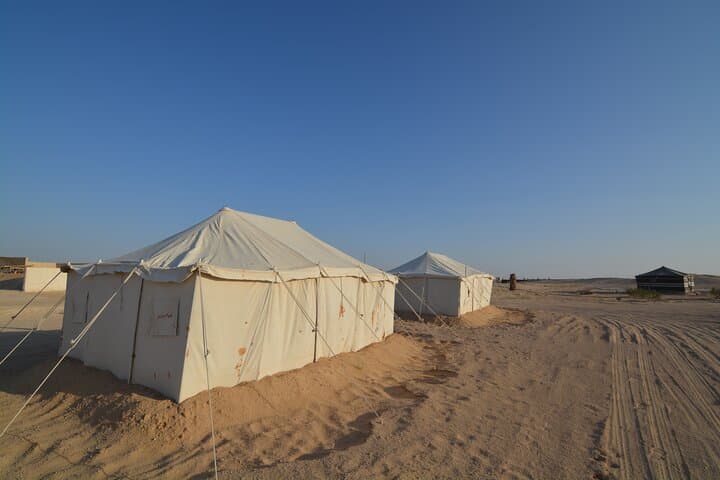
Basic Bedouin or mobile pop-up tents are provided; check with the operator for sleeping comfort options and bedding for children.
The tour is considered easy but involves sandy walking and bumpy 4x4 transfers; it may be challenging for limited mobility—ask about vehicle access and tent arrangements.
Ubar (Shisr) was a key node in the ancient frankincense trade; archaeological work in the late 20th century revealed submerged ruins that align with historical caravan routes.
Frankincense trees are ecologically and culturally important; visitors should avoid disturbing groves and follow leave-no-trace practices to protect fragile desert soils.
Marhaba Dhofar operates guided outdoor trips and adventures with an emphasis on safety, stewardship, and memorable experiences.
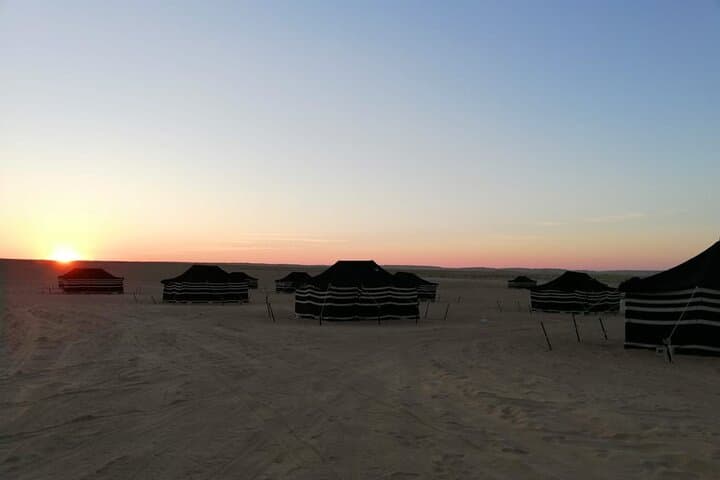
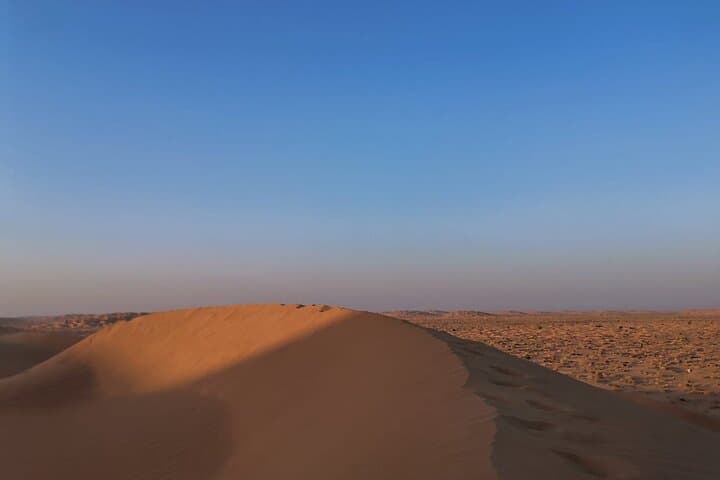
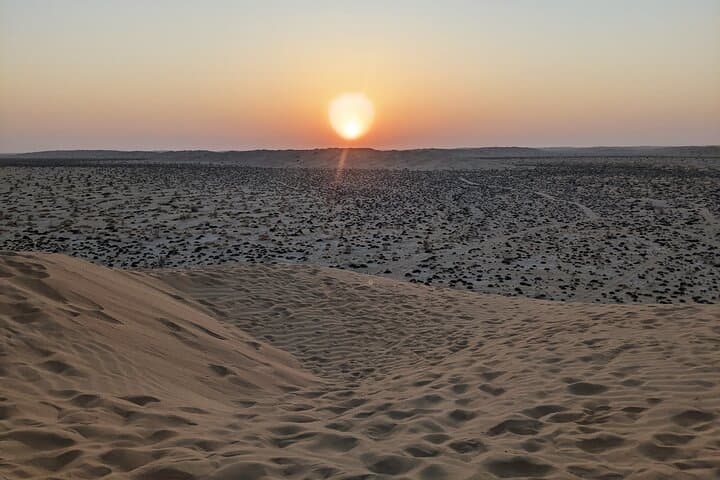
The sun slides low over dunes that shift like a slow-moving ocean; wind drafts sketch ridges while your vehicle threads a track across fine sand. You arrive at a starlit camp where tents sit on the lip of the Empty Quarter and the quiet is so immediate the desert almost breathes.
The sun slides low over dunes that shift like a slow-moving ocean; wind drafts sketch ridges while your vehicle threads a track across fine sand. You arrive at a starlit camp where tents sit on the lip of the Empty Quarter and the quiet is so immediate the desert almost breathes.
This overnight tour from Salalah visits Wadi Dawkha—home to the region's largest stands of wild frankincense—and the archaeological site known as the Lost City of Ubar, a UNESCO-listed remnant of a once-thriving incense trade. Geologically, the journey moves from limestone foothills into vast aeolian plains: sand seas shaped by wind and occasional hard-packed interdunal corridors.
Culturally, Dhofar's frankincense economy echoes through local stories and small museum displays at Ubar. Bedouin-style tents and a simple campfire meal offer a direct connection to the travel routes that linked Arabia to the Mediterranean for millennia.
Practically, expect roughly an hour’s drive from Salalah/Taqah hotels to the first stop, and 30–60 minute transfers between sites. The itinerary includes guided visits, museum admission at Ubar, dinner and breakfast, and standard camping gear or mobile pop-up tents. Nights are cool and exposed—bring layers; days are dry and sunny—bring sun protection and water.
This trip suits low-impact travelers who can tolerate bumpy 4x4 driving and sandy walking. Photograph frankincense groves at golden hour, listen for the hush of wind over dunes, and leave no trace: the Empty Quarter’s scale is fragile despite its hardness.