THE ADVENTURE COLLECTIVE® · Independent discovery and booking for outdoor travel

Spend a night under the stars in Merzouga’s Erg Chebbi dunes with a sunset camel ride, Berber dinner, and sunrise views. Practical tips on gear, timing, and alternatives help you plan an easy overnight desert camp.
Spend a night under the stars in Merzouga’s Erg Chebbi dunes with a sunset camel ride, Berber dinner, and sunrise views. Practical tips on gear, timing, and alternatives help you plan an easy overnight desert camp.
The sun slides behind a wall of sand and the dunes of Erg Chebbi turn from gold to an austere copper; the wind rearranges ripples like an impatient artist. You arrive by camel or 4x4 at a low-slung Berber camp where lantern light and the scent of cumin promise a night away from towns and engines.
Verified experiences and guided adventures in the surrounding area.
Operated by TouaregTrails.com · Merzouga, Drâa-Tafilalet
The sun slides behind a wall of sand and the dunes of Erg Chebbi turn from gold to an austere copper; the wind rearranges ripples like an impatient artist. You arrive by camel or 4x4 at a low-slung Berber camp where lantern light and the scent of cumin promise a night away from towns and engines.
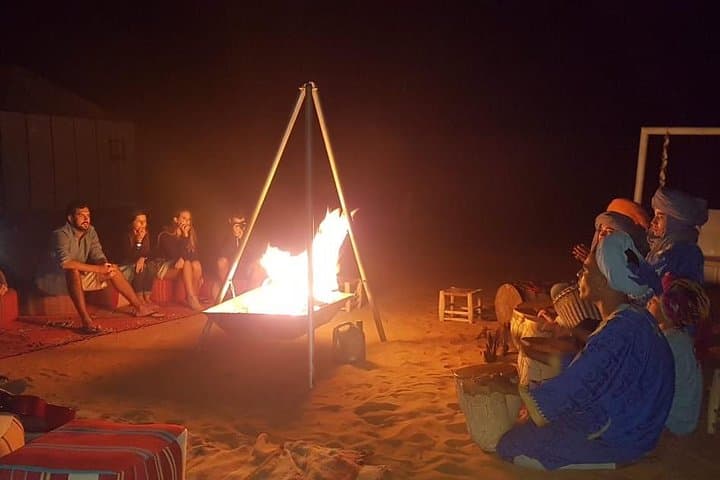
This overnight centers on Merzouga’s giant dunes, a relatively young Sahara feature formed by wind-blown sands fed from dried riverbeds of the Atlas foothills. Berber hospitality shapes the cultural frame: shared tajine dinners, improvised music around the campfire, and stories that trace local lineage through caravan routes and salt trade history. The sky here takes on agency—stars pour across it and the Milky Way seems to lean in to listen.
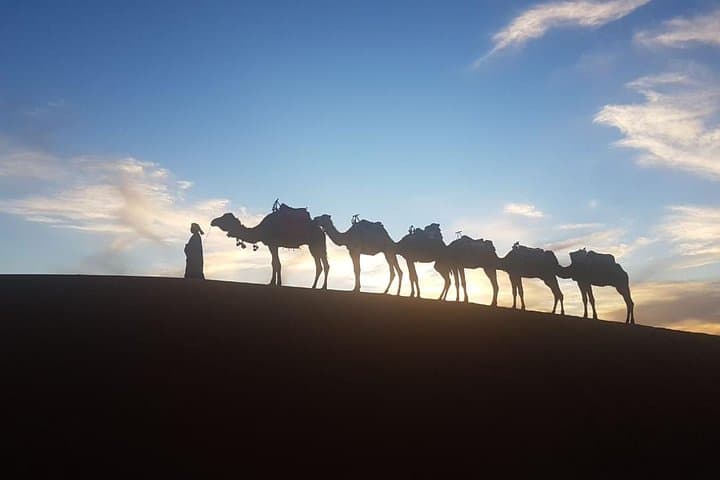
Expect a short camel trek timed for sunset, simple canvas or upgraded tents with mattresses, and breakfast at dawn before a final walk or camel return. Temps swing dramatically: baking by day, chilly after midnight. Sand is the terrain—soft, uneven, and occasionally sharp at dune crests—so mobility is slow and rhythmic.
Practical beat: hydrate early, layer for cold mornings, and keep electronics dust-protected. If camels aren’t suitable, ask for a quad or 4x4 transfer. Bring cash for tips and souvenirs, and arrive at Touareg Safari meeting point on time. The experience rewards patience: watch the dunes reshape with each breeze and listen—local musicians treat the desert as an active audience.
easy.
12–16 hours.
Suitable for travelers in light to moderate physical condition; you should be able to climb dune slopes and mount a camel.
Meet at the Touareg Safari office in Merzouga; many operators can arrange paid transfers from Erfoud, Rissani, Marrakech, or Fes—confirm pickup time and cost in advance.
No — if you have allergies or prefer to skip camels, request a 4x4 transfer or quad option when booking; operators usually accommodate this.
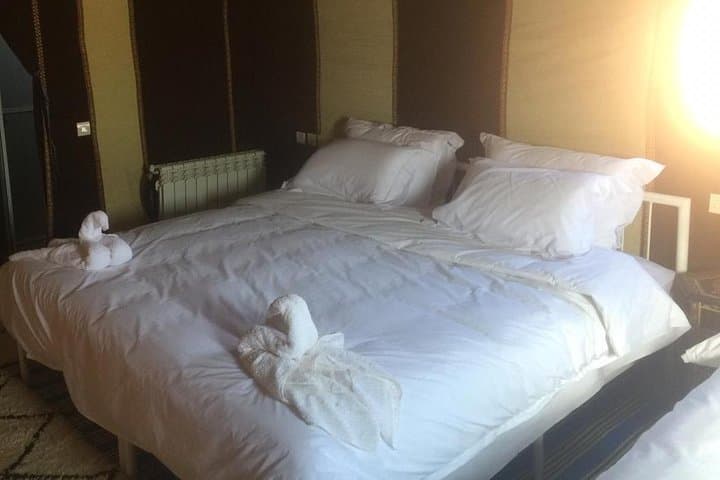
Upgraded camps typically include framed tents or canvas berber tents with mattresses, blankets, and often private or shared basic wash facilities; expectations should remain modest compared with hotels.
The supplier notes the activity isn’t recommended for pregnant travelers or those with serious spinal or heart conditions; check age limits and safety guidance when booking.
Erg Chebbi formed as Saharan sands migrated over millennia under Atlas-range winds; Merzouga grew as a caravan and salt-trading stop linking Sahara routes to inland oases.
Stay on established paths, avoid collecting plants or artifacts, and carry out any trash; local camps often rely on fragile groundwater and sensible water use helps preserve the landscape.
TouaregTrails.com operates guided outdoor trips and adventures with an emphasis on safety, stewardship, and memorable experiences.
The sun slides behind a wall of sand and the dunes of Erg Chebbi turn from gold to an austere copper; the wind rearranges ripples like an impatient artist. You arrive by camel or 4x4 at a low-slung Berber camp where lantern light and the scent of cumin promise a night away from towns and engines.
The sun slides behind a wall of sand and the dunes of Erg Chebbi turn from gold to an austere copper; the wind rearranges ripples like an impatient artist. You arrive by camel or 4x4 at a low-slung Berber camp where lantern light and the scent of cumin promise a night away from towns and engines.
This overnight centers on Merzouga’s giant dunes, a relatively young Sahara feature formed by wind-blown sands fed from dried riverbeds of the Atlas foothills. Berber hospitality shapes the cultural frame: shared tajine dinners, improvised music around the campfire, and stories that trace local lineage through caravan routes and salt trade history. The sky here takes on agency—stars pour across it and the Milky Way seems to lean in to listen.
Expect a short camel trek timed for sunset, simple canvas or upgraded tents with mattresses, and breakfast at dawn before a final walk or camel return. Temps swing dramatically: baking by day, chilly after midnight. Sand is the terrain—soft, uneven, and occasionally sharp at dune crests—so mobility is slow and rhythmic.
Practical beat: hydrate early, layer for cold mornings, and keep electronics dust-protected. If camels aren’t suitable, ask for a quad or 4x4 transfer. Bring cash for tips and souvenirs, and arrive at Touareg Safari meeting point on time. The experience rewards patience: watch the dunes reshape with each breeze and listen—local musicians treat the desert as an active audience.