THE ADVENTURE COLLECTIVE® · Independent discovery and booking for outdoor travel

Spend a night under the stars in Lompoul’s wind-sculpted dunes: a 2-day trip with a camel ride, dinner in a khaima tent and a sunrise over orange ridgelines. Practical, low-impact desert camping near Thiès.
Spend a night under the stars in Lompoul’s wind-sculpted dunes: a 2-day trip with a camel ride, dinner in a khaima tent and a sunrise over orange ridgelines. Practical, low-impact desert camping near Thiès.
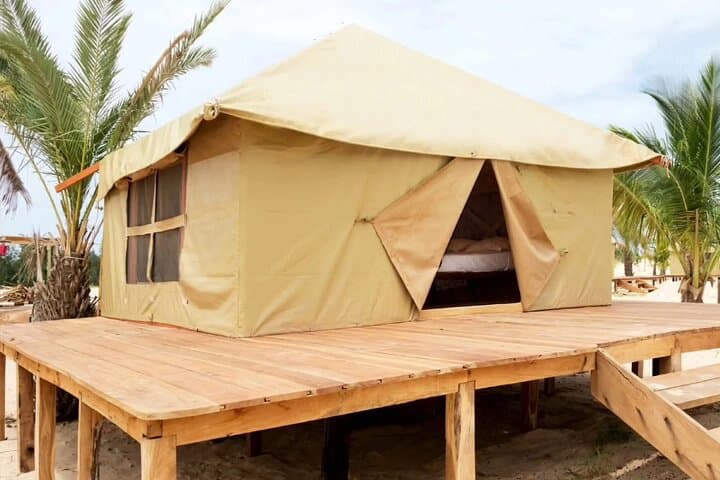
The sun slides down a wall of orange sand and the desert exhales. On arrival, vehicles give way to open dune and a line of low khaima tents: canvas pitched against wind, lanterns beginning to pulse. A camel's slow rhythm and the hush after sunset are the first measures of time here.
Verified experiences and guided adventures in the surrounding area.
Operated by Senegal Tourist Guide · Lompoul, Thiès Region
The sun slides down a wall of orange sand and the desert exhales. On arrival, vehicles give way to open dune and a line of low khaima tents: canvas pitched against wind, lanterns beginning to pulse. A camel's slow rhythm and the hush after sunset are the first measures of time here.
The Lompoul dunes are a stretch of Saharan-influenced sand deposited along Senegal’s Thiès Region; wind-built ridges that shift seasonally and preserve traces of coastal and Sahelian geology. Historically the area acted as a corridor between inland markets and coastal towns — today tour groups pause in Thiès for basketry and batik before crossing to the dunes in 4x4s. The cultural notes are immediate: woven markets, Toucouleur and Wolof craft traditions, and desert hospitality centered on shared evening meals and khaima living.
Expect a two-day loop: a daytime drive with a lunch stop, a late-afternoon camel ride, sunset on the high dunes, dinner under stars and an overnight in a khaima tent at a desert oasis camp, followed by breakfast and a return to town. Terrain is sand and compacted tracks; daylight heat is strong while nights go cool. Practical tips: bring sun protection and water, layered clothing for evening chill, sturdy shoes for walking on dunes, and a headlamp. The experience is low on technical challenge but rich in sensory contrast — the push of wind over sand, the slow gait of camels and quiet desert hours — and suits travelers wanting an accessible, authentic desert night within reach of Dakar and Thiès.
easy.
2 days (approx. 48 hours).
Suitable for average fitness; must be able to mount a camel and walk short dune sections
This is a two-day, one-night experience — approximately 48 hours from pickup to return, with daytime driving and an overnight in a khaima tent.
Typical inclusions are round-trip transport (air-conditioned vehicle), dinner, breakfast, camel ride, and overnight accommodation in a khaima tent at the desert camp.
The trip is marked physically easy but not recommended for pregnant travelers or those with serious spinal or heart conditions; children should be supervised and infants sit on laps during transport.
Pack sun protection, a reusable water bottle, a warm layer for night, comfortable closed-toe shoes for dunes, and any personal medications; toilet facilities and power access can be limited at remote camps.
Lompoul’s dunes are wind-transported sands shaped over centuries and sit near historic trade routes linking inland markets with coastal towns like Thiès and Dakar.
The dunes are a fragile environment — stick to established paths, limit campfires, pack out waste and support camps that use local materials and water-conservation practices.
Senegal Tourist Guide operates guided outdoor trips and adventures with an emphasis on safety, stewardship, and memorable experiences.
The sun slides down a wall of orange sand and the desert exhales. On arrival, vehicles give way to open dune and a line of low khaima tents: canvas pitched against wind, lanterns beginning to pulse. A camel's slow rhythm and the hush after sunset are the first measures of time here.
The sun slides down a wall of orange sand and the desert exhales. On arrival, vehicles give way to open dune and a line of low khaima tents: canvas pitched against wind, lanterns beginning to pulse. A camel's slow rhythm and the hush after sunset are the first measures of time here.
The Lompoul dunes are a stretch of Saharan-influenced sand deposited along Senegal’s Thiès Region; wind-built ridges that shift seasonally and preserve traces of coastal and Sahelian geology. Historically the area acted as a corridor between inland markets and coastal towns — today tour groups pause in Thiès for basketry and batik before crossing to the dunes in 4x4s. The cultural notes are immediate: woven markets, Toucouleur and Wolof craft traditions, and desert hospitality centered on shared evening meals and khaima living.
Expect a two-day loop: a daytime drive with a lunch stop, a late-afternoon camel ride, sunset on the high dunes, dinner under stars and an overnight in a khaima tent at a desert oasis camp, followed by breakfast and a return to town. Terrain is sand and compacted tracks; daylight heat is strong while nights go cool. Practical tips: bring sun protection and water, layered clothing for evening chill, sturdy shoes for walking on dunes, and a headlamp. The experience is low on technical challenge but rich in sensory contrast — the push of wind over sand, the slow gait of camels and quiet desert hours — and suits travelers wanting an accessible, authentic desert night within reach of Dakar and Thiès.