THE ADVENTURE COLLECTIVE® · Independent discovery and booking for outdoor travel

Spend a night beneath the stars in Senegal’s Lompoul Desert: an easy overnight camp that pairs short camel rides, dune walks, and campfire drumming with local cuisine. Ideal for travelers seeking a low-impact desert immersion close to Dakar.
Spend a night beneath the stars in Senegal’s Lompoul Desert: an easy overnight camp that pairs short camel rides, dune walks, and campfire drumming with local cuisine. Ideal for travelers seeking a low-impact desert immersion close to Dakar.
You arrive as the light thins and the dunes take on sharp edges—sand slopes glow orange while a cool wind begins to move through the hollows. The camp sits on a low dune rim: canvas tents, a communal fire, and paths pressed into the sand where camel hooves and footprints cross.
Verified experiences and guided adventures in the surrounding area.
Operated by Djibril Dieng · Lompoul, Louga Region
You arrive as the light thins and the dunes take on sharp edges—sand slopes glow orange while a cool wind begins to move through the hollows. The camp sits on a low dune rim: canvas tents, a communal fire, and paths pressed into the sand where camel hooves and footprints cross.
The Lompoul dunes are marine sands pushed inland by Atlantic winds, a compact pocket of Saharan-style ridges set between Dakar and Saint-Louis. Historically the area marked a shifting frontier used by nomadic herders and coastal traders; today small camps keep those hospitality traditions alive with music, food, and shared stories around the fire.
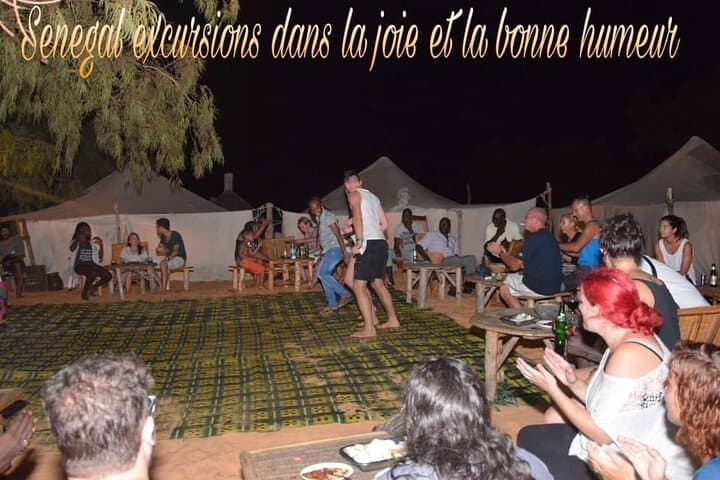
Expect close-up dune walking (soft sand underfoot, short steep pitches) and an introductory camel ride that covers a few kilometers of open sweep rather than long-distance caravan travel. Evenings focus on communal dining—candlelit dinners served outdoors—and live percussion and dance that draw from Wolof and broader Sahelian rhythms.
Practical notes: the overnight program runs about 24 hours and is labeled easy—no technical skills required, but the desert’s day–night temperature swing is significant. Bring layered clothing, sun protection, and at least 2–3 liters of water per person. Arrive prepared for irregular mobile reception and simple facilities; the emphasis is on immersion rather than luxury.
Best timing is the dry season when the sand is firmest; visits support local guides and small-scale operators, so travel with respect—avoid stray fires, pack out waste, and ask before photographing people.
easy.
24 hours (overnight).
Suitable for most fitness levels; requires short dune walks and brief camel rides—no sustained hiking.
Rides are short, usually a few kilometers across nearby dunes, guided and paced for beginners—no prior experience required.
Camps offer private or shared canvas tents with basic bedding; expect rustic comfort focused on atmosphere rather than luxury amenities.
Dry season months (roughly November–May) are most comfortable—less rain, firmer sand and clearer nights for stargazing.
Meals (lunch and dinner) are included; operators typically accommodate common dietary needs if notified in advance at booking.
The Lompoul dunes are wind‑blown coastal sands that formed a fringe landscape long used by nomadic herders and coastal traders; modern camps draw on local musical and hospitality traditions.
Dune habitats are fragile—stay on established paths, avoid collecting vegetation or wood, and pack out all waste to protect the ecosystem.
Djibril Dieng operates guided outdoor trips and adventures with an emphasis on safety, stewardship, and memorable experiences.
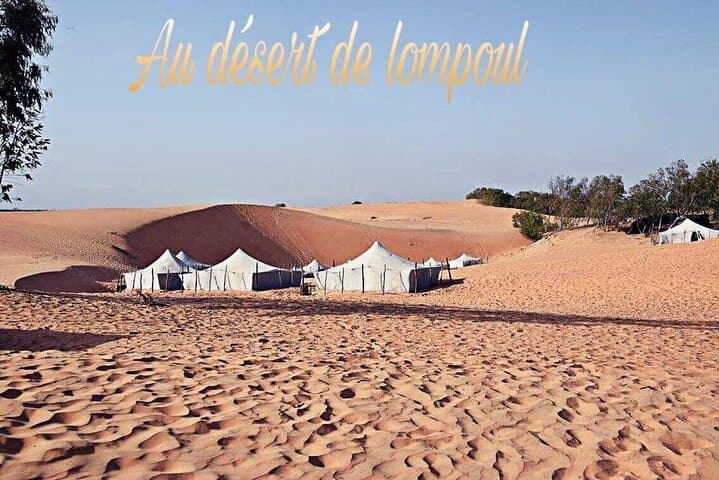
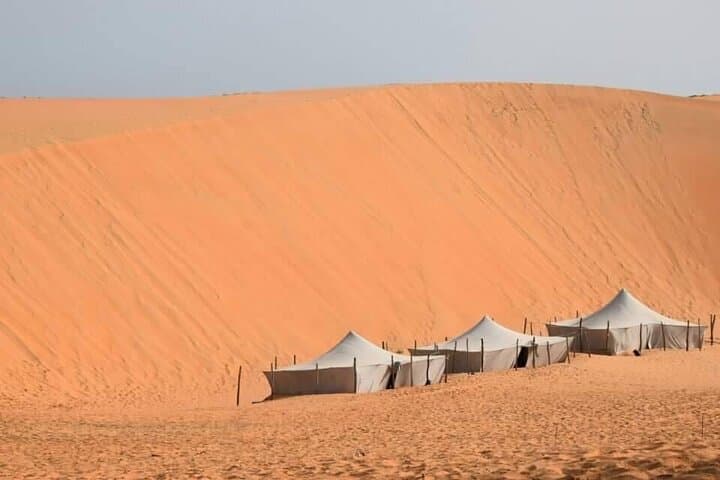
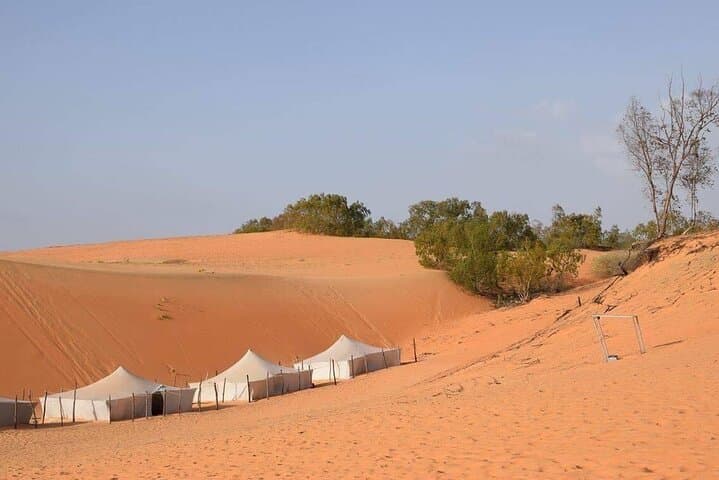
You arrive as the light thins and the dunes take on sharp edges—sand slopes glow orange while a cool wind begins to move through the hollows. The camp sits on a low dune rim: canvas tents, a communal fire, and paths pressed into the sand where camel hooves and footprints cross.
You arrive as the light thins and the dunes take on sharp edges—sand slopes glow orange while a cool wind begins to move through the hollows. The camp sits on a low dune rim: canvas tents, a communal fire, and paths pressed into the sand where camel hooves and footprints cross.
The Lompoul dunes are marine sands pushed inland by Atlantic winds, a compact pocket of Saharan-style ridges set between Dakar and Saint-Louis. Historically the area marked a shifting frontier used by nomadic herders and coastal traders; today small camps keep those hospitality traditions alive with music, food, and shared stories around the fire.
Expect close-up dune walking (soft sand underfoot, short steep pitches) and an introductory camel ride that covers a few kilometers of open sweep rather than long-distance caravan travel. Evenings focus on communal dining—candlelit dinners served outdoors—and live percussion and dance that draw from Wolof and broader Sahelian rhythms.
Practical notes: the overnight program runs about 24 hours and is labeled easy—no technical skills required, but the desert’s day–night temperature swing is significant. Bring layered clothing, sun protection, and at least 2–3 liters of water per person. Arrive prepared for irregular mobile reception and simple facilities; the emphasis is on immersion rather than luxury.
Best timing is the dry season when the sand is firmest; visits support local guides and small-scale operators, so travel with respect—avoid stray fires, pack out waste, and ask before photographing people.