THE ADVENTURE COLLECTIVE® · Independent discovery and booking for outdoor travel

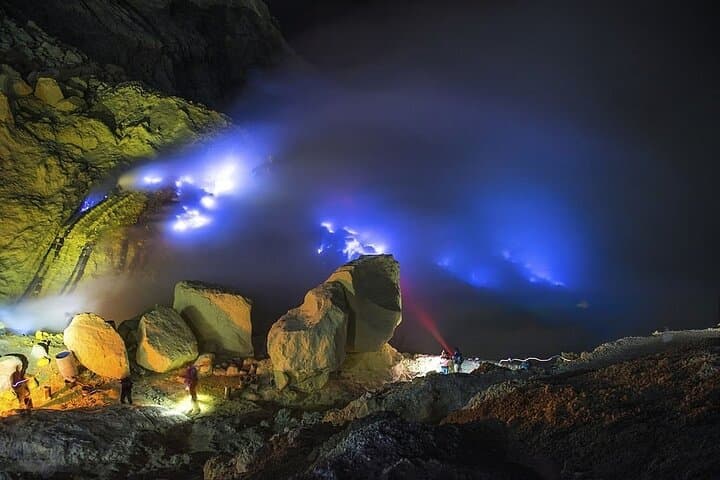
Witness Kawah Ijen’s rare blue flames on an overnight trek from Bali. This guided night hike pairs volcanic spectacle with firsthand glimpses of local sulfur mining and crater-edge sunrise views.
Witness Kawah Ijen’s rare blue flames on an overnight trek from Bali. This guided night hike pairs volcanic spectacle with firsthand glimpses of local sulfur mining and crater-edge sunrise views.
A hush falls over the road as your van climbs away from Bali’s lights and Java’s silhouette grows under a blanket of stars. You arrive at basecamp, strap on a headlamp and follow a narrow, moonlit path into a highland forest where the air sharpens with altitude. The trail pulls you upward for 1.5–2 hours; branches click, wind pushes at your jacket, and the mountain seems to breathe around you.
Verified experiences and guided adventures in the surrounding area.
Operated by VIC Tour And Transport · Banyuwangi, East Java
A hush falls over the road as your van climbs away from Bali’s lights and Java’s silhouette grows under a blanket of stars. You arrive at basecamp, strap on a headlamp and follow a narrow, moonlit path into a highland forest where the air sharpens with altitude. The trail pulls you upward for 1.5–2 hours; branches click, wind pushes at your jacket, and the mountain seems to breathe around you.
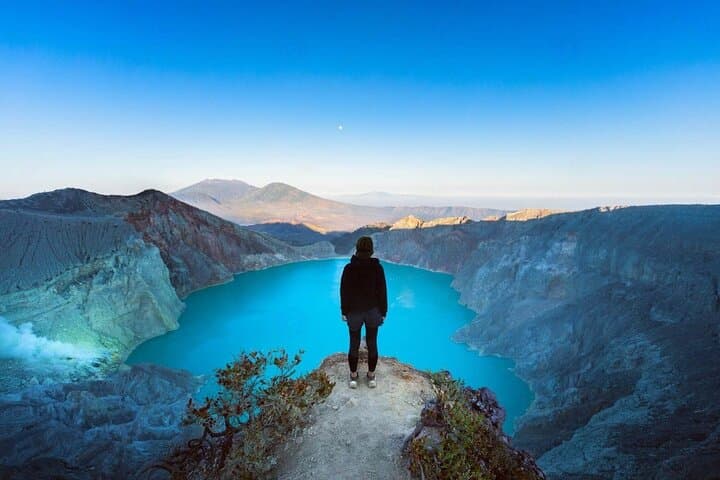
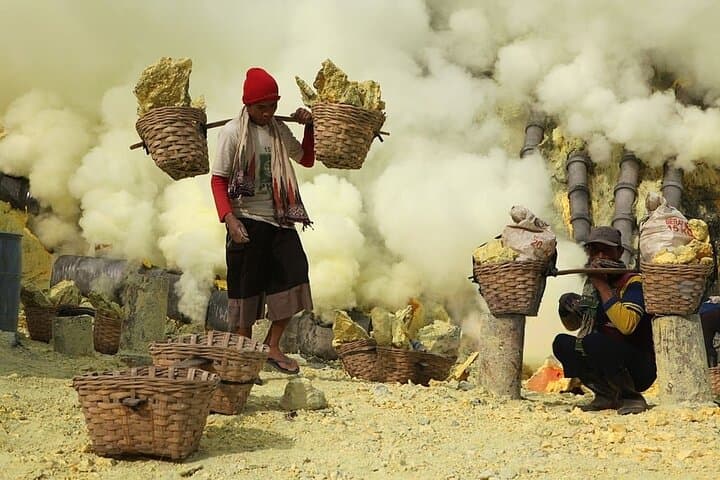
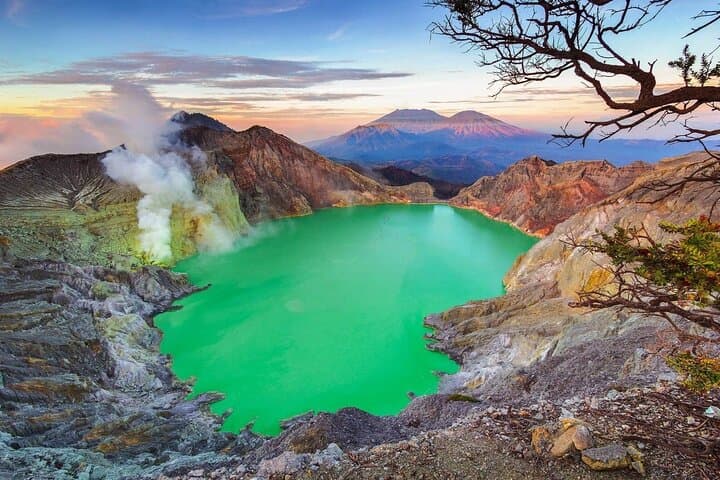
Kawah Ijen sits at roughly 2,443 m, its crater holding one of the world’s largest acidic turquoise lakes and a sulfur–rich vent that produces the famous blue flames. Geologically the complex is a young stratovolcanic caldera: acidic hydrothermal activity eats at rock and pushes sulfuric gas to the surface. Culturally, the crater is a working landscape — local miners extract raw sulfur by hand, loading baskets often weighing tens of kilograms and hauling them out by foot along steep ramps.
Expect volcanic scree, forested approaches, and a steep rim descent into sulfur-tinged air. The blue fire is brightest before dawn, after which the sun reveals the lake’s vivid turquoise and sweeping views across East Java toward Bali. Guides provide gas masks and headlamps; the route is not technical but demands steady footing and respect for shifting conditions.
Practical tips: time your hike to reach the crater before first light, keep a slow steady pace on loose rock, and plan for rain on the return. Hydrate before the ascent, wear sturdy, closed shoes, and carry layers — temperatures drop at altitude.
This overnight run from Bali packs a rare night-sky phenomenon, human resilience, and volcanic geology into a compact, unforgettable outing.
moderate.
18–24 hours.
Moderate fitness — able to hike uphill for 1.5–2 hours on uneven terrain and handle steep descents; comfortable with night hiking.
Most groups take 1.5–2 hours to reach the rim from basecamp; the pace slows on loose sections, so guides keep groups together.
Blue flames are visible at night and are most striking in the hours before dawn when sulfur gases ignite and ambient light is lowest.
Yes — reputable tour operators supply gas masks or respirators; bringing a personal mask can improve fit and comfort.
This trek is not recommended for very young children, pregnant travelers, or people with serious cardiovascular or spinal conditions due to the terrain and potential gas exposure.
The Ijen caldera has been a site of sulfur extraction for generations; miners still use traditional shoulder baskets and trails cut into the crater walls.
The area is protected but active mining and tourism both stress fragile soils and air quality; follow guide instructions, avoid littering, and minimize time near active vents.
VIC Tour And Transport operates guided outdoor trips and adventures with an emphasis on safety, stewardship, and memorable experiences.
A hush falls over the road as your van climbs away from Bali’s lights and Java’s silhouette grows under a blanket of stars. You arrive at basecamp, strap on a headlamp and follow a narrow, moonlit path into a highland forest where the air sharpens with altitude. The trail pulls you upward for 1.5–2 hours; branches click, wind pushes at your jacket, and the mountain seems to breathe around you.
A hush falls over the road as your van climbs away from Bali’s lights and Java’s silhouette grows under a blanket of stars. You arrive at basecamp, strap on a headlamp and follow a narrow, moonlit path into a highland forest where the air sharpens with altitude. The trail pulls you upward for 1.5–2 hours; branches click, wind pushes at your jacket, and the mountain seems to breathe around you.
Kawah Ijen sits at roughly 2,443 m, its crater holding one of the world’s largest acidic turquoise lakes and a sulfur–rich vent that produces the famous blue flames. Geologically the complex is a young stratovolcanic caldera: acidic hydrothermal activity eats at rock and pushes sulfuric gas to the surface. Culturally, the crater is a working landscape — local miners extract raw sulfur by hand, loading baskets often weighing tens of kilograms and hauling them out by foot along steep ramps.
Expect volcanic scree, forested approaches, and a steep rim descent into sulfur-tinged air. The blue fire is brightest before dawn, after which the sun reveals the lake’s vivid turquoise and sweeping views across East Java toward Bali. Guides provide gas masks and headlamps; the route is not technical but demands steady footing and respect for shifting conditions.
Practical tips: time your hike to reach the crater before first light, keep a slow steady pace on loose rock, and plan for rain on the return. Hydrate before the ascent, wear sturdy, closed shoes, and carry layers — temperatures drop at altitude.
This overnight run from Bali packs a rare night-sky phenomenon, human resilience, and volcanic geology into a compact, unforgettable outing.