THE ADVENTURE COLLECTIVE® · Independent discovery and booking for outdoor travel

Trek 14 km through Dades Gorge, spend a spontaneous night in caves or tents with nomadic families, and return via ancient fossil tracks. This rugged, small-group adventure blends physical hiking with intimate cultural exchange.
Trek 14 km through Dades Gorge, spend a spontaneous night in caves or tents with nomadic families, and return via ancient fossil tracks. This rugged, small-group adventure blends physical hiking with intimate cultural exchange.
Late afternoon light pools in the floor of Dades Canyon as a small group threads a rocky bed, cliffs pressing like pages of an old book. The first 7 km climbs from the canyon floor to a rim that opens onto the Dades Valley—wind lifts dust, and a distant line of donkeys picks its way among sparse oaks. At sunset, the group meets nomadic families who live in caves and tents; a low fire, shared bread and stories trace a human map older than roads.
Verified experiences and guided adventures in the surrounding area.
Operated by Morocco Exposure · Boumalne Dades, Drâa-Tafilalet
Late afternoon light pools in the floor of Dades Canyon as a small group threads a rocky bed, cliffs pressing like pages of an old book. The first 7 km climbs from the canyon floor to a rim that opens onto the Dades Valley—wind lifts dust, and a distant line of donkeys picks its way among sparse oaks. At sunset, the group meets nomadic families who live in caves and tents; a low fire, shared bread and stories trace a human map older than roads.
Geology here is blunt: folded red and ochre shale carved by seasonal floods into narrow canyons and serrated ridgelines. Historically the valley sat on trans-Saharan routes, and the local Berber culture preserves livestock-based rhythms—grazing, wood collection, and seasonal movement. The area also yields fossilized dinosaur footprints on nearby tracks, a tangible echo of deep time beneath your boots.
Expect two guided hikes of about 7 km each over uneven terrain with short steep sections and rocky scrambling to reach the rim. The overnight is informal and unbooked—guides arrive with donkeys, sleeping bags, and food; guests sleep in tents or in natural caves alongside families who live there year-round.
Practical notes: bring sturdy boots, a warm sleeping layer and a headlamp; water is provided but carry a liter for the hikes. Plan for an 18–20 hour window (late afternoon to next-morning return). Respect local customs—ask before photographing people, remove shoes when invited indoors, and leave no trace of your camp. This is a physical and cultural immersion: the landscape will test your legs, the hosts will test your assumptions, and the night sky will reward both.
moderate.
18–20 hours.
Able to hike 14 km over uneven terrain, climb short steep sections, and sleep outdoors; good baseline cardio and stable ankles recommended
Each hike is about 7 km with uneven terrain and a roughly one-hour ascent to the rim; pace is guided and suitable for moderately fit people.
Sleep is either in simple tents provided or inside natural caves alongside nomad families; sleeping bags are supplied by the operator.
Yes—dinner and breakfast (including freshly baked bread and tea) are included, prepared with nomad hosts and basic camp provisions.
No—the overnight is spontaneous; guides arrive with donkeys and supplies and are welcomed by families who live seasonally in caves or tents.
Dades Valley has long been a corridor for Berber communities and seasonal herders; rock formations record millennia of sedimentation and erosion.
This is a fragile semi-arid ecosystem—stay on established paths, pack out all waste, and minimize fire impact; support local guides who practice low-impact camping.
Morocco Exposure operates guided outdoor trips and adventures with an emphasis on safety, stewardship, and memorable experiences.
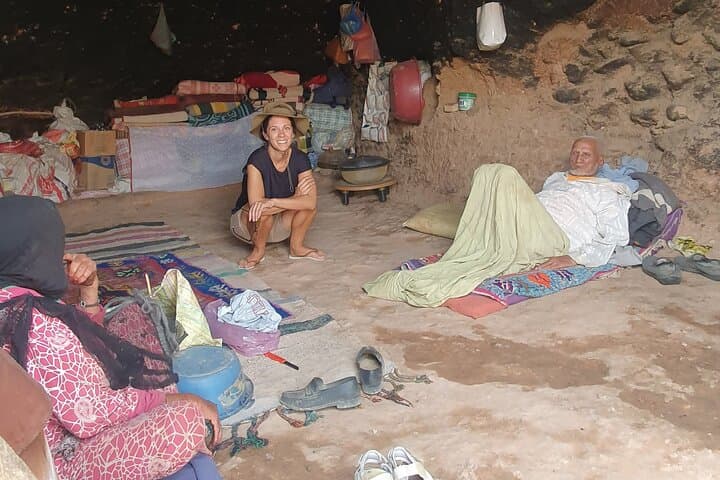
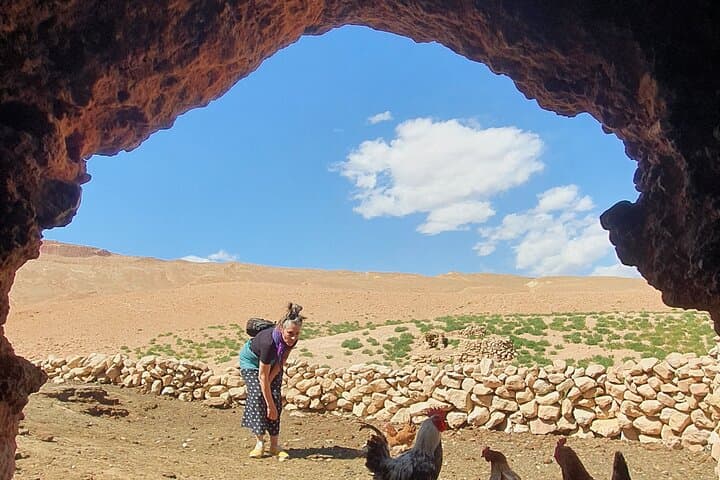

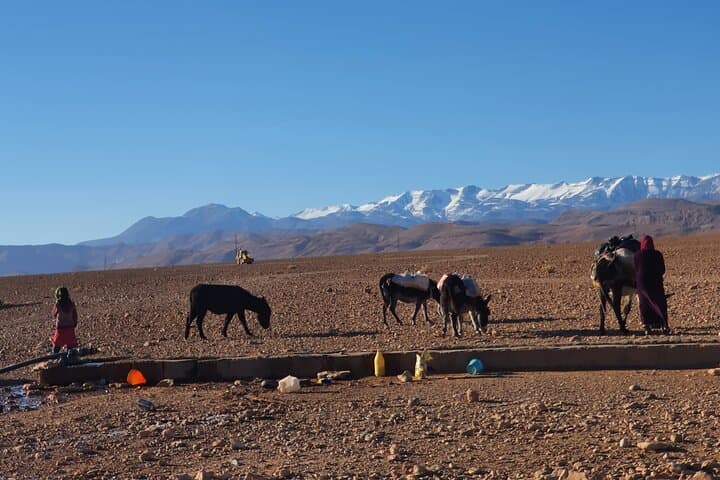
Late afternoon light pools in the floor of Dades Canyon as a small group threads a rocky bed, cliffs pressing like pages of an old book. The first 7 km climbs from the canyon floor to a rim that opens onto the Dades Valley—wind lifts dust, and a distant line of donkeys picks its way among sparse oaks. At sunset, the group meets nomadic families who live in caves and tents; a low fire, shared bread and stories trace a human map older than roads.
Late afternoon light pools in the floor of Dades Canyon as a small group threads a rocky bed, cliffs pressing like pages of an old book. The first 7 km climbs from the canyon floor to a rim that opens onto the Dades Valley—wind lifts dust, and a distant line of donkeys picks its way among sparse oaks. At sunset, the group meets nomadic families who live in caves and tents; a low fire, shared bread and stories trace a human map older than roads.
Geology here is blunt: folded red and ochre shale carved by seasonal floods into narrow canyons and serrated ridgelines. Historically the valley sat on trans-Saharan routes, and the local Berber culture preserves livestock-based rhythms—grazing, wood collection, and seasonal movement. The area also yields fossilized dinosaur footprints on nearby tracks, a tangible echo of deep time beneath your boots.
Expect two guided hikes of about 7 km each over uneven terrain with short steep sections and rocky scrambling to reach the rim. The overnight is informal and unbooked—guides arrive with donkeys, sleeping bags, and food; guests sleep in tents or in natural caves alongside families who live there year-round.
Practical notes: bring sturdy boots, a warm sleeping layer and a headlamp; water is provided but carry a liter for the hikes. Plan for an 18–20 hour window (late afternoon to next-morning return). Respect local customs—ask before photographing people, remove shoes when invited indoors, and leave no trace of your camp. This is a physical and cultural immersion: the landscape will test your legs, the hosts will test your assumptions, and the night sky will reward both.