THE ADVENTURE COLLECTIVE® · Independent discovery and booking for outdoor travel

Climb through Sinai night to reach Moses Mountain for sunrise, then descend to visit the 6th‑century St. Catherine’s Monastery and the Chapel of the Burning Bush. This guided overnight hike blends strenuous terrain with deep history — passport required.
Climb through Sinai night to reach Moses Mountain for sunrise, then descend to visit the 6th‑century St. Catherine’s Monastery and the Chapel of the Burning Bush. This guided overnight hike blends strenuous terrain with deep history — passport required.
You leave the light of the town behind and climb into a night that smells of cold rock and resinous shrubs. Under a headlamp the trail narrows; the Sinai rises like an ancient spine, each step taking you higher toward a pale horizon where the sunrise will arrive. By the time the sky bleeds color, you’re at the summit of Moses Mountain — wind pulling at your jacket, Sinai ridgelines engraved into the distance, the desert below quiet and immense.
Verified experiences and guided adventures in the surrounding area.
Operated by Rafiki Experiences · St. Catherine, South Sinai
You leave the light of the town behind and climb into a night that smells of cold rock and resinous shrubs. Under a headlamp the trail narrows; the Sinai rises like an ancient spine, each step taking you higher toward a pale horizon where the sunrise will arrive. By the time the sky bleeds color, you’re at the summit of Moses Mountain — wind pulling at your jacket, Sinai ridgelines engraved into the distance, the desert below quiet and immense.
The route follows trails used for centuries to reach Jebel Musa, a peak standing roughly 2,285 m above sea level. Below the peak sits St. Catherine’s Monastery, a 6th‑century complex founded during Justinian’s reign and home to the Chapel of the Burning Bush, a focal point of Christian pilgrimage. Geology here is Precambrian granite — steep, fluted faces and loose scree that demand careful footing. Local Bedouin history threads through the valleys, and the monastery’s library preserves manuscripts few places still hold.
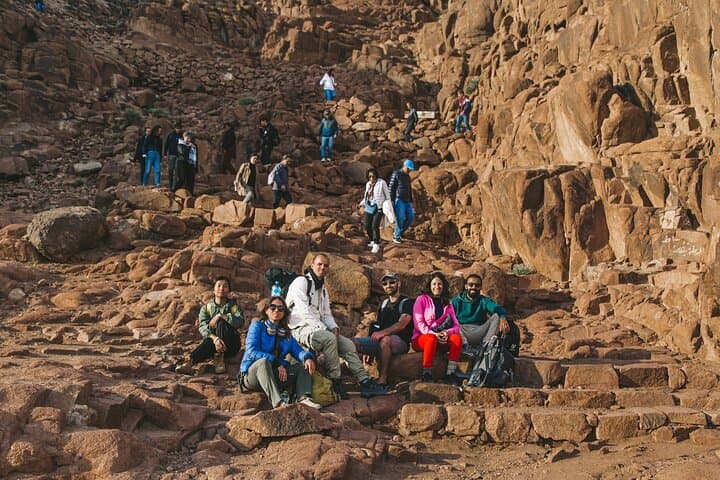
Practical guidance: this guided overnight itinerary typically involves a 5–6 hour ascent timed to catch sunrise and a descent plus monastery visit, totaling about 10–12 hours. Expect steep stone steps, rocky slopes and strong sun once day breaks. Bring a headlamp, 2–3 liters of water, warm layers for the summit, sturdy boots and your passport (required for entry). Acclimatize if you’ve recently arrived at sea level; go slowly on the ascent and protect your skin from sun and wind. With an experienced guide and basic preparation, the hike is a profound mix of physical challenge, ancient history and raw desert panoramas.
challenging.
10–12 hours.
Good cardiovascular fitness and endurance for a sustained ascent (5–6 hours) and steep rocky descents.
Yes — you must carry a valid passport for monastery entry and local checkpoints; the tour reminder emphasizes this.
The trail is steep with stone steps and rocky sections but non-technical; good boots and steady pacing are more important than technical climbing skills.
The itinerary is demanding: the ascent is 5–6 hours and the full experience runs 10–12 hours, so people should be in good cardiovascular shape and free of serious back or heart issues.
The summit is around 2,285 m; most visitors do fine, but if you’re sensitive to altitude take it slow, hydrate and notify the guide if symptoms develop.
St. Catherine’s Monastery was constructed in the 6th century under Emperor Justinian and sits at the foot of Jebel Musa, long linked in tradition to Moses and pilgrimage.
This fragile desert landscape is vulnerable to erosion and litter; stick to paths, pack out waste and respect monastery rules to protect cultural and natural heritage.
Rafiki Experiences operates guided outdoor trips and adventures with an emphasis on safety, stewardship, and memorable experiences.
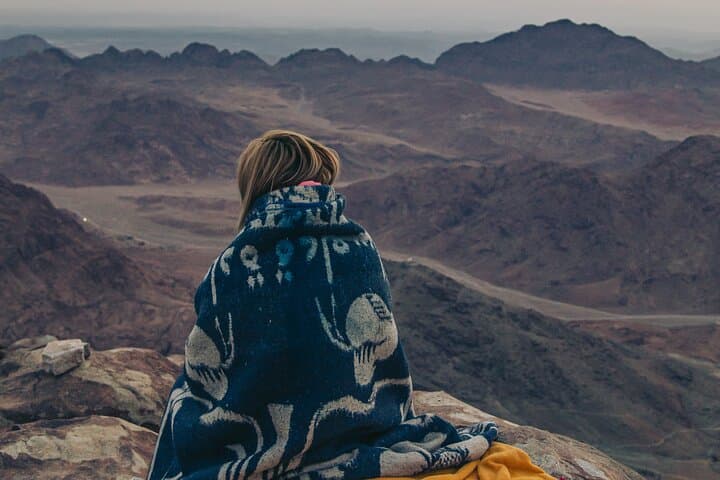
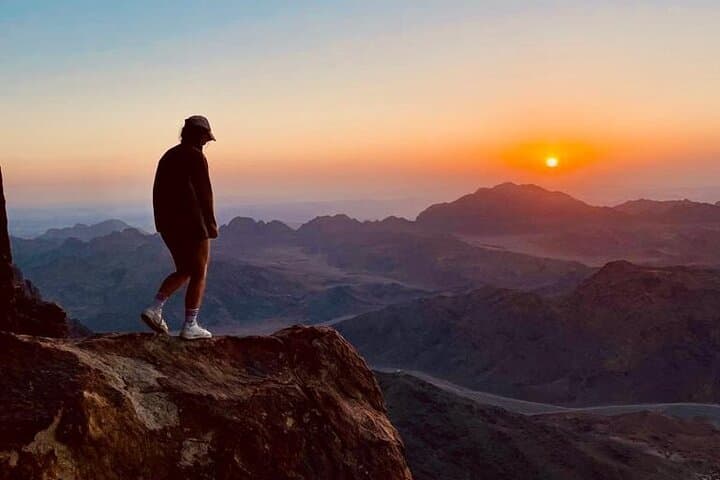
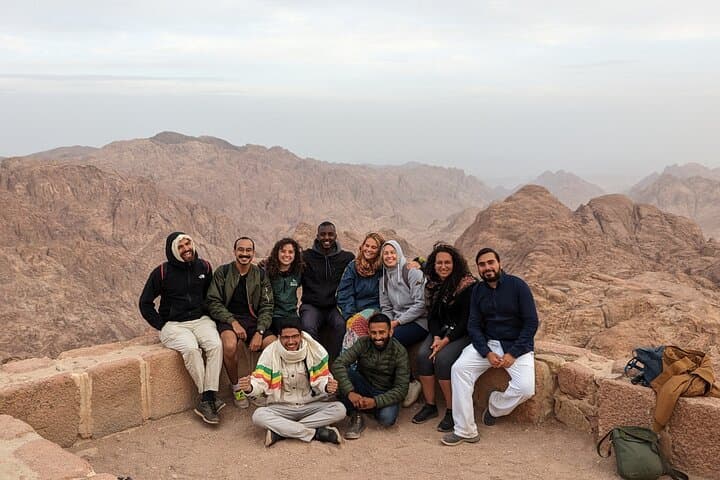
You leave the light of the town behind and climb into a night that smells of cold rock and resinous shrubs. Under a headlamp the trail narrows; the Sinai rises like an ancient spine, each step taking you higher toward a pale horizon where the sunrise will arrive. By the time the sky bleeds color, you’re at the summit of Moses Mountain — wind pulling at your jacket, Sinai ridgelines engraved into the distance, the desert below quiet and immense.
You leave the light of the town behind and climb into a night that smells of cold rock and resinous shrubs. Under a headlamp the trail narrows; the Sinai rises like an ancient spine, each step taking you higher toward a pale horizon where the sunrise will arrive. By the time the sky bleeds color, you’re at the summit of Moses Mountain — wind pulling at your jacket, Sinai ridgelines engraved into the distance, the desert below quiet and immense.
The route follows trails used for centuries to reach Jebel Musa, a peak standing roughly 2,285 m above sea level. Below the peak sits St. Catherine’s Monastery, a 6th‑century complex founded during Justinian’s reign and home to the Chapel of the Burning Bush, a focal point of Christian pilgrimage. Geology here is Precambrian granite — steep, fluted faces and loose scree that demand careful footing. Local Bedouin history threads through the valleys, and the monastery’s library preserves manuscripts few places still hold.
Practical guidance: this guided overnight itinerary typically involves a 5–6 hour ascent timed to catch sunrise and a descent plus monastery visit, totaling about 10–12 hours. Expect steep stone steps, rocky slopes and strong sun once day breaks. Bring a headlamp, 2–3 liters of water, warm layers for the summit, sturdy boots and your passport (required for entry). Acclimatize if you’ve recently arrived at sea level; go slowly on the ascent and protect your skin from sun and wind. With an experienced guide and basic preparation, the hike is a profound mix of physical challenge, ancient history and raw desert panoramas.