THE ADVENTURE COLLECTIVE® · Independent discovery and booking for outdoor travel

Spend a night under the stars at Erg Chegaga with Touareg music, a dune sunrise and simple desert camp comforts. Perfect for travelers wanting an authentic Sahara taste without extended travel time.
Spend a night under the stars at Erg Chegaga with Touareg music, a dune sunrise and simple desert camp comforts. Perfect for travelers wanting an authentic Sahara taste without extended travel time.
The night opens as the last road drops away and the dunes take over: wind-sculpted ridgelines roll into shadow while the camp lights are warm and low. Around a crackling fire, Touareg musicians strike call-and-response rhythms and the sky fills with a scatter of stars that seems to push the horizon back. At dawn, a thin line of gold spills down the flank of the nearest dune and invites an early climb.
Verified experiences and guided adventures in the surrounding area.
Operated by Desert Atmosphere Tours · M'Hamid, Drâa-Tafilalet
The night opens as the last road drops away and the dunes take over: wind-sculpted ridgelines roll into shadow while the camp lights are warm and low. Around a crackling fire, Touareg musicians strike call-and-response rhythms and the sky fills with a scatter of stars that seems to push the horizon back. At dawn, a thin line of gold spills down the flank of the nearest dune and invites an early climb.
Erg Chegaga is one of Morocco’s great dune seas, formed by wind-driven sand collected in a broad basin on the southern edge of the Sahara. The region has long been a crossroad for trans-Saharan caravans and the local nomadic culture — an influence that remains visible in music, hospitality and the low, functional architecture of M'Hamid.
Visitors can expect an overnight camp experience: arrivals by 4x4, time to explore dunes on foot or camel, a communal dinner with traditional music and an early-morning sunrise before return via scenic stops including Lac Iriqui. Terrain is soft sand, variable dune slopes up to several dozen meters; trails are informal and movement can be slow.
Practical notes: pack layered clothing for chilly desert nights, carry ample water and sun protection, and allow extra time for transfers on unpaved tracks. Respect local customs — ask before photographing people — and follow Leave No Trace: fragile biocrust and desert plants recover slowly. This budget overnight is straightforward logistically but offers a full sensory encounter with the Sahara: quiet, wind, heat by day, and a dramatic, starlit night.
easy.
2 days.
Suitable for travelers in average fitness; expect short, informal hikes on soft sand and some climbing of moderate dunes.
Most operators provide 4×4 transfers from M'Hamid along unpaved tracks; allow 1–2 hours depending on route and weather.
Facilities are basic — many camps offer simple ablution tents and bucket or solar-heated showers, so check the operator’s amenities in advance.
Camel rides are often available but may not be included by default; confirm with the tour provider before booking.
Yes; the itinerary notes it’s suitable for all fitness levels but families should be aware of long vehicle transfers and uneven sand terrain.
The area around M'Hamid was a waypoint on trans-Saharan caravan routes and a center for nomadic pastoralists; local music and crafts reflect that heritage.
The Sahara’s surface and crust are fragile — stay on vehicle tracks when possible, pack out all waste and avoid driving on vegetated areas to minimize impact.
Desert Atmosphere Tours operates guided outdoor trips and adventures with an emphasis on safety, stewardship, and memorable experiences.
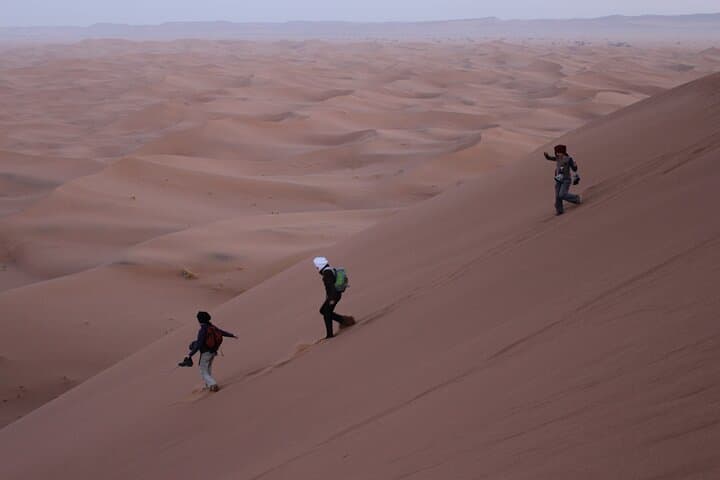
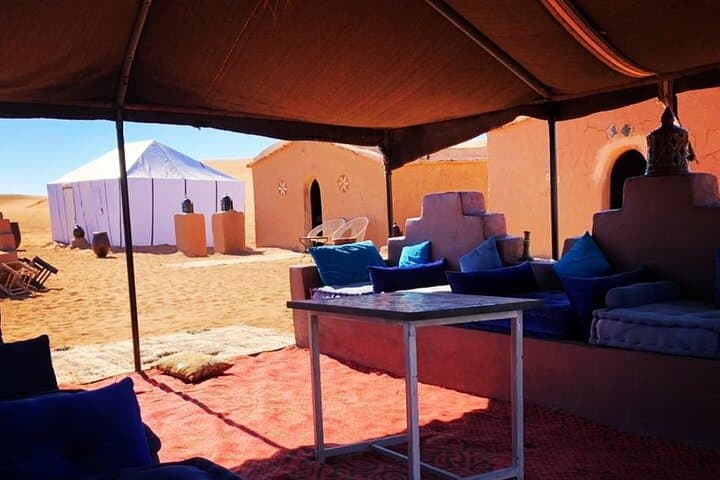
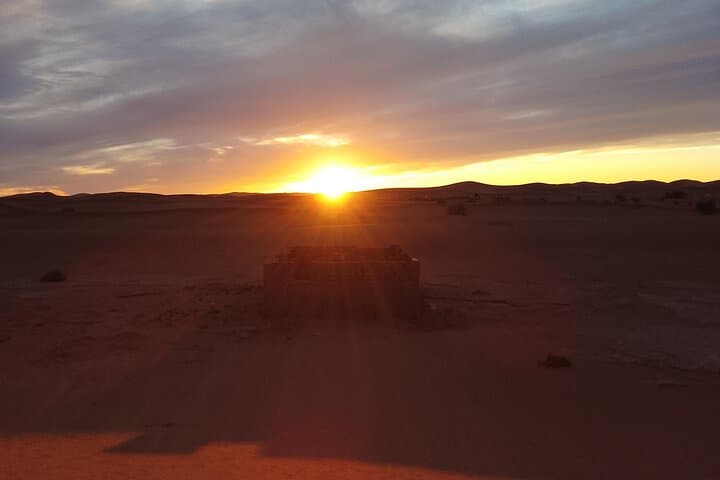
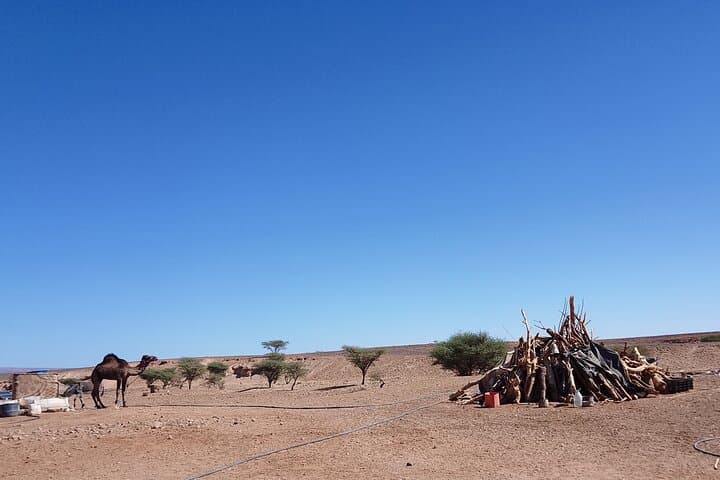
The night opens as the last road drops away and the dunes take over: wind-sculpted ridgelines roll into shadow while the camp lights are warm and low. Around a crackling fire, Touareg musicians strike call-and-response rhythms and the sky fills with a scatter of stars that seems to push the horizon back. At dawn, a thin line of gold spills down the flank of the nearest dune and invites an early climb.
The night opens as the last road drops away and the dunes take over: wind-sculpted ridgelines roll into shadow while the camp lights are warm and low. Around a crackling fire, Touareg musicians strike call-and-response rhythms and the sky fills with a scatter of stars that seems to push the horizon back. At dawn, a thin line of gold spills down the flank of the nearest dune and invites an early climb.
Erg Chegaga is one of Morocco’s great dune seas, formed by wind-driven sand collected in a broad basin on the southern edge of the Sahara. The region has long been a crossroad for trans-Saharan caravans and the local nomadic culture — an influence that remains visible in music, hospitality and the low, functional architecture of M'Hamid.
Visitors can expect an overnight camp experience: arrivals by 4x4, time to explore dunes on foot or camel, a communal dinner with traditional music and an early-morning sunrise before return via scenic stops including Lac Iriqui. Terrain is soft sand, variable dune slopes up to several dozen meters; trails are informal and movement can be slow.
Practical notes: pack layered clothing for chilly desert nights, carry ample water and sun protection, and allow extra time for transfers on unpaved tracks. Respect local customs — ask before photographing people — and follow Leave No Trace: fragile biocrust and desert plants recover slowly. This budget overnight is straightforward logistically but offers a full sensory encounter with the Sahara: quiet, wind, heat by day, and a dramatic, starlit night.