THE ADVENTURE COLLECTIVE® · Independent discovery and booking for outdoor travel

Leave Salalah behind for a 2-day, 1-night crossing into the Rub al Khali. Expect long desert drives, dune walking at golden hour, an archaeological visit to the 'Lost City,' and a simple overnight camp with meals.
Leave Salalah behind for a 2-day, 1-night crossing into the Rub al Khali. Expect long desert drives, dune walking at golden hour, an archaeological visit to the 'Lost City,' and a simple overnight camp with meals.
A wind-swept horizon of orange dunes opens as the minivan slips away from Salalah, salt and khareef-green coastline receding into a flat, sunburnt plain. By late afternoon the sand begins to gather itself into ribs and ridges; the light sharpens and the Empty Quarter—Rub al Khali—takes on the scale of something that both invites and measures you.
Verified experiences and guided adventures in the surrounding area.
Operated by Oman Day Tours · Salalah, Dhofar
A wind-swept horizon of orange dunes opens as the minivan slips away from Salalah, salt and khareef-green coastline receding into a flat, sunburnt plain. By late afternoon the sand begins to gather itself into ribs and ridges; the light sharpens and the Empty Quarter—Rub al Khali—takes on the scale of something that both invites and measures you.
The drive traces trade routes older than the Sultanate: frankincense caravans once threaded from Dhofar toward inland wells and the legendary site called Ubar or “the Lost City” — a scattering of archaeological stones and dune-swallowed walls that speak to a trading past. Geologically, the Rub al Khali is one of the world’s largest erg systems, with sand seas and linear dunes that can crest hundreds of meters above the plain; culturally the landscape remains tied to Bedouin routes and seasonal settlements.
On this overnight trip travelers can expect a 2-day, 1-night rhythm: a multi-hour desert transfer from Salalah, dune walks at golden hour, simple camp accommodation with dinner and breakfast included, and an early-morning low sun crossing the ripples. Nights are cold; days can be blistering. Mobile signal is intermittent and tracks are soft—vehicles stick to known lines.
Practical guidance: pack layered clothing, carry ample water, wear closed-toe shoes and gaiters for sand, and plan driving and walking around cooler morning and late-afternoon windows. Respect archaeological sites and stay with guides; the Empty Quarter rewards patience and careful planning with grand, quiet space.
moderate.
24–30 hours.
Suitable for travelers with basic mobility; expect walking on soft sand and long vehicle transfers so a moderate fitness level helps.
Expect multiple hours each way depending on the exact route—typically a 3–5 hour drive from Salalah to reach deep-dune areas used for overnight camps.
Camps are basic: portable or pit facilities are provided; facilities vary by operator and are simple rather than hotel-standard.
Yes—participants are required to carry a valid passport on the day of travel for identification and any park-authority checks.
Children may join but must be accompanied by adults; infant seats are available for vehicle transfers though child policies depend on operator rules.
The Dhofar region fed the ancient frankincense trade; caravan routes and small settlements linked coastal ports to inland desert wells and trading hubs for centuries.
Rub al Khali is ecologically sensitive—stay on established tracks, pack out waste, and avoid disturbing archaeological sites and native vegetation.
Oman Day Tours operates guided outdoor trips and adventures with an emphasis on safety, stewardship, and memorable experiences.
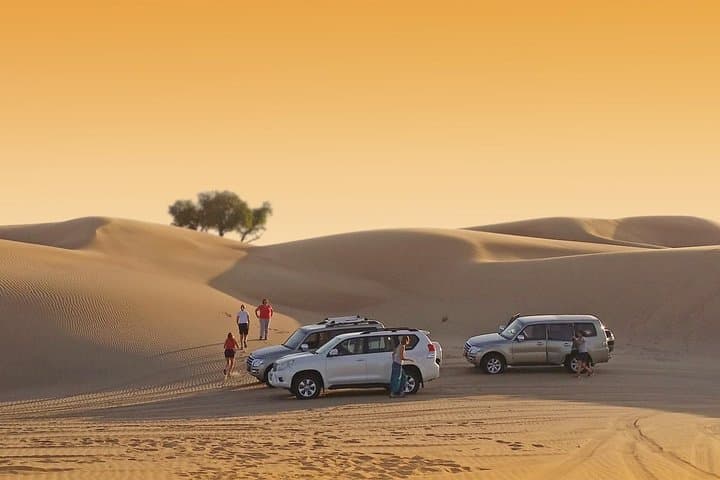


A wind-swept horizon of orange dunes opens as the minivan slips away from Salalah, salt and khareef-green coastline receding into a flat, sunburnt plain. By late afternoon the sand begins to gather itself into ribs and ridges; the light sharpens and the Empty Quarter—Rub al Khali—takes on the scale of something that both invites and measures you.
A wind-swept horizon of orange dunes opens as the minivan slips away from Salalah, salt and khareef-green coastline receding into a flat, sunburnt plain. By late afternoon the sand begins to gather itself into ribs and ridges; the light sharpens and the Empty Quarter—Rub al Khali—takes on the scale of something that both invites and measures you.
The drive traces trade routes older than the Sultanate: frankincense caravans once threaded from Dhofar toward inland wells and the legendary site called Ubar or “the Lost City” — a scattering of archaeological stones and dune-swallowed walls that speak to a trading past. Geologically, the Rub al Khali is one of the world’s largest erg systems, with sand seas and linear dunes that can crest hundreds of meters above the plain; culturally the landscape remains tied to Bedouin routes and seasonal settlements.
On this overnight trip travelers can expect a 2-day, 1-night rhythm: a multi-hour desert transfer from Salalah, dune walks at golden hour, simple camp accommodation with dinner and breakfast included, and an early-morning low sun crossing the ripples. Nights are cold; days can be blistering. Mobile signal is intermittent and tracks are soft—vehicles stick to known lines.
Practical guidance: pack layered clothing, carry ample water, wear closed-toe shoes and gaiters for sand, and plan driving and walking around cooler morning and late-afternoon windows. Respect archaeological sites and stay with guides; the Empty Quarter rewards patience and careful planning with grand, quiet space.