THE ADVENTURE COLLECTIVE® · Independent discovery and booking for outdoor travel

Ride a camel into the undulating dunes of Erg Chebbi, spend an evening with Berber musicians, and sleep in a private tent beneath an enormous desert sky. This overnight camp pairs easy camel trekking with cultural storytelling and sunrise views.
Ride a camel into the undulating dunes of Erg Chebbi, spend an evening with Berber musicians, and sleep in a private tent beneath an enormous desert sky. This overnight camp pairs easy camel trekking with cultural storytelling and sunrise views.
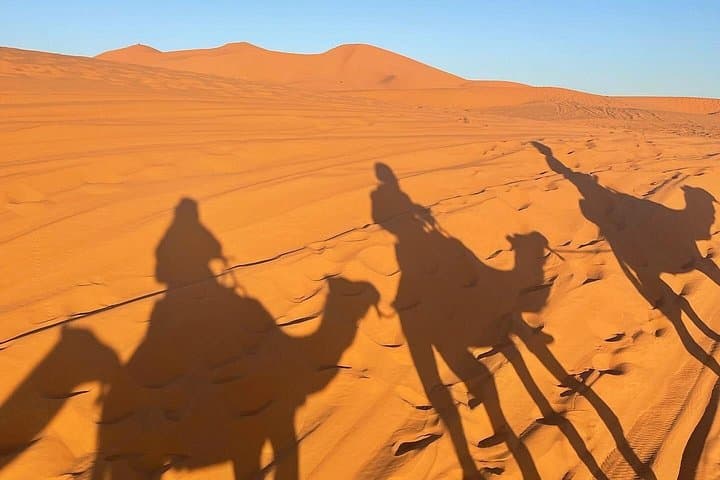
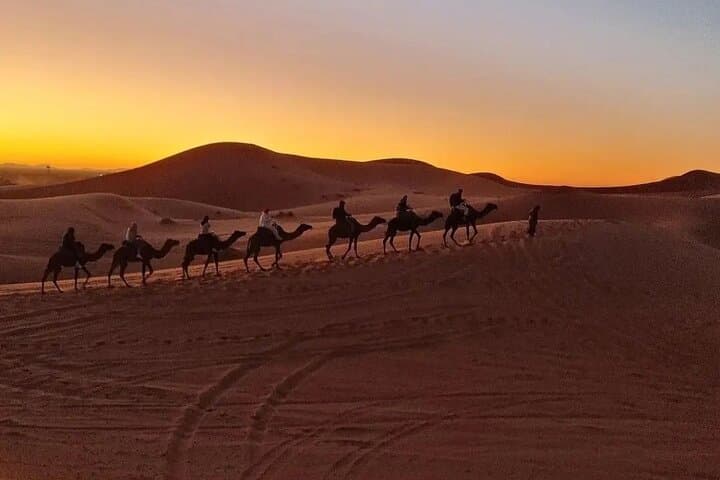
You crest the first dune as the sun begins to slip; the camels move with an even, patient gait and the sand seems to breathe around you. By the time you reach the camp, the dunes are a field of long shadows and the sky has gone wide and deep—an absolute dark that makes the Milky Way feel close enough to touch.
Verified experiences and guided adventures in the surrounding area.
Operated by Sahara Travel Excursions · Merzouga, Drâa-Tafilalet
You crest the first dune as the sun begins to slip; the camels move with an even, patient gait and the sand seems to breathe around you. By the time you reach the camp, the dunes are a field of long shadows and the sky has gone wide and deep—an absolute dark that makes the Milky Way feel close enough to touch.
This experience centers on Erg Chebbi, the high-rolling dunes east of Merzouga carved by Saharan winds over millennia. The area was once threaded by caravan routes and is still shaped by nomadic Berber traditions: evenings mean drums, stories, and songs passed between generations. Geologically, these dunes are mobile—sands shift seasonally, creating sudden ridgelines and quiet bowls where wind forms ripples like skin.
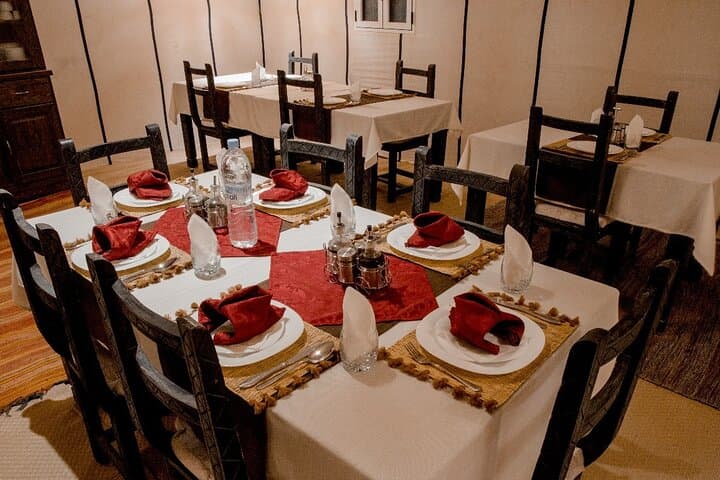
Cultural exchange is part of the night: you sleep in a private tent after a communal dinner, hear Berber tales around a fire, and can try sandboarding on a nearby slope. The itinerary typically includes a one-hour camel ride at sunset and the reverse at sunrise, with time to stand on a dune and watch the desert change color.
Practical notes: plan for extreme daytime heat and cold nights, bring layered clothing, and allow 18–20 hours for the full overnight cycle. Mounting a camel and spending hours on bumpy terrain requires basic mobility—this trip is generally suitable for most travelers but is not recommended for pregnant guests or those with serious back or heart conditions. Bring plenty of water, sun protection, and a small flashlight; respect the fragile dune environment and follow local guides’ instructions for a safe, memorable night under the Sahara sky.
easy.
18–20 hours.
Suitable for most fitness levels; must be able to mount/dismount a camel and tolerate bumpy rides and walking on sand for short stretches.
The camel trek to the camp is about one hour each way, timed so you reach the dunes for sunset and return after breakfast following sunrise.
Yes—this offering includes a private tent plus dinner and breakfast provided by the camp hosts.
Generally yes—many families participate, but infants should be carried and anyone with back, heart, or pregnancy concerns is advised not to join.
Power is limited; some camps offer basic phone charging for a small fee—bring a power bank to be safe.
Erg Chebbi sits along historic caravan corridors used by Berber and trans-Saharan traders; local camps continue cultural practices like music and storytelling that trace to those trade networks.
Dune ecosystems are fragile—stick to established paths when possible, minimize litter, and support camps that follow leave-no-trace practices and engage local communities.
Sahara Travel Excursions operates guided outdoor trips and adventures with an emphasis on safety, stewardship, and memorable experiences.
You crest the first dune as the sun begins to slip; the camels move with an even, patient gait and the sand seems to breathe around you. By the time you reach the camp, the dunes are a field of long shadows and the sky has gone wide and deep—an absolute dark that makes the Milky Way feel close enough to touch.
You crest the first dune as the sun begins to slip; the camels move with an even, patient gait and the sand seems to breathe around you. By the time you reach the camp, the dunes are a field of long shadows and the sky has gone wide and deep—an absolute dark that makes the Milky Way feel close enough to touch.
This experience centers on Erg Chebbi, the high-rolling dunes east of Merzouga carved by Saharan winds over millennia. The area was once threaded by caravan routes and is still shaped by nomadic Berber traditions: evenings mean drums, stories, and songs passed between generations. Geologically, these dunes are mobile—sands shift seasonally, creating sudden ridgelines and quiet bowls where wind forms ripples like skin.
Cultural exchange is part of the night: you sleep in a private tent after a communal dinner, hear Berber tales around a fire, and can try sandboarding on a nearby slope. The itinerary typically includes a one-hour camel ride at sunset and the reverse at sunrise, with time to stand on a dune and watch the desert change color.
Practical notes: plan for extreme daytime heat and cold nights, bring layered clothing, and allow 18–20 hours for the full overnight cycle. Mounting a camel and spending hours on bumpy terrain requires basic mobility—this trip is generally suitable for most travelers but is not recommended for pregnant guests or those with serious back or heart conditions. Bring plenty of water, sun protection, and a small flashlight; respect the fragile dune environment and follow local guides’ instructions for a safe, memorable night under the Sahara sky.