THE ADVENTURE COLLECTIVE® · Independent discovery and booking for outdoor travel

Ride a camel into the Erg Chebbi dunes, sleep in a traditional Berber tent and watch the Sahara trade its colors at sunset and sunrise. This overnight trek pairs simple comforts—tea, music, a hot meal—with hands-on desert guidance for first-time and seasoned travelers alike.
Ride a camel into the Erg Chebbi dunes, sleep in a traditional Berber tent and watch the Sahara trade its colors at sunset and sunrise. This overnight trek pairs simple comforts—tea, music, a hot meal—with hands-on desert guidance for first-time and seasoned travelers alike.
The sun slides low behind a bank of rust-colored dunes and the camels file along like slow ships cutting sand. You arrive at the meeting point in Hassi Labied with the smell of sweet mint tea and the soft creak of saddles; by nightfall the camp lights a small human constellation against an enormous sky.
Verified experiences and guided adventures in the surrounding area.
Operated by See Around Morocco · Hassi Labied, Drâa-Tafilalet
The sun slides low behind a bank of rust-colored dunes and the camels file along like slow ships cutting sand. You arrive at the meeting point in Hassi Labied with the smell of sweet mint tea and the soft creak of saddles; by nightfall the camp lights a small human constellation against an enormous sky.
This stretch of the Sahara is part of the Erg Chebbi dune sea—wind-built ridges of fine quartz sand that have migrated over millennia. Local Berber (Amazigh) people who once moved seasonally across these plains now host visitors in traditional tents, sharing stories, percussion-driven music and recipes rooted in caravan-era trade routes. The dunes themselves are alive: wind nudges their crests, and sand keeps reshaping the route you walk.
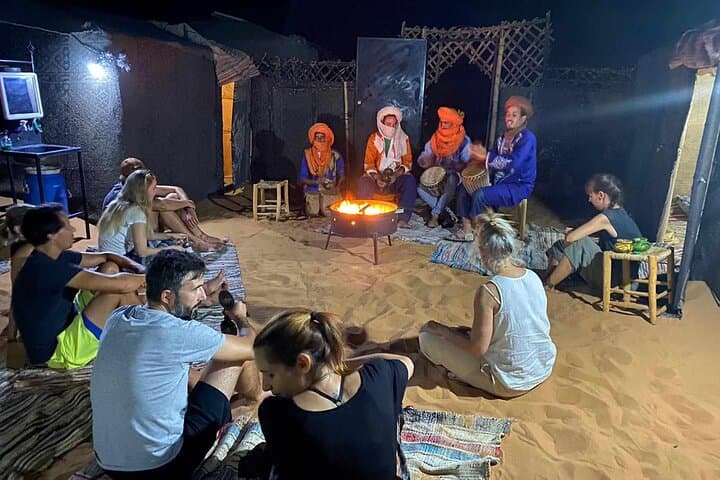
Expect a slow camel ride timed to catch sunset, a short walk to the camp, sandboarding on smaller slopes, a communal dinner, drums and stargazing. Private tents are provided (shared bathroom) and there’s a morning sunrise ride back to the meeting point where you can shower before leaving. Guides handle camel saddling and basic orientation; your role is mainly to breathe, balance and enjoy.
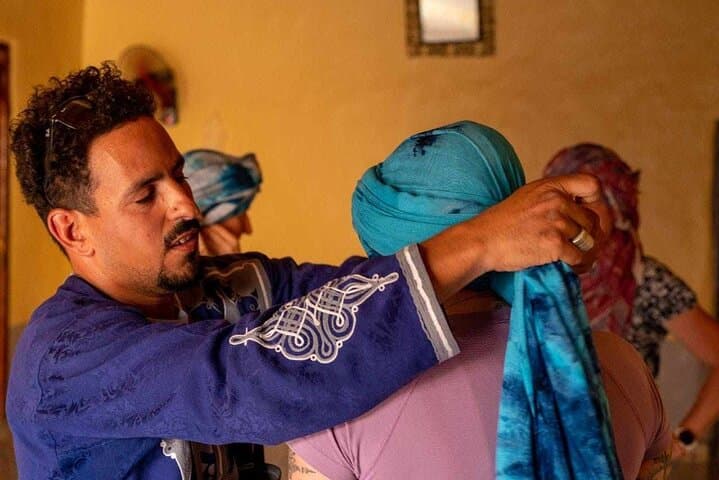
Practical guidance: arrive with layered clothing (desert nights get cold), bring at least 2 liters of water for the ride, protect skin with high-SPF sunscreen and a headscarf, and secure loose items from blowing sand. Cameras and batteries perform best when kept in a sealed pouch. If you travel by car, there’s free parking; pickup by bus is often available. The experience is low-impact but follow your guide’s instructions around animals and the fragile dune edges.
easy.
20 hours (overnight).
Suitable for most fitness levels; you should be able to mount a camel and walk short stretches on sand
The ride to camp is timed around sunset and typically lasts 1–2 hours depending on pace and chosen route.
Yes—there is a shared bathroom at the camp and a shower at the meeting point for use after the trek.
The experience is family-friendly but requires mounting a camel and walking on sand; discuss specific mobility needs with the operator before booking.
Carry Moroccan dirham for small purchases and tips; tipping guides and camp staff is customary—small amounts are appreciated for good service.
This area of the Sahara sat along ancient trade routes; local Berber (Amazigh) communities adapted nomadic practices to seasonal desert life and now share cultural knowledge through hospitality and music.
Dunes are a fragile, shifting environment—stay on established paths, avoid driving on unmarked dunes and pack out all waste; using local guides supports community-based stewardship.
See Around Morocco operates guided outdoor trips and adventures with an emphasis on safety, stewardship, and memorable experiences.


The sun slides low behind a bank of rust-colored dunes and the camels file along like slow ships cutting sand. You arrive at the meeting point in Hassi Labied with the smell of sweet mint tea and the soft creak of saddles; by nightfall the camp lights a small human constellation against an enormous sky.
The sun slides low behind a bank of rust-colored dunes and the camels file along like slow ships cutting sand. You arrive at the meeting point in Hassi Labied with the smell of sweet mint tea and the soft creak of saddles; by nightfall the camp lights a small human constellation against an enormous sky.
This stretch of the Sahara is part of the Erg Chebbi dune sea—wind-built ridges of fine quartz sand that have migrated over millennia. Local Berber (Amazigh) people who once moved seasonally across these plains now host visitors in traditional tents, sharing stories, percussion-driven music and recipes rooted in caravan-era trade routes. The dunes themselves are alive: wind nudges their crests, and sand keeps reshaping the route you walk.
Expect a slow camel ride timed to catch sunset, a short walk to the camp, sandboarding on smaller slopes, a communal dinner, drums and stargazing. Private tents are provided (shared bathroom) and there’s a morning sunrise ride back to the meeting point where you can shower before leaving. Guides handle camel saddling and basic orientation; your role is mainly to breathe, balance and enjoy.
Practical guidance: arrive with layered clothing (desert nights get cold), bring at least 2 liters of water for the ride, protect skin with high-SPF sunscreen and a headscarf, and secure loose items from blowing sand. Cameras and batteries perform best when kept in a sealed pouch. If you travel by car, there’s free parking; pickup by bus is often available. The experience is low-impact but follow your guide’s instructions around animals and the fragile dune edges.