THE ADVENTURE COLLECTIVE® · Independent discovery and booking for outdoor travel

Ride into the Thar at mid-afternoon, watch sand flip gold at sunset, sleep on bedrolls beneath a monumental desert sky and return to Jaisalmer by morning. This non-touristic overnight camel safari combines quiet dunes, visits to Kuldhara and Khaba Fort, basic camp comforts, and direct exposure to local desert life.
Ride into the Thar at mid-afternoon, watch sand flip gold at sunset, sleep on bedrolls beneath a monumental desert sky and return to Jaisalmer by morning. This non-touristic overnight camel safari combines quiet dunes, visits to Kuldhara and Khaba Fort, basic camp comforts, and direct exposure to local desert life.
You push off from Jaisalmer as the town’s sandstone heat loosens and the Thar opens—an expanse of wind-sculpted dunes and hard, sun-baked flats. By mid-afternoon the caravan tacks across cresting ridgelines; camels rise and fall with a slow, steady gait that shapes the tempo of the trip. Sunset spills ochre and rust across the horizon, and the desert begins to hum with night’s cool breath.
Verified experiences and guided adventures in the surrounding area.
Operated by Pleasant Haveli Camel Safari · Jaisalmer, Rajasthan
You push off from Jaisalmer as the town’s sandstone heat loosens and the Thar opens—an expanse of wind-sculpted dunes and hard, sun-baked flats. By mid-afternoon the caravan tacks across cresting ridgelines; camels rise and fall with a slow, steady gait that shapes the tempo of the trip. Sunset spills ochre and rust across the horizon, and the desert begins to hum with night’s cool breath.
This route threads historical sites and quiet desert life: the abandoned lanes of Kuldhara and the ruined Khaba Fort speak to the 19th-century migration of Paliwal communities and the limits of water in this arid landscape. Geologically the Thar is young sand—dunes shifting with seasonal winds—punctuated by hardpan riverbeds like Kakni that mark ephemeral water flow.
Culturally, village stops are practical windows into desert livelihoods—camel care, millet cooking, patched textiles—rather than staged performances. Guides use traditional knowledge for route choice and campsite selection; the operation includes jeep transfer, shower and luggage storage back in town, and simple meals served around the campfire.
Practical guide: expect 18–20 hours total, mostly low-intensity but on uneven terrain; sleep is on custom bedrolls under open sky (no tent provided). Pack layered clothing for large diurnal swings, bring water and a headlamp, and allow time for the long camel rhythm.
This experience suits travelers who want an atmospheric, off-mainstream night in the Thar with accessible logistics and authentic village contact—arrive rested, sun-ready, and curious.
moderate.
18–20 hours.
Light-to-moderate stamina; able to mount a camel, walk on sand and manage basic overnight conditions.
No; guides give a short briefing and camels are handled by the crew—novices can participate but should be comfortable mounting and dismounting.
Showers and luggage storage are provided in Jaisalmer before and after the safari; desert camp facilities are basic and typically involve shared arrangements.
Dinner (local vegetarian-style dal, rice, chapati and spices), evening tea and snacks, and a simple breakfast with toast, porridge, fruit and tea are included.
Not recommended for pregnant travelers or people with serious spinal or cardiovascular issues; children can join but check operator age rules and mobility limits.
The area around Jaisalmer includes abandoned Paliwal settlements like Kuldhara, deserted in the early 19th century when water scarcity and social pressures forced entire communities to relocate.
The Thar is ecologically fragile—minimize waste, avoid disturbing native shrubs that stabilize dunes, and follow guide directions to limit erosion and cultural-site damage.
Pleasant Haveli Camel Safari operates guided outdoor trips and adventures with an emphasis on safety, stewardship, and memorable experiences.
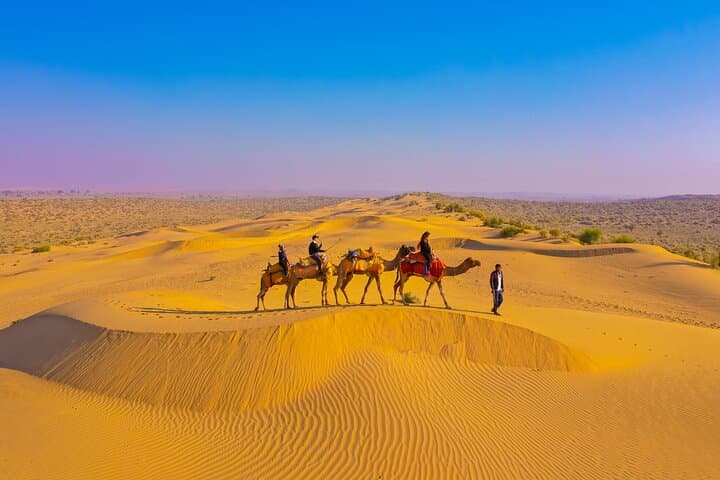
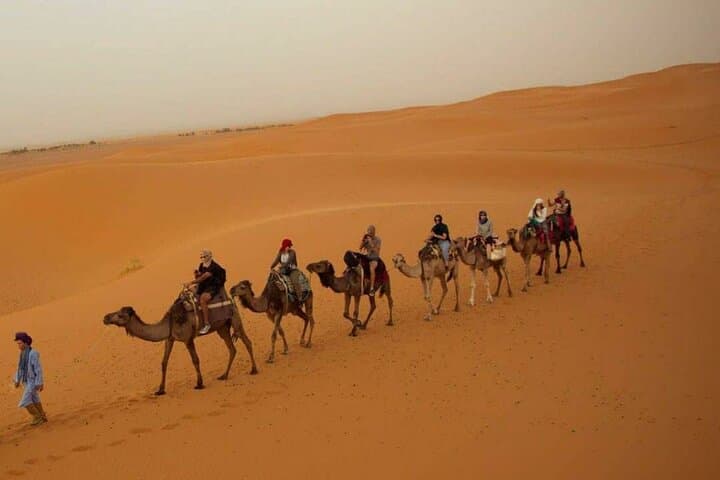
You push off from Jaisalmer as the town’s sandstone heat loosens and the Thar opens—an expanse of wind-sculpted dunes and hard, sun-baked flats. By mid-afternoon the caravan tacks across cresting ridgelines; camels rise and fall with a slow, steady gait that shapes the tempo of the trip. Sunset spills ochre and rust across the horizon, and the desert begins to hum with night’s cool breath.
You push off from Jaisalmer as the town’s sandstone heat loosens and the Thar opens—an expanse of wind-sculpted dunes and hard, sun-baked flats. By mid-afternoon the caravan tacks across cresting ridgelines; camels rise and fall with a slow, steady gait that shapes the tempo of the trip. Sunset spills ochre and rust across the horizon, and the desert begins to hum with night’s cool breath.
This route threads historical sites and quiet desert life: the abandoned lanes of Kuldhara and the ruined Khaba Fort speak to the 19th-century migration of Paliwal communities and the limits of water in this arid landscape. Geologically the Thar is young sand—dunes shifting with seasonal winds—punctuated by hardpan riverbeds like Kakni that mark ephemeral water flow.
Culturally, village stops are practical windows into desert livelihoods—camel care, millet cooking, patched textiles—rather than staged performances. Guides use traditional knowledge for route choice and campsite selection; the operation includes jeep transfer, shower and luggage storage back in town, and simple meals served around the campfire.
Practical guide: expect 18–20 hours total, mostly low-intensity but on uneven terrain; sleep is on custom bedrolls under open sky (no tent provided). Pack layered clothing for large diurnal swings, bring water and a headlamp, and allow time for the long camel rhythm.
This experience suits travelers who want an atmospheric, off-mainstream night in the Thar with accessible logistics and authentic village contact—arrive rested, sun-ready, and curious.