THE ADVENTURE COLLECTIVE® · Independent discovery and booking for outdoor travel

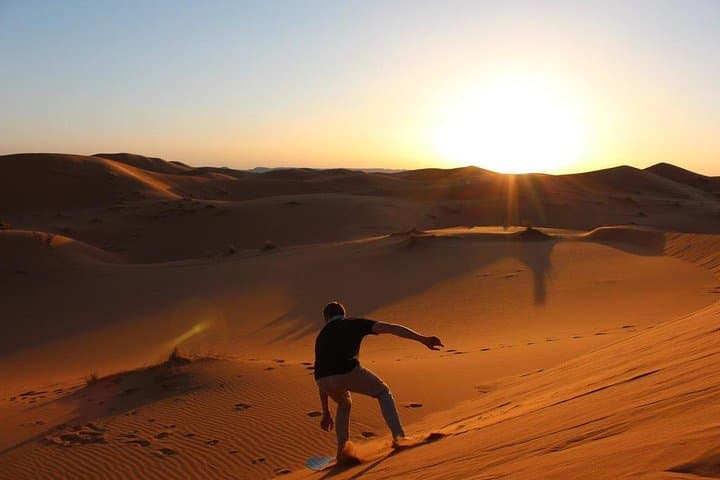
Spend an overnight in Erg Chebbi with a camel transfer, private Berber tent with private bathroom, dinner, sunrise and sunset views, and sand-boarding. This compact desert stay blends cultural performance and quiet dune time for an easy but memorable Sahara experience.
Spend an overnight in Erg Chebbi with a camel transfer, private Berber tent with private bathroom, dinner, sunrise and sunset views, and sand-boarding. This compact desert stay blends cultural performance and quiet dune time for an easy but memorable Sahara experience.
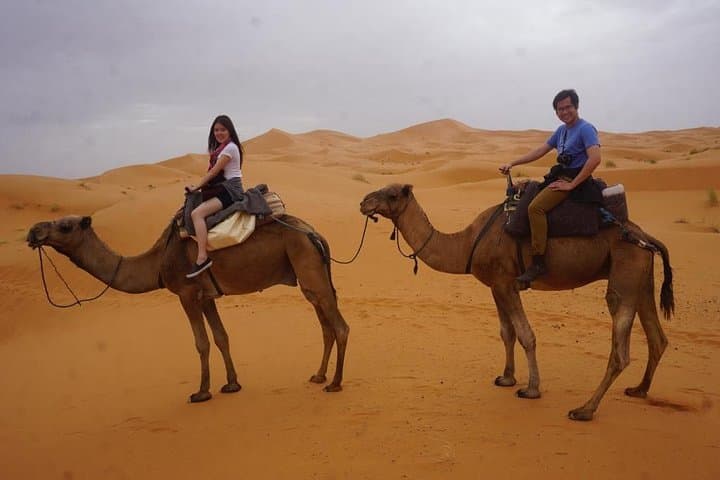
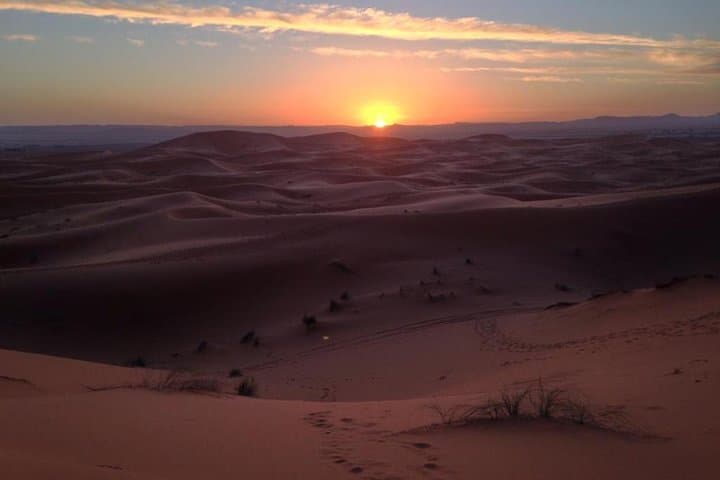
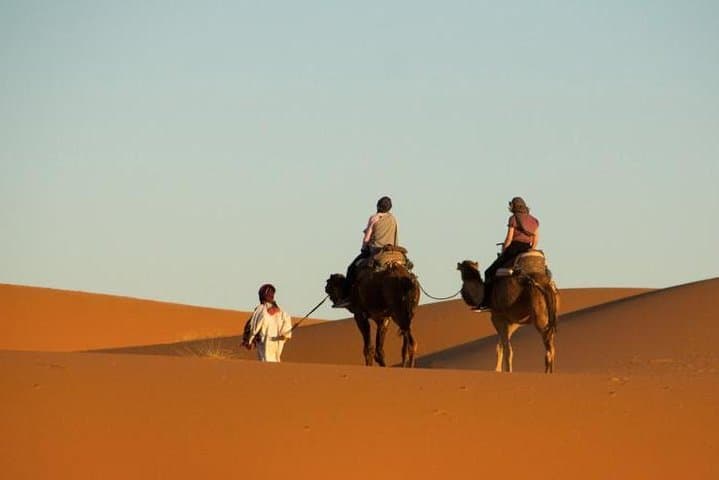
The sun tips the crest of a dune and the horizon turns the Sahara into a burnished ocean. You meet your camel guide at the edge of Merzouga, climb into the slow, swaying rhythm of a pack animal and push deeper into Erg Chebbi until the last lights of town fall away.
Verified experiences and guided adventures in the surrounding area.
Operated by Quiet Merzouga Desert- Day Tours · Merzouga, Drâa-Tafilalet
The sun tips the crest of a dune and the horizon turns the Sahara into a burnished ocean. You meet your camel guide at the edge of Merzouga, climb into the slow, swaying rhythm of a pack animal and push deeper into Erg Chebbi until the last lights of town fall away.
Erg Chebbi’s dunes are wind-carved piles of fine Sahara sand, built over millennia as northerly winds swept deposits southward. The area has long been traversed by Berber nomads and caravan routes linking oases and salt flats; tonight’s camp continues that living tradition with Berber music by fire and simple, local dishes.
Culturally the experience centers on conviviality — a shared dinner, tea rituals and Gnawa rhythms — while geologically the dunes reward early-risers: the sunrise sculpts sharp ridgelines and deep, cool shadows. Wildlife is subtle here; a fennec’s tracks or the flash of a desert lizard are more common than big mammals.
Practicalities: expect roughly 1–1.5 hours on camel each way (jeep transfers available), an overnight in a private tent with its own shower and toilet, plus dinner and breakfast. Bring at least 1.5–2 liters of water, closed-toe shoes for dune walking and layered clothing for cold nights. Phone charging is available but limited; keep valuables secured — luggage is transferred by camp vehicle. Sunset and sunrise are the highlights, and sand-boarding is available for short runs down steep faces. This is an accessible overnight for most travelers but not recommended for serious heart conditions; plan for dramatic light, strong winds at times, and an unforgettable, low-tech night under desert stars.
moderate.
18 hours (overnight).
Suitable for travelers with basic mobility who can mount a camel and walk short stretches of sand; not strenuous.
Expect approximately 1–1.5 hours each way; a jeep transfer option is available for either leg.
Yes—dinner and breakfast are included, typically prepared in a camp kitchen with local dishes and tea.
Yes; the advertised tent is private and includes a private shower and toilet with towels provided.
Limited electricity is provided for charging phones; bring a power bank as a backup.
Erg Chebbi sits along historic trans-Saharan routes used by Berber and nomadic traders; camps today continue elements of that hospitality tradition.
Dune ecosystems are fragile — stick to established routes, avoid driving on active dunes, and pack out all trash to reduce erosion and habitat disturbance.
Quiet Merzouga Desert- Day Tours operates guided outdoor trips and adventures with an emphasis on safety, stewardship, and memorable experiences.
The sun tips the crest of a dune and the horizon turns the Sahara into a burnished ocean. You meet your camel guide at the edge of Merzouga, climb into the slow, swaying rhythm of a pack animal and push deeper into Erg Chebbi until the last lights of town fall away.
The sun tips the crest of a dune and the horizon turns the Sahara into a burnished ocean. You meet your camel guide at the edge of Merzouga, climb into the slow, swaying rhythm of a pack animal and push deeper into Erg Chebbi until the last lights of town fall away.
Erg Chebbi’s dunes are wind-carved piles of fine Sahara sand, built over millennia as northerly winds swept deposits southward. The area has long been traversed by Berber nomads and caravan routes linking oases and salt flats; tonight’s camp continues that living tradition with Berber music by fire and simple, local dishes.
Culturally the experience centers on conviviality — a shared dinner, tea rituals and Gnawa rhythms — while geologically the dunes reward early-risers: the sunrise sculpts sharp ridgelines and deep, cool shadows. Wildlife is subtle here; a fennec’s tracks or the flash of a desert lizard are more common than big mammals.
Practicalities: expect roughly 1–1.5 hours on camel each way (jeep transfers available), an overnight in a private tent with its own shower and toilet, plus dinner and breakfast. Bring at least 1.5–2 liters of water, closed-toe shoes for dune walking and layered clothing for cold nights. Phone charging is available but limited; keep valuables secured — luggage is transferred by camp vehicle. Sunset and sunrise are the highlights, and sand-boarding is available for short runs down steep faces. This is an accessible overnight for most travelers but not recommended for serious heart conditions; plan for dramatic light, strong winds at times, and an unforgettable, low-tech night under desert stars.