THE ADVENTURE COLLECTIVE® · Independent discovery and booking for outdoor travel

From Alexandria’s quay to Cairo’s layered streets, this private overnight tour compresses millennia into 48 hours—Giza’s pyramids, Saqqara’s Step Pyramid, Memphis and the Egyptian Museum. Expect long days, close-up antiquities and a deep dive into Egypt’s civic and sacred past.
From Alexandria’s quay to Cairo’s layered streets, this private overnight tour compresses millennia into 48 hours—Giza’s pyramids, Saqqara’s Step Pyramid, Memphis and the Egyptian Museum. Expect long days, close-up antiquities and a deep dive into Egypt’s civic and sacred past.
You step off the ship at Alexandria Port before dawn, the Mediterranean light still cool, and a private A/C vehicle waits to push you inland toward the Sahara fringe and Cairo’s ancient skyline. The first day moves fast: Giza’s stone giants appear on the horizon, their sharp silhouettes rising from the limestone plateau as camels and vendors orbit the plateau’s edges. Walking the Valley Temple and approaching the Sphinx brings you close to the funerary landscape where kings were prepared for eternity.
Verified experiences and guided adventures in the surrounding area.
Operated by Emo Tours Egypt · Cairo, Cairo
You step off the ship at Alexandria Port before dawn, the Mediterranean light still cool, and a private A/C vehicle waits to push you inland toward the Sahara fringe and Cairo’s ancient skyline. The first day moves fast: Giza’s stone giants appear on the horizon, their sharp silhouettes rising from the limestone plateau as camels and vendors orbit the plateau’s edges. Walking the Valley Temple and approaching the Sphinx brings you close to the funerary landscape where kings were prepared for eternity.
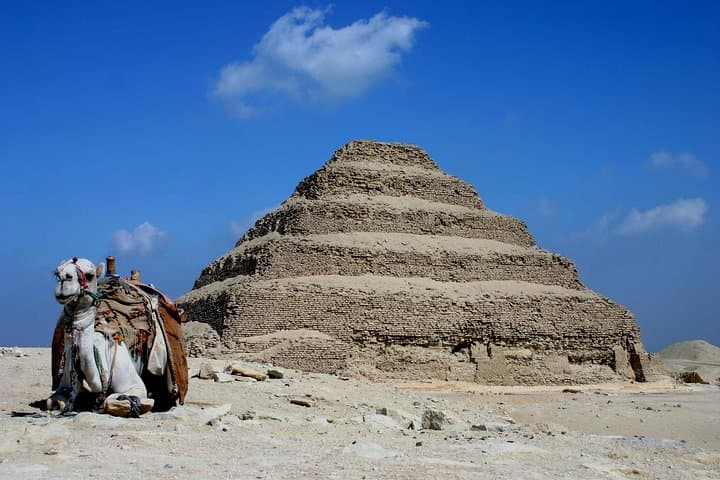
Sakkara slices the chronology of Egyptian architecture—here the Step Pyramid of Djoser marks the shift from mastaba to monument, engineered by Imhotep from local limestone and mudbrick. Memphis, once the pharaonic capital, offers a quieter scale: a colossus of Ramses II and an alabaster sphinx that speak to a civic center of millennia.
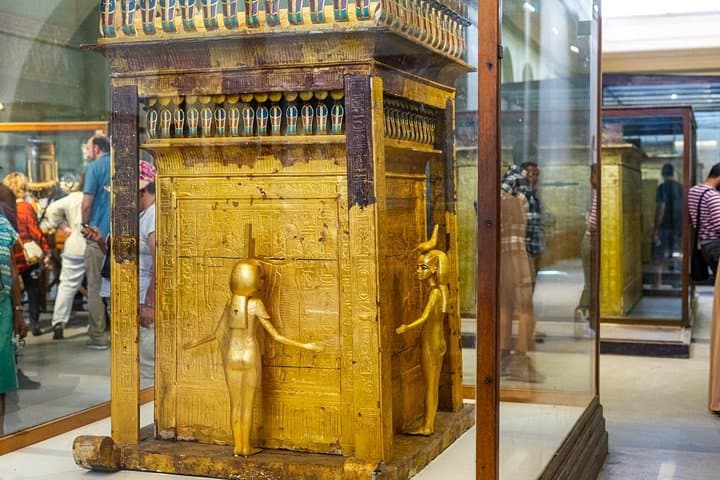
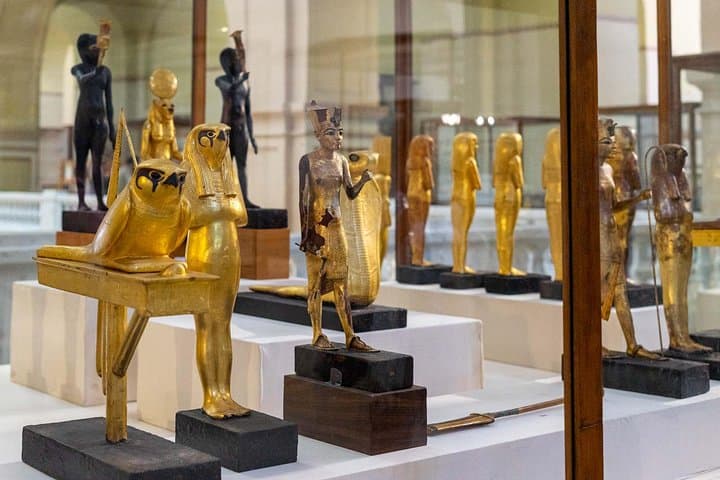
Overnight you stay in Cairo; the city’s layering is immediate—Pharaonic relics, Ottoman fortifications and the bustle of Khan el-Khalili where craftspeople and spices dominate the sensory map. The Egyptian Museum concentrates millennia into halls of gold, statuary and the Tutankhamun trove. The Citadel’s alabaster mosque crowns the skyline and gives a strategic view back over the river and city.
Practicalities: this private two-day tour covers long transfers and several hours of standing and walking across uneven stone and desert dust—comfortable, broken-in footwear, sun protection and a daypack are essential. Carry local cash for tips and market purchases, keep your passport details handy for port pickup, and allow time between sites; guides pace visits to conserve energy, but days are full. Respect site rules: no touching fragile carvings and follow your guide’s route to reduce wear on fragile archaeology.
moderate.
2 days (approx. 48 hours).
Suitable for travelers in average health; expect multiple hours of standing and walking on uneven surfaces each day.
Pickup and drop-off are at Alexandria Port; exact pickup point and timings are collected at booking to match your ship’s schedule.
Yes: site entry fees and one night in a 5-star Cairo hotel are included per the itinerary.
The tour involves uneven ground and steps at archaeological sites; it’s not recommended for travelers with significant mobility or spinal issues—check with the operator for adaptations.
Visitors should confirm visa requirements for Egypt based on nationality and carry passport details and cruise arrival/departure times for port processing.
Memphis was the ancient political center from c. 3100 B.C.; Sakkara’s Step Pyramid predates the smooth-sided pyramids and marks a major architectural innovation by Imhotep.
High visitor numbers stress fragile stone and painted reliefs; follow posted routes, avoid touching surfaces and support licensed guides to ensure site preservation.
Emo Tours Egypt operates guided outdoor trips and adventures with an emphasis on safety, stewardship, and memorable experiences.
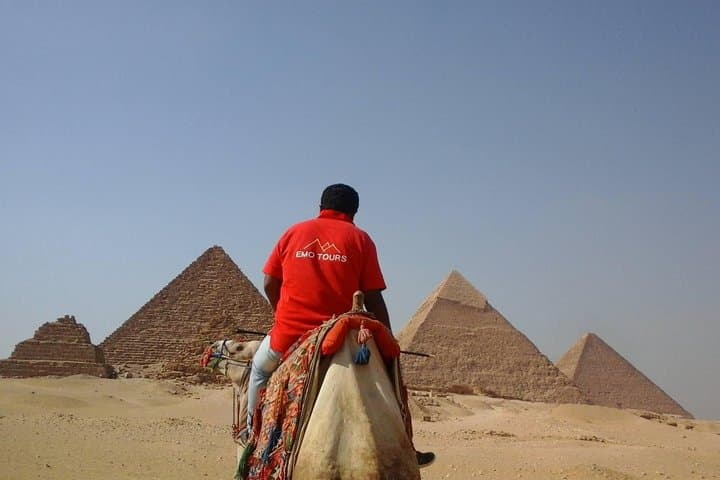
You step off the ship at Alexandria Port before dawn, the Mediterranean light still cool, and a private A/C vehicle waits to push you inland toward the Sahara fringe and Cairo’s ancient skyline. The first day moves fast: Giza’s stone giants appear on the horizon, their sharp silhouettes rising from the limestone plateau as camels and vendors orbit the plateau’s edges. Walking the Valley Temple and approaching the Sphinx brings you close to the funerary landscape where kings were prepared for eternity.
You step off the ship at Alexandria Port before dawn, the Mediterranean light still cool, and a private A/C vehicle waits to push you inland toward the Sahara fringe and Cairo’s ancient skyline. The first day moves fast: Giza’s stone giants appear on the horizon, their sharp silhouettes rising from the limestone plateau as camels and vendors orbit the plateau’s edges. Walking the Valley Temple and approaching the Sphinx brings you close to the funerary landscape where kings were prepared for eternity.
Sakkara slices the chronology of Egyptian architecture—here the Step Pyramid of Djoser marks the shift from mastaba to monument, engineered by Imhotep from local limestone and mudbrick. Memphis, once the pharaonic capital, offers a quieter scale: a colossus of Ramses II and an alabaster sphinx that speak to a civic center of millennia.
Overnight you stay in Cairo; the city’s layering is immediate—Pharaonic relics, Ottoman fortifications and the bustle of Khan el-Khalili where craftspeople and spices dominate the sensory map. The Egyptian Museum concentrates millennia into halls of gold, statuary and the Tutankhamun trove. The Citadel’s alabaster mosque crowns the skyline and gives a strategic view back over the river and city.
Practicalities: this private two-day tour covers long transfers and several hours of standing and walking across uneven stone and desert dust—comfortable, broken-in footwear, sun protection and a daypack are essential. Carry local cash for tips and market purchases, keep your passport details handy for port pickup, and allow time between sites; guides pace visits to conserve energy, but days are full. Respect site rules: no touching fragile carvings and follow your guide’s route to reduce wear on fragile archaeology.