THE ADVENTURE COLLECTIVE® · Independent discovery and booking for outdoor travel

A long-haul daytime-to-overnight bus transfer linking Cat Ba Island to Hue with a ferry crossing and a VIP sleeper segment—ideal for travelers prioritizing convenience and budget over speed. Read what to expect, stops, and practical tips before you book.
A long-haul daytime-to-overnight bus transfer linking Cat Ba Island to Hue with a ferry crossing and a VIP sleeper segment—ideal for travelers prioritizing convenience and budget over speed. Read what to expect, stops, and practical tips before you book.
You leave Cat Ba town at midday, the harbor air salt-bright as the bus rolls toward Cai Vieng for the short ferry across to Got. The sea pulls at the ferry’s hull like a patient current daring you to slow down; once ashore, the road unspools across coastal flats and into limestone country where karst towers loom like weathered sentries.
Verified experiences and guided adventures in the surrounding area.
Operated by Full Moon Travel Asia (Cat Ba) · Cat Ba, Hai Phong
You leave Cat Ba town at midday, the harbor air salt-bright as the bus rolls toward Cai Vieng for the short ferry across to Got. The sea pulls at the ferry’s hull like a patient current daring you to slow down; once ashore, the road unspools across coastal flats and into limestone country where karst towers loom like weathered sentries.
The route stitches together different faces of northern Vietnam: Cat Ba’s island fishing clusters, Ninh Binh’s river-carved plains and rice fields, then the long overnight stretch through central provinces that opens, at dawn, into Hue’s fog-damp riverbanks and the Perfume River pushing toward the Imperial City.
Geology and history intersect on this run — the same karst that defines Halong and Ninh Binh formed in shallow seas millions of years ago; Hue’s citadel, by contrast, is 19th-century imperial architecture sitting on older Vietnamese and Cham cultural layers.
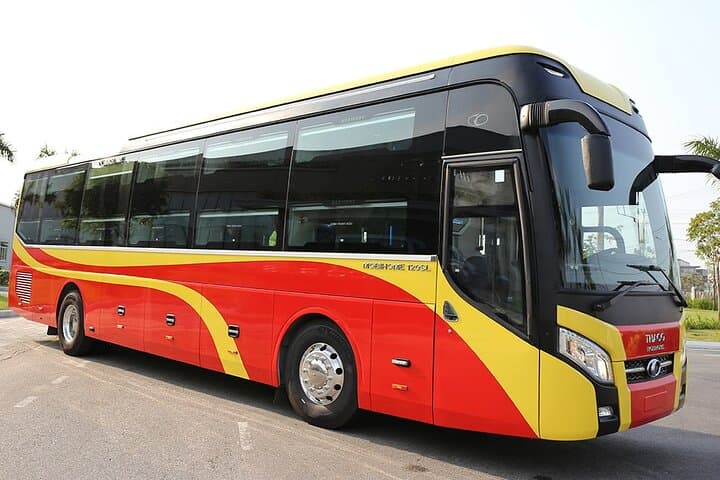
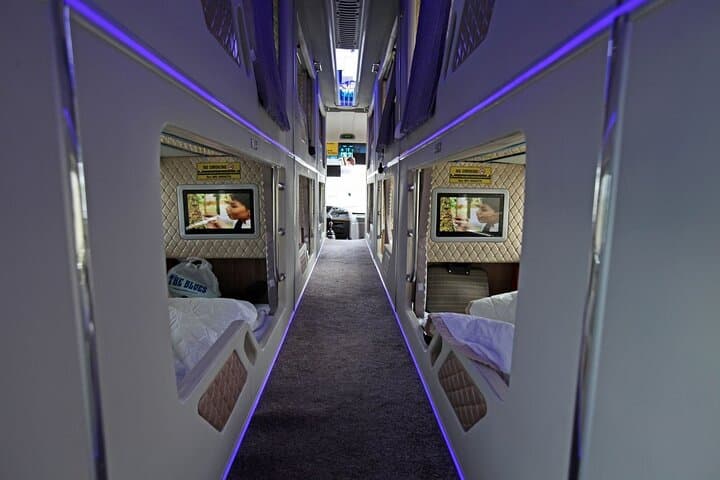
Practical guidance: the trip is a transfer — expect about 17 hours total including a 1-hour change in Ninh Binh. The first leg uses seating buses with AC; the second is a VIP cabin sleeper with soft beds. Luggage stays with the company during transfer; plan for two restaurant breaks en route. Bring layers (coastal afternoons to cool nights), earplugs and a neck pillow for the cabin beds, and motion-sickness meds if you’re sensitive to curvy mountain roads.
Health notes: not recommended for pregnant travelers or those with serious spine or heart conditions. For many, it’s the most direct, cost-efficient way to move between Cat Ba and Hue while seeing a cross-section of Vietnam’s landscape between islands and imperial plains.
easy.
17 hours.
Suitable for travelers who can sit or sleep on a bus for long periods and handle short transfers; not strenuous
Expect about 17 hours door-to-door, including a 1-hour change in Ninh Binh and two restaurant breaks.
Service animals are allowed; infants must sit on an adult’s lap—confirm policies when booking.
Yes—during the Ninh Binh stop you leave larger luggage at the company office while you rest for the hour.
There are at least two planned restaurant breaks (one each leg) and onboard cabins typically have basic facilities but plan accordingly.
Hue served as Vietnam’s imperial capital under the Nguyen dynasty in the 19th century; the route traverses regions shaped by maritime trade and rice cultivation.
Be mindful of litter during stops—coastal and karst habitats are sensitive; use provided waste bins and avoid single-use plastics when possible.
Full Moon Travel Asia (Cat Ba) operates guided outdoor trips and adventures with an emphasis on safety, stewardship, and memorable experiences.


You leave Cat Ba town at midday, the harbor air salt-bright as the bus rolls toward Cai Vieng for the short ferry across to Got. The sea pulls at the ferry’s hull like a patient current daring you to slow down; once ashore, the road unspools across coastal flats and into limestone country where karst towers loom like weathered sentries.
You leave Cat Ba town at midday, the harbor air salt-bright as the bus rolls toward Cai Vieng for the short ferry across to Got. The sea pulls at the ferry’s hull like a patient current daring you to slow down; once ashore, the road unspools across coastal flats and into limestone country where karst towers loom like weathered sentries.
The route stitches together different faces of northern Vietnam: Cat Ba’s island fishing clusters, Ninh Binh’s river-carved plains and rice fields, then the long overnight stretch through central provinces that opens, at dawn, into Hue’s fog-damp riverbanks and the Perfume River pushing toward the Imperial City.
Geology and history intersect on this run — the same karst that defines Halong and Ninh Binh formed in shallow seas millions of years ago; Hue’s citadel, by contrast, is 19th-century imperial architecture sitting on older Vietnamese and Cham cultural layers.
Practical guidance: the trip is a transfer — expect about 17 hours total including a 1-hour change in Ninh Binh. The first leg uses seating buses with AC; the second is a VIP cabin sleeper with soft beds. Luggage stays with the company during transfer; plan for two restaurant breaks en route. Bring layers (coastal afternoons to cool nights), earplugs and a neck pillow for the cabin beds, and motion-sickness meds if you’re sensitive to curvy mountain roads.
Health notes: not recommended for pregnant travelers or those with serious spine or heart conditions. For many, it’s the most direct, cost-efficient way to move between Cat Ba and Hue while seeing a cross-section of Vietnam’s landscape between islands and imperial plains.