THE ADVENTURE COLLECTIVE® · Independent discovery and booking for outdoor travel

Spend a night among the stepped rice terraces of Ban Pa Pong Piang and hike Doi Inthanon's highland trails. This 2-day tour pairs cultural homestay charm with a 2-hour trek and a visit to Wachirathan waterfall.
Spend a night among the stepped rice terraces of Ban Pa Pong Piang and hike Doi Inthanon's highland trails. This 2-day tour pairs cultural homestay charm with a 2-hour trek and a visit to Wachirathan waterfall.
Morning mist thins to reveal terraces cut into the mountain like living steps of green; villagers walk narrow ridgelines between plots while the air carries the sharp scent of wet earth. On this two-day circuit from Chiang Mai, travelers move from high granite summits to cultivated slopes and rushing waterfalls, sleeping in a solar-lit homestay beside the rice paddies.
Verified experiences and guided adventures in the surrounding area.
Operated by Tourist Information Center Co. Ltd. · Chiang Mai, Chiang Mai Province
Morning mist thins to reveal terraces cut into the mountain like living steps of green; villagers walk narrow ridgelines between plots while the air carries the sharp scent of wet earth. On this two-day circuit from Chiang Mai, travelers move from high granite summits to cultivated slopes and rushing waterfalls, sleeping in a solar-lit homestay beside the rice paddies.
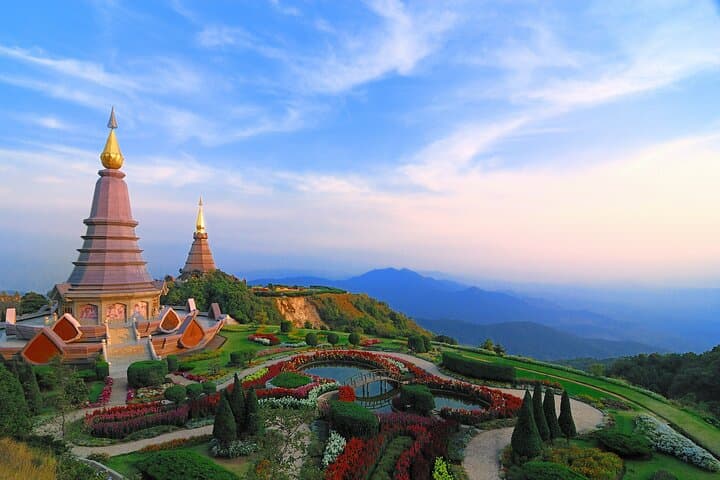
Doi Inthanon is Thailand’s highest peak, a massif of granite and sandstone shaped by uplift and erosion; its summit hosts cool-climate gardens and royal pagodas built to honor the Thai monarchy. Ban Pa Pong Piang’s rice terraces are a relatively recent cultural adaptation—local Karen and Hmong communities shaping steep land for wet-rice agriculture—and the area’s markets still trade hill-grown vegetables and handwoven textiles.
Expect a mixture of short paved drives, garden walks around the King and Queen pagodas, and a focused 2‑hour hike on the Pha Dok Siew trail: narrow dirt tread, occasional root and rock steps, light elevation change but steady footing required. Wachirathan waterfall delivers a loud, spray-cooled rest stop with stone viewing platforms.
Practical guidance: bring layered clothing for temperature swings (summit can be several degrees cooler than Chiang Mai), sturdy trail shoes with grip for wet paths, a rain shell in the June–November wet season, and cash for local markets. Hydrate and pace the Pha Dok Siew trek; guides keep the route straightforward, but slippery roots demand attention. The itinerary suits travelers who want culture, short trekking, and an overnight village stay without technical climbing.
moderate.
2 days (approx. 2–6 hours active).
Suitable for travelers in light to moderate physical condition; able to walk uneven trails for up to two hours.
The trek is about two hours on uneven trail with modest elevation change; basic mobility and regular walking fitness are sufficient.
Yes—local breakfasts, lunches and dinners and one night in the village homestay are included in the tour package.
June through November is the wet season when terraces are lush and vibrant; planting and water levels are most visible then.
At the Doi Inthanon summit (~2,565–2,700 m), some may notice mild breathlessness, but serious altitude sickness is rare at these elevations.
Doi Inthanon was declared Thailand’s first national park in 1972; royal development projects later supported reforestation and community agriculture in surrounding highlands.
The park balances tourism with habitat protection—stay on trails, minimize waste, and support local homestays that use solar power and low-impact practices.
Tourist Information Center Co. Ltd. operates guided outdoor trips and adventures with an emphasis on safety, stewardship, and memorable experiences.
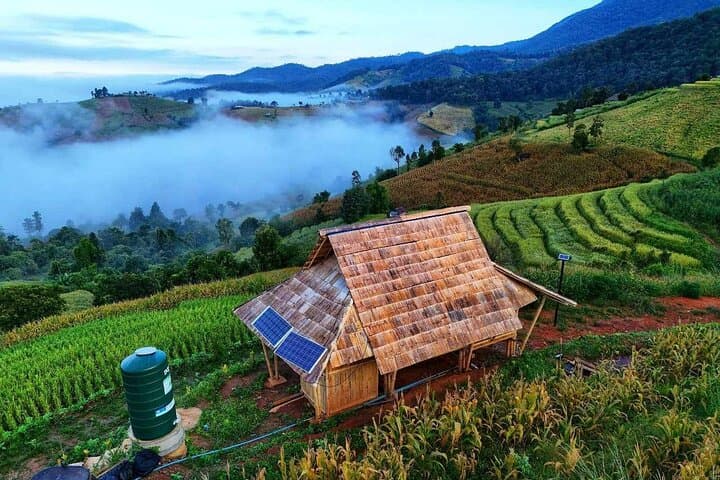
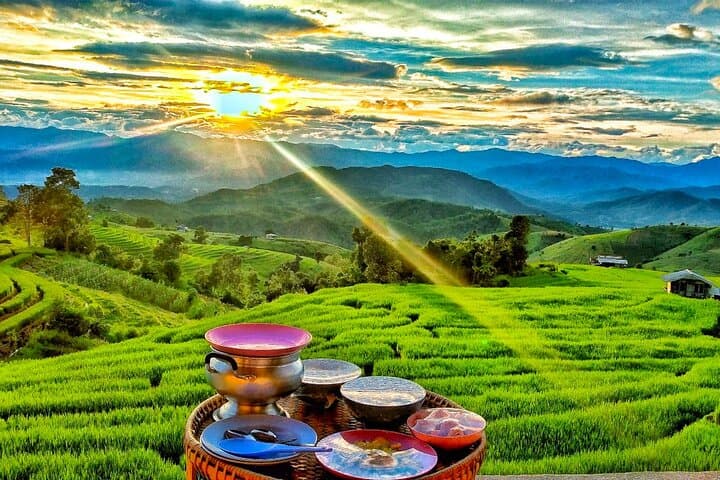
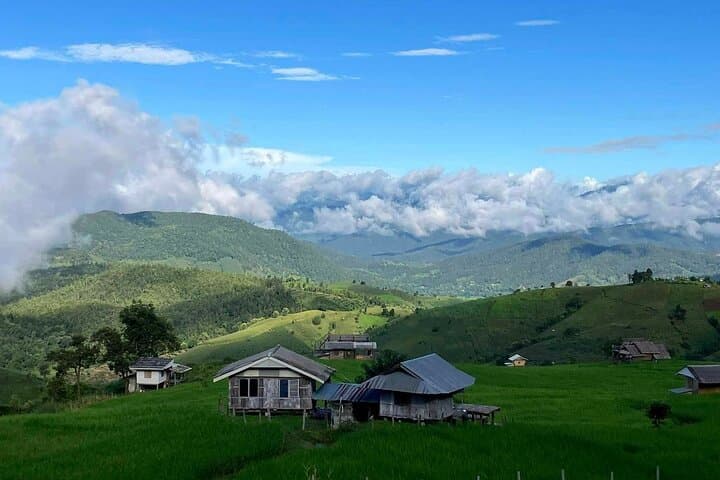
Morning mist thins to reveal terraces cut into the mountain like living steps of green; villagers walk narrow ridgelines between plots while the air carries the sharp scent of wet earth. On this two-day circuit from Chiang Mai, travelers move from high granite summits to cultivated slopes and rushing waterfalls, sleeping in a solar-lit homestay beside the rice paddies.
Morning mist thins to reveal terraces cut into the mountain like living steps of green; villagers walk narrow ridgelines between plots while the air carries the sharp scent of wet earth. On this two-day circuit from Chiang Mai, travelers move from high granite summits to cultivated slopes and rushing waterfalls, sleeping in a solar-lit homestay beside the rice paddies.
Doi Inthanon is Thailand’s highest peak, a massif of granite and sandstone shaped by uplift and erosion; its summit hosts cool-climate gardens and royal pagodas built to honor the Thai monarchy. Ban Pa Pong Piang’s rice terraces are a relatively recent cultural adaptation—local Karen and Hmong communities shaping steep land for wet-rice agriculture—and the area’s markets still trade hill-grown vegetables and handwoven textiles.
Expect a mixture of short paved drives, garden walks around the King and Queen pagodas, and a focused 2‑hour hike on the Pha Dok Siew trail: narrow dirt tread, occasional root and rock steps, light elevation change but steady footing required. Wachirathan waterfall delivers a loud, spray-cooled rest stop with stone viewing platforms.
Practical guidance: bring layered clothing for temperature swings (summit can be several degrees cooler than Chiang Mai), sturdy trail shoes with grip for wet paths, a rain shell in the June–November wet season, and cash for local markets. Hydrate and pace the Pha Dok Siew trek; guides keep the route straightforward, but slippery roots demand attention. The itinerary suits travelers who want culture, short trekking, and an overnight village stay without technical climbing.