THE ADVENTURE COLLECTIVE® · Independent discovery and booking for outdoor travel

Travel from Luxor to Aswan for Philae and a night in the Nile city, then wake before dawn for the epic drive to Abu Simbel. This overnight tour pairs UNESCO engineering feats with colossal New Kingdom temples and local Nubian culture.
Travel from Luxor to Aswan for Philae and a night in the Nile city, then wake before dawn for the epic drive to Abu Simbel. This overnight tour pairs UNESCO engineering feats with colossal New Kingdom temples and local Nubian culture.
Before dawn the road south of Luxor narrows into a ribbon of headlights and desert hush. By first light the Nile widens into the pale ribbon that defines Upper Egypt; palms and compact towns slip past as the coach makes its way toward Aswan. You arrive in the warm, dust-streaked morning to Philae—now sitting on Agilkia Island after an extraordinary UNESCO salvage—and the carved colonnades feel like a living map of Hellenistic and Pharaonic layers.
Verified experiences and guided adventures in the surrounding area.
Operated by True Egypt - Day Tours · Aswan, Aswan Governorate
Before dawn the road south of Luxor narrows into a ribbon of headlights and desert hush. By first light the Nile widens into the pale ribbon that defines Upper Egypt; palms and compact towns slip past as the coach makes its way toward Aswan. You arrive in the warm, dust-streaked morning to Philae—now sitting on Agilkia Island after an extraordinary UNESCO salvage—and the carved colonnades feel like a living map of Hellenistic and Pharaonic layers.
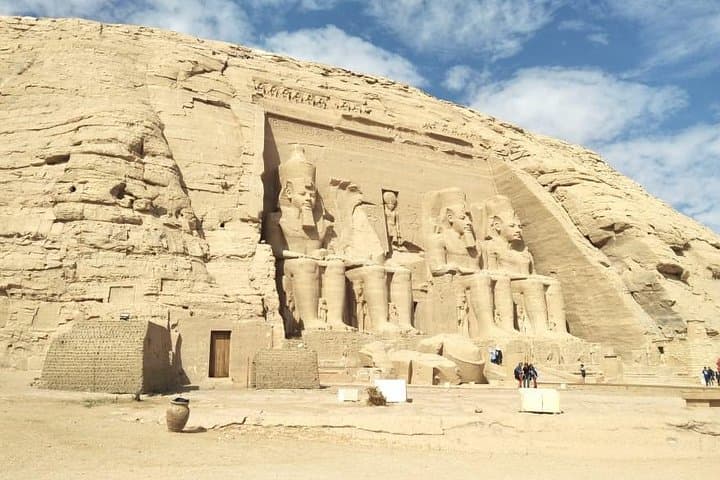
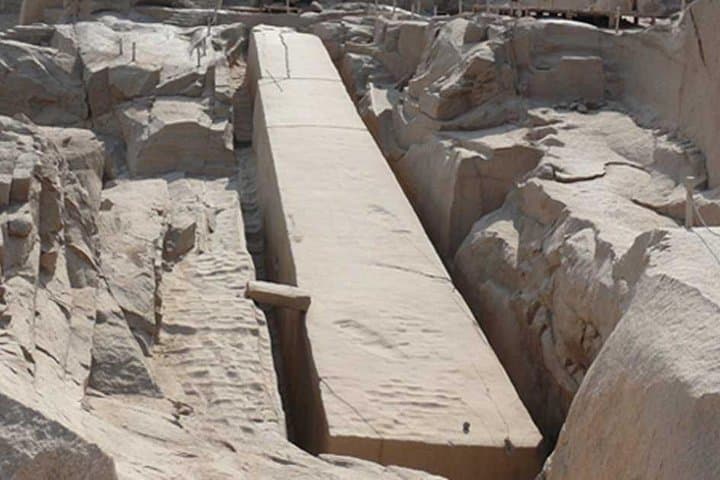
The landscape here is as much geology as history: Aswan’s pink granite quarries fed obelisks and statues for millennia, and the modern High Dam reshaped the river and created Lake Nasser, the backdrop for the moved miracle that is Abu Simbel. Ramesses II’s twin temples, carved into a cliff in the 13th century BCE and later raised onto an artificial hill, impress with colossal seated figures and solar alignments; the smaller Nefertari temple fronts Hathor’s graceful columns.
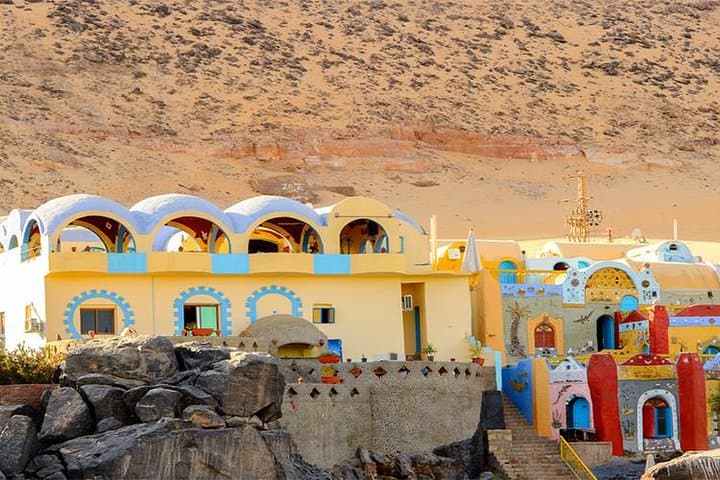
Practically, expect long drives (the itinerary covers roughly 180 km from Luxor to Aswan then a predawn ~230 km run to Abu Simbel), short temple walks on uneven stone, and early starts. Bring sun protection, a refillable water bottle, and comfortable shoes with good tread for steps and sandstone thresholds. Staff usually handle logistics—private transport, meals, and museum admissions are included—but carry local cash for tips and small purchases in Nubian villages.
This overnight pairing balances cultural depth and travel rhythm: two full-site visits, an evening in Aswan to sample Nubian hospitality, and a sunrise‑to‑sunset arc that moves from river islands to a lake-born mountain of stone.
easy.
2 days (overnight).
Suitable for travelers in average fitness—able to handle long vehicle transfers and short periods of standing and walking.
This tour notes admission to major sites is included, but confirm at booking for any optional exhibits or local fees.
From Aswan it’s roughly a 3‑hour drive (about 230 km); the tour schedules a very early departure to maximize visiting time.
The operator lists the tour as suitable for all fitness levels and wheelchair accessible, though some temple areas have steps and uneven surfaces.
An expert Egyptology guide who speaks your language is included—confirm your preferred language when booking.
Philae and Abu Simbel were moved or raised in major UNESCO campaigns during the 1960s–70s to protect antiquities from the rising waters of the High Dam and Lake Nasser.
Tourism supports local economies but stresses fragile monuments; follow site rules, avoid touching reliefs, and use official walkways to minimize wear.
True Egypt - Day Tours operates guided outdoor trips and adventures with an emphasis on safety, stewardship, and memorable experiences.
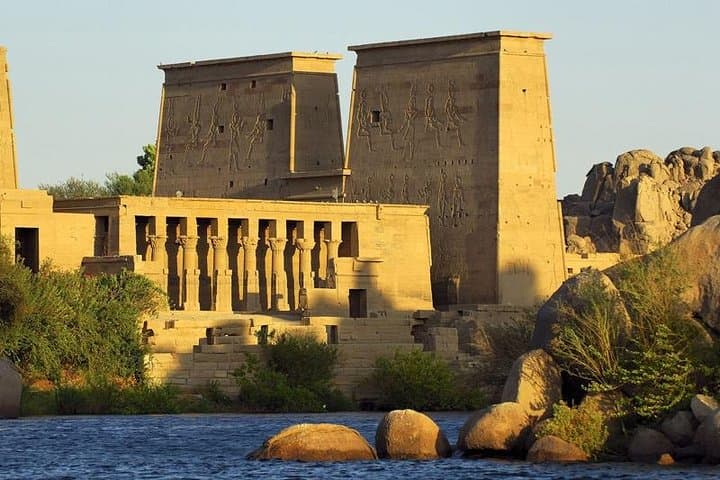
Before dawn the road south of Luxor narrows into a ribbon of headlights and desert hush. By first light the Nile widens into the pale ribbon that defines Upper Egypt; palms and compact towns slip past as the coach makes its way toward Aswan. You arrive in the warm, dust-streaked morning to Philae—now sitting on Agilkia Island after an extraordinary UNESCO salvage—and the carved colonnades feel like a living map of Hellenistic and Pharaonic layers.
Before dawn the road south of Luxor narrows into a ribbon of headlights and desert hush. By first light the Nile widens into the pale ribbon that defines Upper Egypt; palms and compact towns slip past as the coach makes its way toward Aswan. You arrive in the warm, dust-streaked morning to Philae—now sitting on Agilkia Island after an extraordinary UNESCO salvage—and the carved colonnades feel like a living map of Hellenistic and Pharaonic layers.
The landscape here is as much geology as history: Aswan’s pink granite quarries fed obelisks and statues for millennia, and the modern High Dam reshaped the river and created Lake Nasser, the backdrop for the moved miracle that is Abu Simbel. Ramesses II’s twin temples, carved into a cliff in the 13th century BCE and later raised onto an artificial hill, impress with colossal seated figures and solar alignments; the smaller Nefertari temple fronts Hathor’s graceful columns.
Practically, expect long drives (the itinerary covers roughly 180 km from Luxor to Aswan then a predawn ~230 km run to Abu Simbel), short temple walks on uneven stone, and early starts. Bring sun protection, a refillable water bottle, and comfortable shoes with good tread for steps and sandstone thresholds. Staff usually handle logistics—private transport, meals, and museum admissions are included—but carry local cash for tips and small purchases in Nubian villages.
This overnight pairing balances cultural depth and travel rhythm: two full-site visits, an evening in Aswan to sample Nubian hospitality, and a sunrise‑to‑sunset arc that moves from river islands to a lake-born mountain of stone.