THE ADVENTURE COLLECTIVE® · Independent discovery and booking for outdoor travel

A demanding overnight trek that rewards strenuous ascent with close-up views of Volcán Fuego’s eruptions and a sunrise summit over the Antigua valley. This guided multi-day hike combines cloud forest, high-alpine terrain, and campsite life at 12,300 ft.
A demanding overnight trek that rewards strenuous ascent with close-up views of Volcán Fuego’s eruptions and a sunrise summit over the Antigua valley. This guided multi-day hike combines cloud forest, high-alpine terrain, and campsite life at 12,300 ft.
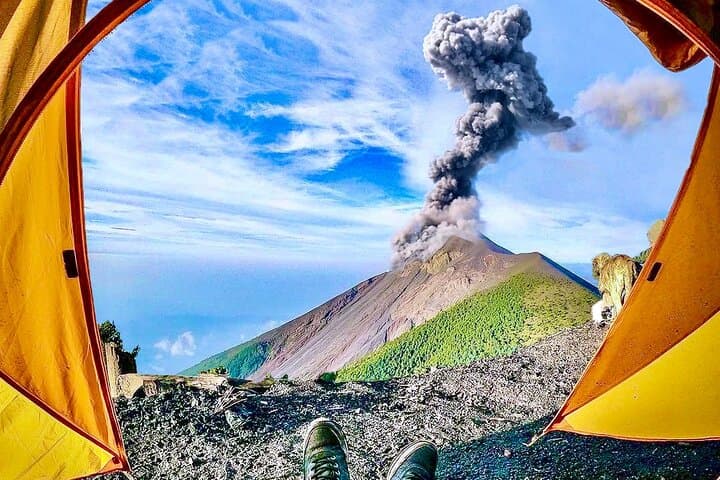
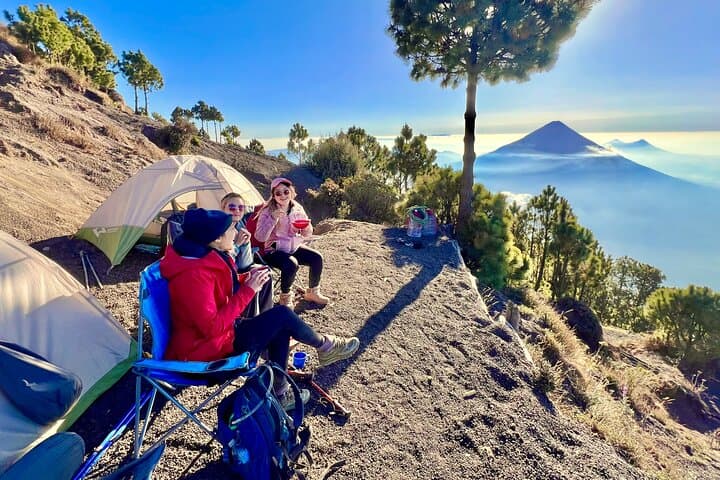
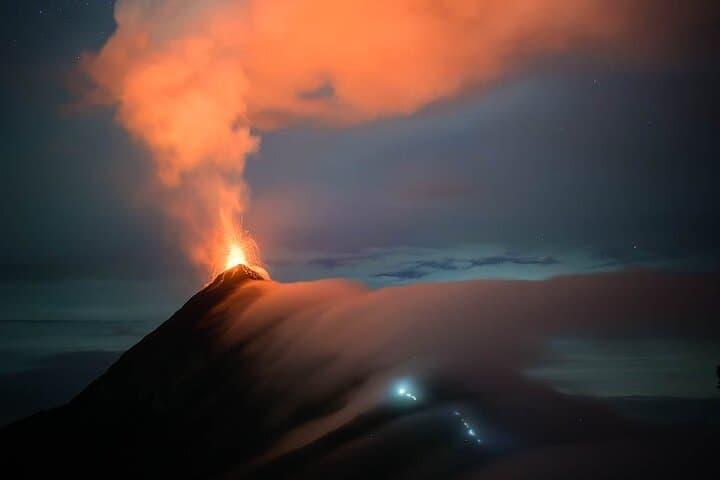
Night on Acatenango begins with wind cutting across an open volcanic plain and the glow of Fuego painting the horizon—an honest reminder you’re sitting on one of Central America’s great stratovolcanoes. The first day moves through agricultural terraces and a cool cloud forest, then into high-alpine scrub where tents cluster on a ridgeline at roughly 12,300 ft. Around the campfire, eruptions from neighboring Volcán Fuego punctuate the dark with orange flares while the valley below settles into silence.
Verified experiences and guided adventures in the surrounding area.
Operated by Trek Guatemala · Antigua Guatemala, Sacatepéquez
Night on Acatenango begins with wind cutting across an open volcanic plain and the glow of Fuego painting the horizon—an honest reminder you’re sitting on one of Central America’s great stratovolcanoes. The first day moves through agricultural terraces and a cool cloud forest, then into high-alpine scrub where tents cluster on a ridgeline at roughly 12,300 ft. Around the campfire, eruptions from neighboring Volcán Fuego punctuate the dark with orange flares while the valley below settles into silence.
Geologically, Acatenango is older and taller than Fuego, built from repeated lava flows and explosive eruptions; the twin peaks frame Antigua’s valley and, on clear mornings, the highlands stretching toward Mexico. Cultural echoes are present in the fields you pass—smallholders growing corn and snow peas—and in Antigua, whose colonial architecture is the usual staging point for the climb.
Practically speaking, the trip is an overnight, guided, multi-day trek: expect ~6–8 hours uphill day one to basecamp at ~3,750 m, a pre-dawn summit push of about 45 minutes to an hour, then a 3-hour descent on day two. Weather ranges from humid cloud forest to biting alpine winds; layers and sun protection are essential. Hydrate at every rest stop; altitude can hit even fit hikers.
Logistics include provided tents, sleeping gear, meals, entrance fees, and group transport from Antigua. Time your booking in the dry season (November–April) for the clearest summit views, and always follow guide instructions around active volcanic vents—this is adventure with real geological drama.
difficult.
2 days (approx. 48 hours).
High level of cardiovascular fitness and experience with sustained uphill hiking at altitude recommended.
Expect 6–8 hours of steady uphill hiking through varied terrain, including steep, rocky sections—moderate to hard effort depending on fitness.
No—guides provide tents and sleeping systems and support camp setup, but basic comfort with sleeping outdoors helps.
Yes, Fuego often emits glowing lava and ash plumes visible from Acatenango’s basecamp, though visibility depends on weather and volcanic activity.
Acute altitude symptoms like headache, nausea, and shortness of breath are possible; guides monitor pace and recommend acclimatization and hydration.
Acatenango and neighboring Fuego form a volcanic complex shaped by repeated eruptions over millennia; Spanish colonial travelers recorded Fuego’s activity as early as the 16th century.
Trails and alpine vegetation are fragile—stick to established campsites, pack out waste, and respect local limits to protect high-altitude ecosystems.
Trek Guatemala operates guided outdoor trips and adventures with an emphasis on safety, stewardship, and memorable experiences.

Night on Acatenango begins with wind cutting across an open volcanic plain and the glow of Fuego painting the horizon—an honest reminder you’re sitting on one of Central America’s great stratovolcanoes. The first day moves through agricultural terraces and a cool cloud forest, then into high-alpine scrub where tents cluster on a ridgeline at roughly 12,300 ft. Around the campfire, eruptions from neighboring Volcán Fuego punctuate the dark with orange flares while the valley below settles into silence.
Night on Acatenango begins with wind cutting across an open volcanic plain and the glow of Fuego painting the horizon—an honest reminder you’re sitting on one of Central America’s great stratovolcanoes. The first day moves through agricultural terraces and a cool cloud forest, then into high-alpine scrub where tents cluster on a ridgeline at roughly 12,300 ft. Around the campfire, eruptions from neighboring Volcán Fuego punctuate the dark with orange flares while the valley below settles into silence.
Geologically, Acatenango is older and taller than Fuego, built from repeated lava flows and explosive eruptions; the twin peaks frame Antigua’s valley and, on clear mornings, the highlands stretching toward Mexico. Cultural echoes are present in the fields you pass—smallholders growing corn and snow peas—and in Antigua, whose colonial architecture is the usual staging point for the climb.
Practically speaking, the trip is an overnight, guided, multi-day trek: expect ~6–8 hours uphill day one to basecamp at ~3,750 m, a pre-dawn summit push of about 45 minutes to an hour, then a 3-hour descent on day two. Weather ranges from humid cloud forest to biting alpine winds; layers and sun protection are essential. Hydrate at every rest stop; altitude can hit even fit hikers.
Logistics include provided tents, sleeping gear, meals, entrance fees, and group transport from Antigua. Time your booking in the dry season (November–April) for the clearest summit views, and always follow guide instructions around active volcanic vents—this is adventure with real geological drama.