THE ADVENTURE COLLECTIVE® · Independent discovery and booking for outdoor travel

A private day trip from Marrakech delivers one of Morocco’s most dramatic waterfalls and an easy-to-moderate hike through olive groves, terraces and viewpoints. Read on for what to expect on the 9–11 hour outing, practical route details, and tips to make the most of the light and lunch spots.
A private day trip from Marrakech delivers one of Morocco’s most dramatic waterfalls and an easy-to-moderate hike through olive groves, terraces and viewpoints. Read on for what to expect on the 9–11 hour outing, practical route details, and tips to make the most of the light and lunch spots.
By midmorning the minivan eases off the highway and the air shifts — dust softens, the smell of olive oil and thyme edges in, and terraces of silver-green trees roll toward a cliff that drops into thunder. Visitors arriving from Marrakech on this private day trip find the Ouzoud waterfalls announcing themselves before the view opens: a vertical sheet of water that tumbles roughly 110 meters, breaking into a spray that throws rainbows across the gorge.
Verified experiences and guided adventures in the surrounding area.
Operated by Morocco Trips Services · Ouzoud, Béni Mellal-Khénifra
By midmorning the minivan eases off the highway and the air shifts — dust softens, the smell of olive oil and thyme edges in, and terraces of silver-green trees roll toward a cliff that drops into thunder. Visitors arriving from Marrakech on this private day trip find the Ouzoud waterfalls announcing themselves before the view opens: a vertical sheet of water that tumbles roughly 110 meters, breaking into a spray that throws rainbows across the gorge.
The falls sit on the northern fringe of the High Atlas foothills, at about 1,480 meters above sea level. Geologically the drop follows a faulted limestone ridge where a tributary has carved a stepped gorge through layers of sedimentary rock; over millennia the current cut the basalt and marl into terraces that now host olive groves. Culturally the area has been a meeting point between Berber mountain life and the trade routes to Marrakech — small villages around the falls still run family-owned mills and cafés where tajine and strong coffee are local currency.
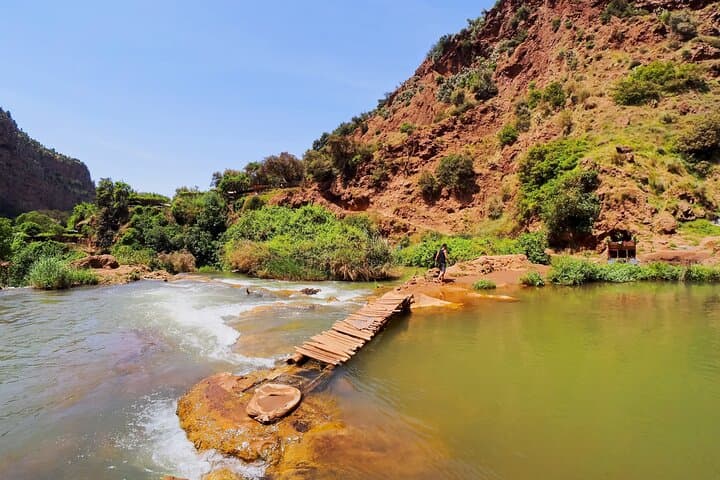
The walking here is pragmatic, not pristine: expect well-trodden stone paths, wooden footbridges, and sections of steep steps that angle down toward pools at the base. A typical visit includes a guided orientation in the park and roughly 2–3 hours of on-foot exploration, though travelers can stretch that into a longer hike through terraces or keep it brief at the main viewpoints. Monkeys — Barbary macaques — patrol the olive trees and local vendors operate shaded terraces where you can choose your lunch spot overlooking the cascade.
Practical edge: the drive from Marrakech is about 150 km and takes around 2.5–3 hours each way; the full private day trip runs roughly 9–11 hours. Timing matters — arrive before midday if you want clear light on the main viewpoint and fewer crowds; late afternoon brings warmer colors and softer light for photos but can coincide with the return drive.
Bring layered footwear and a daypack: slip-resistant shoes for wet rocks, sun protection for exposed viewpoints, and a refillable water reservoir — there are cafés but not reliable taps along the trails. If you’re after a quieter experience, ask for a private pickup timed to avoid Marrakech’s morning rush and plan your lunch at one of the terraces below the upper falls to watch the rainbow form as water meets sun.
This is an accessible slice of Morocco’s mountain landscape — dramatic enough for photographers, practical enough for families, and rooted in a landscape shaped by water, olive cultivation, and centuries of local life.
moderate.
9–11 hours.
Suitable for travelers in average fitness — involves sustained walking on uneven ground and stair descents/ascents.
Plan on about 2.5–3 hours each way for the roughly 150 km journey, depending on traffic and road conditions.
Yes — the route is family-friendly but includes stair sections and uneven paths; private transfer and flexible pacing make it manageable for most ages.
This tour’s price notes that admission is not included; check with the operator for current park fees or pay locally at entry points.
Swimming is possible in some pools but conditions vary; follow local signage and avoid swimming after heavy rain or in fast current.
Barbary macaques are common around Ouzoud and often appear in the olive trees; observe from a distance and do not feed or provoke them.
The offering lists bilingual drivers — commonly French and English in addition to Arabic — but confirm language preferences when booking.
Ouzoud sits on historic trade and pastoral routes between the High Atlas villages and Marrakech; local olive presses and mills reflect centuries of mountain agriculture.
Tourism supports local economies but also stresses trails and waste systems — stick to marked paths, avoid feeding wildlife, and carry out trash.
Morocco Trips Services operates guided outdoor trips and adventures with an emphasis on safety, stewardship, and memorable experiences.
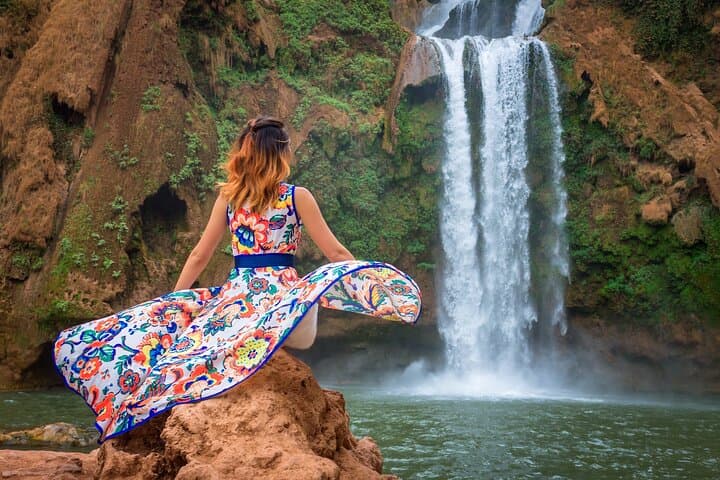
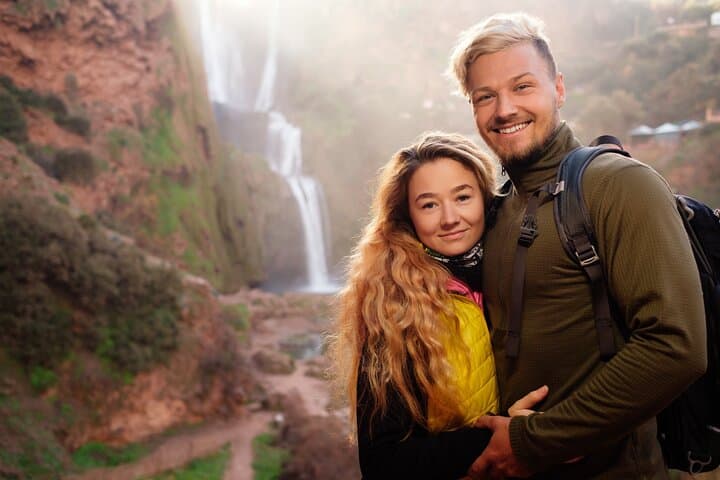
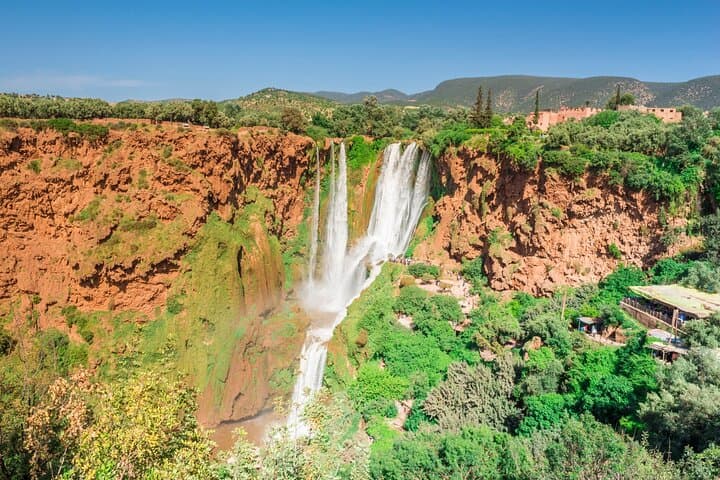
By midmorning the minivan eases off the highway and the air shifts — dust softens, the smell of olive oil and thyme edges in, and terraces of silver-green trees roll toward a cliff that drops into thunder. Visitors arriving from Marrakech on this private day trip find the Ouzoud waterfalls announcing themselves before the view opens: a vertical sheet of water that tumbles roughly 110 meters, breaking into a spray that throws rainbows across the gorge.
By midmorning the minivan eases off the highway and the air shifts — dust softens, the smell of olive oil and thyme edges in, and terraces of silver-green trees roll toward a cliff that drops into thunder. Visitors arriving from Marrakech on this private day trip find the Ouzoud waterfalls announcing themselves before the view opens: a vertical sheet of water that tumbles roughly 110 meters, breaking into a spray that throws rainbows across the gorge.
The falls sit on the northern fringe of the High Atlas foothills, at about 1,480 meters above sea level. Geologically the drop follows a faulted limestone ridge where a tributary has carved a stepped gorge through layers of sedimentary rock; over millennia the current cut the basalt and marl into terraces that now host olive groves. Culturally the area has been a meeting point between Berber mountain life and the trade routes to Marrakech — small villages around the falls still run family-owned mills and cafés where tajine and strong coffee are local currency.
The walking here is pragmatic, not pristine: expect well-trodden stone paths, wooden footbridges, and sections of steep steps that angle down toward pools at the base. A typical visit includes a guided orientation in the park and roughly 2–3 hours of on-foot exploration, though travelers can stretch that into a longer hike through terraces or keep it brief at the main viewpoints. Monkeys — Barbary macaques — patrol the olive trees and local vendors operate shaded terraces where you can choose your lunch spot overlooking the cascade.
Practical edge: the drive from Marrakech is about 150 km and takes around 2.5–3 hours each way; the full private day trip runs roughly 9–11 hours. Timing matters — arrive before midday if you want clear light on the main viewpoint and fewer crowds; late afternoon brings warmer colors and softer light for photos but can coincide with the return drive.
Bring layered footwear and a daypack: slip-resistant shoes for wet rocks, sun protection for exposed viewpoints, and a refillable water reservoir — there are cafés but not reliable taps along the trails. If you’re after a quieter experience, ask for a private pickup timed to avoid Marrakech’s morning rush and plan your lunch at one of the terraces below the upper falls to watch the rainbow form as water meets sun.
This is an accessible slice of Morocco’s mountain landscape — dramatic enough for photographers, practical enough for families, and rooted in a landscape shaped by water, olive cultivation, and centuries of local life.