THE ADVENTURE COLLECTIVE® · Independent discovery and booking for outdoor travel

A full-day private trip from Marrakech to the Cascades d'Ouzoud delivers dramatic drops, old stone mills and playful Barbary macaques. This guide covers what to expect on the trail, local history, and practical tips for a smooth visit.
A full-day private trip from Marrakech to the Cascades d'Ouzoud delivers dramatic drops, old stone mills and playful Barbary macaques. This guide covers what to expect on the trail, local history, and practical tips for a smooth visit.
You leave Marrakech at first light in a comfortable van and watch olive groves and low ridgelines slide past the window until the road opens onto the valley that holds the Cascades d'Ouzoud.
Verified experiences and guided adventures in the surrounding area.
Operated by Marrakech Tours · Ouzoud, Béni Mellal-Khénifra
You leave Marrakech at first light in a comfortable van and watch olive groves and low ridgelines slide past the window until the road opens onto the valley that holds the Cascades d'Ouzoud.
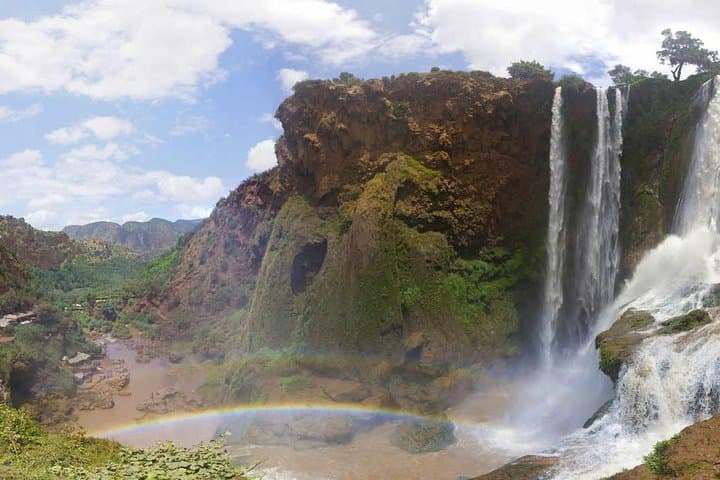
The falls cut a 110–115m notch through Miocene limestone, spilling into a shaded amphitheater where mist lifts in ribbons and, when the sun is right, a rainbow avoids the plunge pool like a dare. The name Ouzoud — “the act of grinding grain” — shows up in the dozen small stone mills at the rim; many still turn when farmers bring grain down from nearby villages. The landscape here is more working countryside than postcard wilderness: terraced olive plots, stone houses, and a steady human presence that’s shaped how you experience the falls.
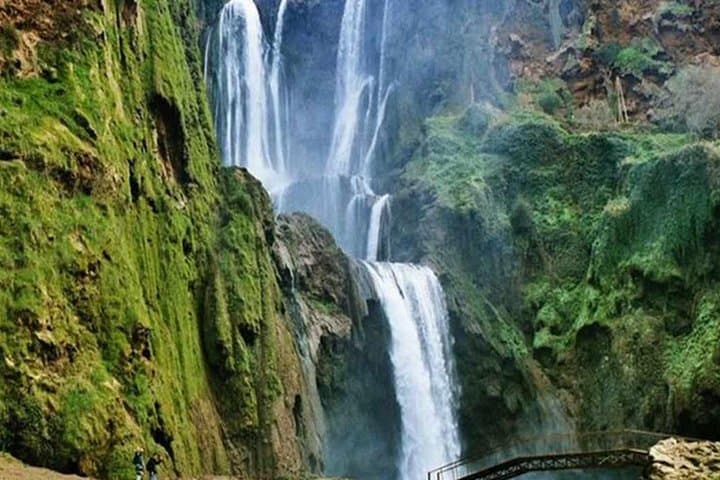
Expect an accessible but uneven route: a well-travelled, shaded path winds to the base with steps, switchbacks and rocky sections. Barbary macaques move through trees with casual curiosity, and local cafés cluster near viewpoints offering mint tea and tagine.
Practical guidance: the drive from Marrakech takes roughly 2.5–3 hours each way; plan for an 8–12 hour day depending on stops. Wear grippy shoes for wet stone, pack 2–3 liters of water, and bring layers — mornings can be cool and the spray chills. Respect the monkeys: do not feed or chase them. If you want fewer people, aim for earlier arrival; late morning light is best for rainbows. A local guide or driver will handle logistics and can point out the old mills, quieter upstream trails, and safe viewpoints for photography.
moderate.
8–12 hours.
Moderately fit: able to manage several hundred feet of elevation change on uneven steps and walk for 1–3 hours on mixed terrain.
Expect about 2.5–3 hours each way depending on traffic and stops; private transfers typically include hotel pickup and drop-off.
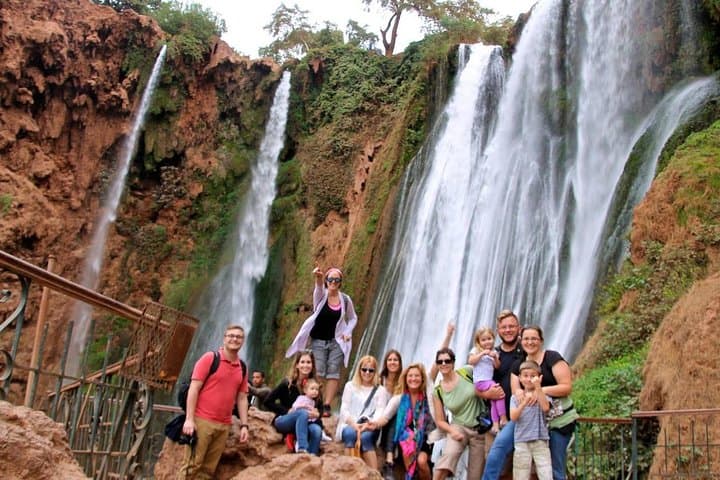
The path includes steps and some steep sections—children and older visitors can usually manage it but should go slowly and use handrails where available.
There is a small local entrance/parking fee in some areas; hiring a local guide is optional but helpful for navigation and cultural context.
Barbary macaques are generally not aggressive but will take food or shiny objects—observe from a distance and do not feed them.
Ouzoud’s name reflects the region’s milling tradition; the river powered small stone mills that still dot the rim of the falls.
Tourists should stay on marked paths, avoid feeding wildlife, and support local vendors; litter and off-trail erosion are ongoing concerns.
Marrakech Tours operates guided outdoor trips and adventures with an emphasis on safety, stewardship, and memorable experiences.
You leave Marrakech at first light in a comfortable van and watch olive groves and low ridgelines slide past the window until the road opens onto the valley that holds the Cascades d'Ouzoud.
You leave Marrakech at first light in a comfortable van and watch olive groves and low ridgelines slide past the window until the road opens onto the valley that holds the Cascades d'Ouzoud.
The falls cut a 110–115m notch through Miocene limestone, spilling into a shaded amphitheater where mist lifts in ribbons and, when the sun is right, a rainbow avoids the plunge pool like a dare. The name Ouzoud — “the act of grinding grain” — shows up in the dozen small stone mills at the rim; many still turn when farmers bring grain down from nearby villages. The landscape here is more working countryside than postcard wilderness: terraced olive plots, stone houses, and a steady human presence that’s shaped how you experience the falls.
Expect an accessible but uneven route: a well-travelled, shaded path winds to the base with steps, switchbacks and rocky sections. Barbary macaques move through trees with casual curiosity, and local cafés cluster near viewpoints offering mint tea and tagine.
Practical guidance: the drive from Marrakech takes roughly 2.5–3 hours each way; plan for an 8–12 hour day depending on stops. Wear grippy shoes for wet stone, pack 2–3 liters of water, and bring layers — mornings can be cool and the spray chills. Respect the monkeys: do not feed or chase them. If you want fewer people, aim for earlier arrival; late morning light is best for rainbows. A local guide or driver will handle logistics and can point out the old mills, quieter upstream trails, and safe viewpoints for photography.